
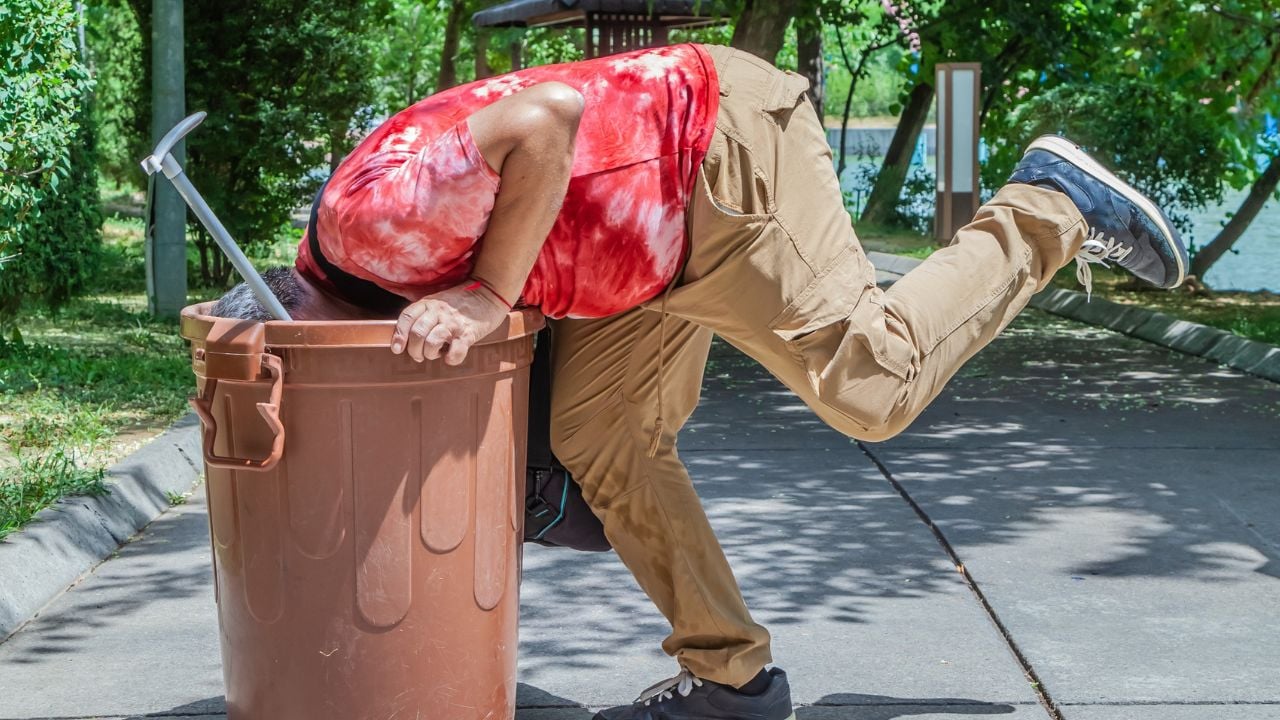
9 Strange Florida Laws About What Residents Can Throw in the Trash

Florida doesn’t care how you fold your bedsheets.
But it has plenty to say about how you wrap your mattress once you want to get rid of it.
Skip the plastic bag and the tape on trash day, and Miami-Dade County can fine a resident $100 for setting a bare mattress at the curb.
These are some of the strangest laws about what Floridians are allowed to put in their own trash cans.
Note: This is general information, not legal advice. Waste disposal rules vary by city and county across Florida and are subject to change.
1. Fridges Lose Their Doors First
Miami-Dade County won’t take a refrigerator or freezer to the trash pile with its door still attached.
The county’s bulky waste rules require the door removed first and call a door left on the box a hazard.
Leave it on, and the crew skips the pile entirely.
No door, no pickup.
Florida backs that rule with a statewide one.
Refrigerators, freezers, water heaters, and other large appliances fall under what the state calls “white goods,” and Florida Statute 403.708 bans them from landfills altogether.
They never head to the dump with the household garbage in the first place.
2. Batteries Banned From Bins
Florida makes any retailer that sells a car battery take the old one back.
State law requires every business that sells lead-acid batteries at retail to accept a used battery as a trade-in when a customer buys a new one.
That’s the law.
Florida also bans lead-acid batteries from landfills entirely.
Drop a car battery in a curbside cart anyway.
Sorting it out then falls to the resident, well before pickup day, not the hauler.
Small sealed rechargeable batteries carry their own rule. The kind riding around inside a cordless drill or an old laptop can’t go in the trash either, and manufacturers have to run a collection program for them.
3. Wrap Every Mattress
Miami-Dade County will pick up an old mattress with the rest of the bulky trash, but only if it’s dressed for the occasion.
The mattress has to be fully sealed in a plastic mattress bag or sleeve, taped shut with something weather-resistant like packing tape or duct tape, before it ever reaches the curb.
The box spring gets a pass.
Skip the wrap, and the county can fine a resident $100, for one bare mattress.
No exceptions.
4. No Whole Tires Allowed
Unincorporated Orange County, Florida, caps a household at four passenger tires a week.
The county collects up to four tires alongside the regular large-item pickup.
No landfill trip needed.
Show up with a fifth tire, and it waits for next week.
Florida backs the cap with a statewide ban.
The state won’t let a whole tire near a landfill, full stop.
Under state rules, a tire has to be cut into pieces before it’s buried.
Whole tires trap air, float upward, and collect rainwater that breeds mosquitoes.
A Different Florida Trash Offense Carries Teeth
Miami-Dade County and Seminole County both cap their curbside trash fines, the bare mattress and the unsecured can, at $100 a violation, and both are civil code-enforcement penalties, not criminal charges.
Florida treats illegal dumping on someone else’s property or a vacant lot as a separate, harsher offense.
Under Florida Statute 403.413, dumping 15 pounds or less draws a $150 civil penalty.
Dumping more than that, up to 500 pounds or 100 cubic feet, is a first-degree misdemeanor, punishable by up to a year in jail and a $1,000 fine.
Cross 500 pounds or 100 cubic feet, and it becomes a felony, with the vehicle used to haul it subject to seizure.
5. Motor Oil Stays Out
Florida recycles barely a third of the motor oil residents use each year.
The state’s own environmental agency puts the number at 35%, out of more than 7 million gallons Floridians use every year.
The rest is supposed to go anywhere but the regular trash.
Under state law, mixing used oil into the trash headed for a landfill is illegal, and so is pouring it down a drain, a storm sewer, or a septic tank.
Florida keeps a free, statewide network of public collection centers instead, no more than 5 gallons per visit, no charge.
Do-it-yourself oil changes stay legal.
6. Electronics Skip the Curb
Miami-Dade County’s trash rules treat a dead television differently than a broken lamp.
Electronics don’t belong in a bulky trash pile at all, and the county calls sending them to a landfill illegal.
No gray area.
Computers, monitors, printers, VCRs, and even old cellphones have to go to one of the county’s Trash and Recycling Centers instead, where staff handle the lead and mercury inside separately.
Neither curbside pickup nor the dumpster out back will take them.
Psst! How much do you know about what’s legal to trash in Florida? Flip these cards and see how many you can call correctly.
7. Dried Paint Only
Florida won’t let free liquid ride into a landfill, and that includes a half-full can of paint.
State rules bar noncontainerized liquid waste from landfills outright, so wet paint has to be dealt with before trash day, not on it.
The fix is simple.
County guidance across Florida tells residents to mix in cat litter, sawdust, or a paint hardener until the can is solid, then let it dry out completely, lid off, before setting it curbside.
Solid paint in an open can is trash.
Liquid paint in a sealed one isn’t.
8. Needles Ride in a Sealed Container, Never Loose
Florida’s health department treats a loose needle in the trash as a serious hazard, not a minor slip-up.
The Florida Department of Health tells residents never to throw a used syringe, lancet, or needle straight into the household trash.
Its guidance calls for a hard-plastic or metal container with a tight lid first, an empty detergent bottle taped shut works.
Guidance, not a statute.
Skip it anyway, and the risk lands on someone else. A stray needle can puncture a sanitation worker’s hand weeks after anyone in the house forgot it was even in there.
9. No Plastic Bags for Yard Waste
Sarasota County, Florida, stopped accepting yard waste in plastic bags altogether.
Since Ordinance 2022-069 took effect, grass clippings and leaves bagged in plastic get left at the curb, not picked up.
Paper bags, bundles, or reusable containers are the only options now.
The county’s own guidance answers the obvious follow-up directly: No, yard waste can’t just go in with the regular garbage either.
Tampa adopted the same plastic-bag ban on the west coast, effective February 1, 2024.
Same rule, different coast.
In both cities, the lawn clippings and the kitchen trash never mix.
A yard crew that bags clippings in plastic out of habit can leave a homeowner with an uncollected pile and a second trip to the curb.
Switching to a reusable bin solves it for good, and many county solid waste offices will say exactly that if a resident calls to ask.
10 Florida Wildlife Rules People Break Just by “Being Friendly”
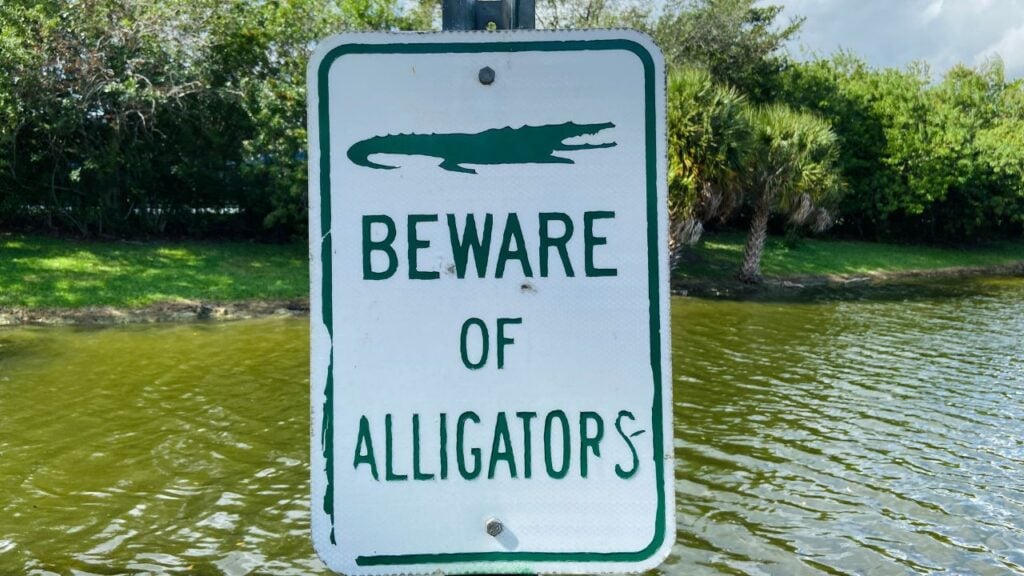
A tourist in Miami Beach once stepped on a sea turtle nest and walked away with a felony charge and a $5,000 bond.
Many people who run afoul of Florida’s wildlife rules aren’t trying to hurt anything. They’re trying to help, pet, or photograph it, and the law doesn’t care about the intention.
10 Florida Wildlife Rules People Break Just by “Being Friendly”
9 Things That Instantly Mark You as a Florida Newcomer

By late August, a new Florida resident’s front bumper carries a gray crust that won’t scrub off, and they have no idea what caused it.
Locals know exactly what it is on sight. Lovebugs are just the start of what nobody mentions before the moving truck shows up.
