
8 Great Smoky Mountains Mistakes Tennessee Visitors Make Every September

September 2015 sent more than 1 million people through Great Smoky Mountains National Park in a single month, one of the highest Septembers the park has ever recorded.
Tennessee visitors picturing empty trails once school starts back are picturing the wrong month.
These are the Great Smoky Mountains mistakes Tennessee visitors keep making once the calendar flips to September.
Note: This is general travel and safety information, not official park guidance. Park rules, closures, and wildlife regulations are subject to change, so confirm current conditions with Great Smoky Mountains National Park before your trip.
1. Letting Their Bear Guard Down
Great Smoky Mountains National Park is bear country every month of the year, but many Tennessee visitors relax in September, assuming the busiest bear season already passed with summer.
It didn’t.
Black bears shift into hyperphagia each fall, a stretch when they forage up to 20 hours a day and can gain two to three pounds daily building fat for winter.
That means Cades Cove Campground and Elkmont, both on the Tennessee side, stay squarely in bear territory in September, hyperphagia in full swing even as the weather starts to cool.
A cooler left on a picnic table matters just as much this month as it did all summer.
Great Smoky Mountains National Park requires food, coolers, and trash locked in a hard-sided vehicle or a bear-proof locker at every frontcountry site, and rangers impound anything left out.
Feeding a bear, even by accident through a forgotten cooler, is exactly what those rules exist to prevent.
Violations can draw fines up to $5,000 and up to six months in jail.
Rangers usually euthanize a food-conditioned bear instead of relocating it.
2. Misjudging the Elk-Rut Drive
The Smokies’ elk rut turns Cataloochee Valley into the park’s most dramatic wildlife show every September, and Tennessee visitors often get the drive wrong before they ever see a bull.
Great Smoky Mountains National Park brought elk back to Cataloochee Valley in 2001, reintroducing 25 animals after the species had been gone from the region since the 1800s.
Every one of their descendants gets far more aggressive come September.
The rut, or breeding season, starts September 1, and bulls treat people and vehicles like rivals instead of scenery.
Approaching a bull within 50 yards, about half the length of a football field, is a federal violation that can mean fines or arrest.
Tennessee visitors leaving Gatlinburg for the day often plan to fold Cataloochee into the same trip as a Newfound Gap Road drive, assuming one route covers both.
It doesn’t.
Cataloochee sits on a separate access road entirely, reached by leaving the park on Highway 321 through Greenbrier and Cosby, picking up Interstate 40 into North Carolina, then following the winding, partly gravel Cove Creek Road, a route with steep, unguarded drop-offs for the final miles in.
That detour runs over an hour from Gatlinburg on its own, on top of any time already spent on Newfound Gap Road.
Oconaluftee, the park’s other elk-viewing spot, sits at the far end of Newfound Gap Road near Cherokee, so it’s the only one of the two on that route.
Cataloochee and Oconaluftee’s Rut-Season Closures
Great Smoky Mountains National Park closes the fields at both Cataloochee and Oconaluftee to every visitor from September 1 through October 31, the entire length of elk rutting season.
Roadside viewing stays legal the whole time, so binoculars or a telephoto lens from a designated pull-off is the way to watch.
Dawn and dusk give the best odds of seeing a bull elk work a herd.
3. Expecting Fall Color Already
Great Smoky Mountains National Park spreads its color out over weeks, and September is only the opening act.
Tennessee visitors book a September trip to Gatlinburg or Pigeon Forge expecting the postcard version of fall, reds and golds down every ridge.
Not yet.
Above 4,000 feet, color can start turning as early as mid-September, but the lower valleys where many visitors stay remain green.
Peak color at those lower elevations doesn’t arrive until mid-October to early November, weeks after many September trips wrap up.
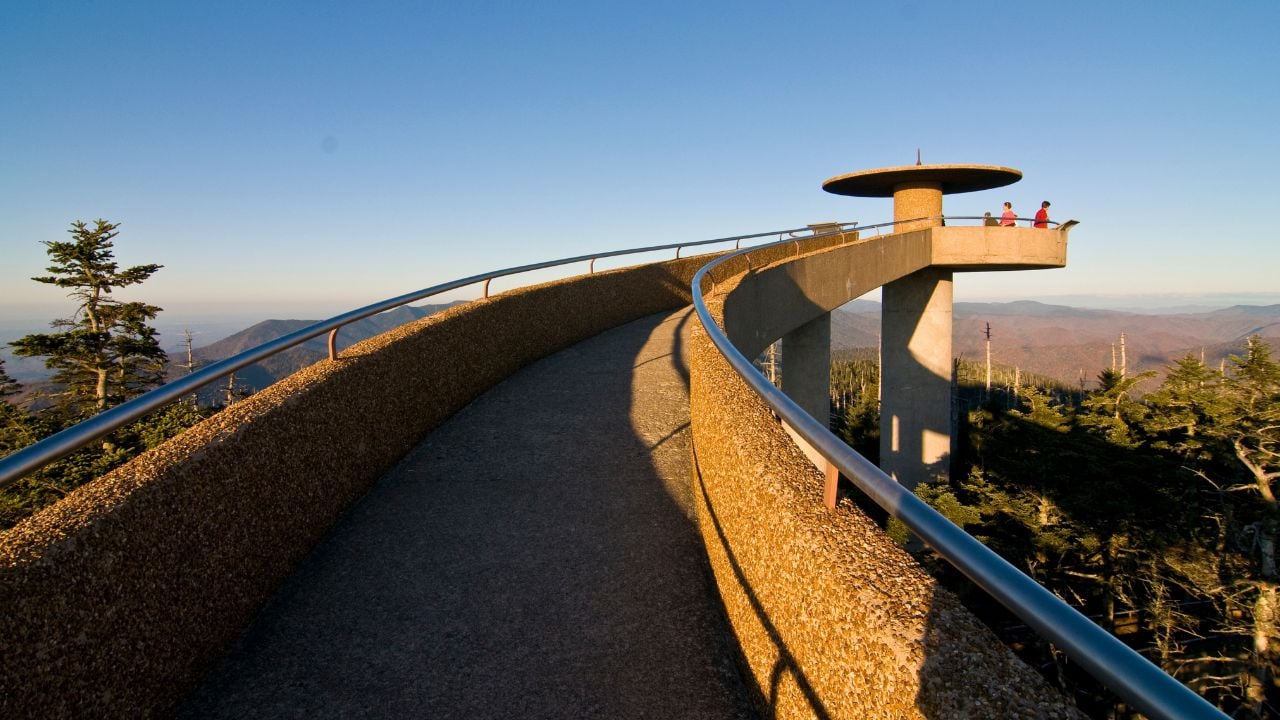
A drive up to Clingmans Dome or along Newfound Gap Road gets Tennessee visitors the earliest color the park has to offer this month.
Staying at valley elevation the whole trip means waiting on a season that hasn’t started yet.
4. Driving Into a Vehicle-Free Wednesday
The Smokies close the entire 11-mile Cades Cove Loop Road to cars every Wednesday from sunrise to sunset, a program that runs from May 6 through September 30 this year.
Tennessee visitors who last drove the loop back in June assume the program wrapped with summer camp season.
It hasn’t.
September 30 falls on a Wednesday in 2026, which means the program’s final vehicle-free closure of the year lands on the very last day the season runs.
A Tennessee visitor who assumes the program already wound down after Labor Day gets caught by that closing Wednesday the same as anyone else.
Show up with a car on any Wednesday this month, including that last one, and the only way around the cove is on foot or on two wheels.
Bikes, including Class 1 and Class 2 e-bikes, are welcome.
Scooters and skateboards aren’t.
Cades Cove sits on the Tennessee side, reached through Townsend, so this is squarely a Tennessee-visitor problem, not a North Carolina one.
5. Assuming the Crowds Thinned Out
Crowds in the Smokies don’t thin out the way Tennessee visitors expect once Labor Day passes.
September 2015 brought more than 1 million visitors to the park in a single month, at the time the highest September the park had ever recorded, well above the roughly 900,000 visitors a decade of Septembers had averaged before it.
Shoulder-season crowds haven’t gone anywhere since.
Weekday mornings do ease up once school starts back, especially on Newfound Gap Road and around Sugarlands.
Weekends are a different story.
Cades Cove Loop Road still backs up on a September Saturday the same way it does in July, and parking at popular pull-offs fills before 9 a.m.
Plan a September trip around a weekday, not the calendar page that says summer is over.
6. Trusting the Old Laurel Falls Timeline
Great Smoky Mountains National Park’s most popular waterfall hike is still closed this September, and the reopening date keeps slipping.
Laurel Falls Trail, the paved, family-friendly route more than 300,000 people hike every year, closed for a major rehabilitation in January 2025.
The park expected an 18-month closure, putting the reopening somewhere around the summer of 2026.
That timeline slipped.
As of late July, the park now expects Laurel Falls to stay closed into 2027, past the fall trip many Tennessee visitors built around the original schedule.
The closure blocks access from both Little River Road and the Little Greenbrier/Cove Mountain trail junction, and it takes the adjoining Sugarlands Mountain Trail and its parking lot down with it.
A Tennessee visitor working from an old “18 months” estimate shows up to a locked trailhead instead of a waterfall.
Baskins Creek Trail and the Cove Mountain Trail route to Cataract Falls, both reached from the Sugarlands side, make the closer stand-ins this fall.
Psst! How much do you know about the history of the Smokies? Take our quiz and see if you can ace it.
Quiz
Smokies History IQ
Answer these questions on Great Smoky Mountains history and Tennessee trivia. We bet you can’t get them all right. Prove us wrong?
What did Tennessee’s 1930s deed for the road that became Newfound Gap Road forever ban?
7. Losing Daylight Without Noticing
Great Smoky Mountains National Park has no artificial lighting on its trails or its mountain roads, so daylight is the only clock that matters.
In Gatlinburg, sunset shifts from around 8 p.m. to 7:18 p.m. over the course of September, a loss of about 42 minutes in a single month.
Tennessee visitors who started a July hike at 3 p.m. and finished with hours of light to spare try the same schedule in September.
They don't have that cushion anymore.
Cell service is extremely limited across much of the park, so a late start that turns into a dark trail rarely ends with a quick call for help.
No margin left.
Start earlier than the summer habit suggests, especially on longer routes toward Mount LeConte or Chimney Tops.
8. Dressing for the Valley, Not the Summit
Great Smoky Mountains National Park can run 10 to 20 degrees cooler at the summit than at the base, and Tennessee visitors feel that gap first on the drive up from Gatlinburg.
September highs in Gatlinburg average 83 degrees.
Up on Clingmans Dome, the park's highest point at 6,643 feet, the September average high sits at 60 degrees, with lows near 47.
That's a whole different season twenty miles up the road.
Big difference.
September mornings sharpen the gap further, since the first frosts of the year often arrive at elevation by late September while Gatlinburg still feels like summer.
A Tennessee visitor who leaves the cabin in shorts and a T-shirt can step out at the summit into a stiff, cold wind an hour later.
Clear skies over Gatlinburg don't guarantee the same conditions 4,000 feet higher, according to the park's own weather page.
9 Tennessee Foods and Drinks That Confuse Anyone Who Didn't Grow Up With Them

Tennessee borders eight other states, tied for more neighbors than any state in the country, and the food changes at nearly every line.
A dish that's second nature in Memphis can draw a blank stare two hours up the road in Nashville.
9 Tennessee Foods and Drinks That Confuse Anyone Who Didn't Grow Up With Them
7 Kroger Mistakes Tennessee Shoppers Make Every Week

Consumer Reports checked sale tags at 26 Kroger-owned stores and found shoppers paid an average of $1.70 too much on items that were supposed to be marked down.
Kroger's own Make It Right policy fixes a wrong price on the spot, and many Tennessee shoppers never ask for it.
