
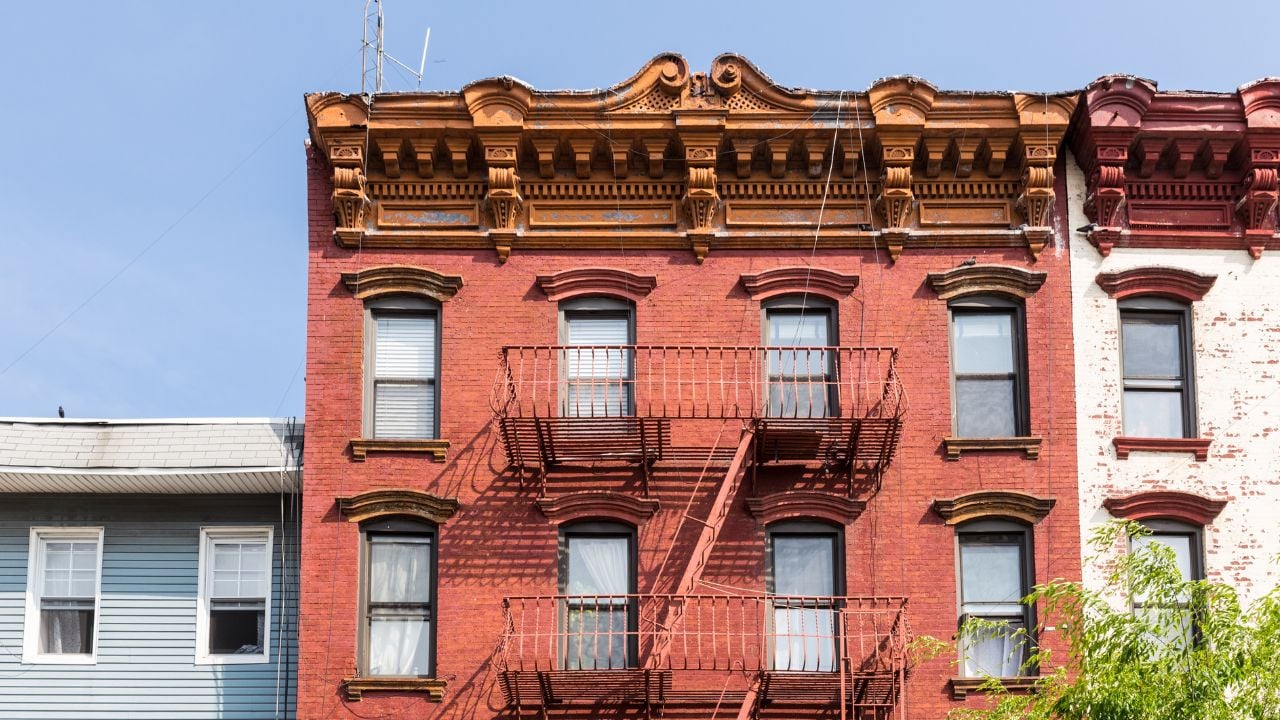
8 Things New York City Leases Ban That Residents Do Anyway

Some New York City apartment rules are easy to understand.
Others might make you wonder who would ever break them.
But tenants do, from putting grills on fire escapes to sneaking washing machines into apartments without permission.
Here are some of the things New York City leases ban that residents do anyway.
Note: This is general information, not legal advice. Lease terms, building codes, and city rules are subject to change.
1. Grilling on the Fire Escape
A standard New York City lease folds in a fire-safety clause that leans straight on the city’s own fire code.
The code draws one hard line: No grill of any kind belongs on a fire escape, not even an electric one.
Charcoal needs a terrace or a backyard, with at least 10 feet of open air between the flame and the building.
A full-size propane tank is banned altogether from a balcony, a fire escape, or a roof deck.
The fire code allows one narrow exception: Portable grills fueled by liquefied petroleum gas (LPG) canisters of 16.4 ounces or less, capped at four per apartment, can go on a roof deck.
None of that stops the smell of char drifting up a fire escape many summer weekends.
The Fire Department of New York (FDNY) posts the same fire-escape warning nearly every summer, and the grills come out regardless.
2. Renting the Place on Airbnb
New York City leases routinely bar tenants from listing the apartment on any booking platform, full stop.
City law backs that clause with its own rule.
Local Law 18 requires short-term rental hosts to register with the city, and it turns almost any stay under 30 days into a violation unless the host is home for it.
Registration crushed the open market: Active listings dropped roughly 70% once enforcement began in 2023, and the smaller pool that’s left isn’t necessarily playing by the rules.
The city’s Office of Special Enforcement found in an April 2026 report that 27% of registered listings had converted to illegal, unregistered operation.
In 2025, the office filed its first lawsuit under the law’s newest penalties, going after a West Village host accused of running 10 apartments as unregistered short-term rentals at once.
What Unlawful Means for a New York City Host
New York City’s short-term rental rules turn nearly every sub-30-day stay into a civil violation, not a criminal charge.
A first-time host who gets caught faces fines and a blocked booking, not an arrest.
The law does carve out one legal path: A host who lives in the unit during the stay, caps it at two guests, and gives them access to the whole apartment.
Skip any part of that, and the booking platform is supposed to block the transaction before it ever goes through.
3. Installing a Washing Machine
Co-op, condo, and many rental leases in New York City require written permission before a tenant adds a washing machine.
The city backs that clause with its own rule: Connecting a washer to a building’s water and waste lines counts as plumbing work.
The Department of Buildings requires a permit filed by a licensed master plumber for that kind of connection, existing units included.
Plenty never file it.
Real estate site Brick Underground has run reader stories about washing machines installed without permission for more than a decade, including tenants who only got caught after a leak tipped off the neighbor downstairs.
4. Waiting Out a No-Pets Clause
A no-pets clause is standard in New York City co-op and multi-unit rental leases.
City law hands tenants a workaround regardless.
Under the city’s pet law, a landlord who knows about a pet and does nothing to enforce the lease for three months loses the right to evict over that one animal.
That three-month clock runs the same way for rentals and co-ops citywide, but condos split by court district.
The rule applies in Brooklyn, Queens, and Staten Island under the Second Department’s case law.
It doesn’t apply in Manhattan or the Bronx, where the First Department’s rulings go the other way.
Three months, then it’s over.
Real estate attorneys have described this workaround publicly for years, and tenants who want a dog or cat in a no-pets building sometimes wait out the clock on purpose.
5. Storing Bikes in the Hallway
New York City’s building leases almost always ban storing personal property in a hallway, a stairwell, or the lobby.
The city’s fire code makes the same rule mandatory, not optional.
Hallways count as a required means of egress, and bikes, strollers, and boxes can’t sit in one.
Nobody moves them.
Real estate site Brick Underground names noise as the top source of friction between New York City neighbors, with hallway clutter turning up as one of the recurring complaints underneath it.
6. Subletting Without Asking
A New York City lease requires written landlord consent before someone else takes over the apartment, even for just a few months.
New York’s sublet statute backs up that clause.
It applies statewide, not just inside New York City.
A landlord gets 30 days to respond to a sublet request, and any arrangement made outside that process counts as a lease violation.
The law skips co-ops, public and subsidized housing, and buildings with fewer than four units, so tenants in those situations don’t get its protection.
Tenants rarely file it.
A friend or family member moves in and starts paying rent directly for months at a stretch, with the original tenant never filing a word of it.
7. Running a Business From Home
New York City leases typically restrict the apartment to residential use only, banning any business run out of it.
The city’s Department of Buildings can fine violators $5,000 to $25,000 for an illegal conversion to business use.
The standard penalty runs $15,000, and repeat or uncorrected violations can rise as high as $70,000 once daily penalties stack up.
Tutoring counts.
So does a home training session.
Personal trainers, tutors, and massage therapists still run sessions out of New York City apartments, mostly drawing scrutiny once foot traffic grows loud enough for a neighbor to complain.
8. Removing the Window Guard
A New York City lease for an apartment housing a child 10 or younger folds in a window-guard clause pulled from the city’s own child-safety law.
Buildings with a child that age must have working window guards under New York City law, and a tenant can’t remove them.
That ban holds even when the reason is an air conditioner.
State guidance says plainly that a tenant can’t remove window guards just to fit an air conditioner into the frame.
Out it comes anyway.
Every September, as fast as air conditioners go back into the windows for the season, the guards come out the same way, tucked in a closet until a landlord asks where they went.
Some tenants never put them back at all.
Psst! How much do you know about New York City apartment life? Take our quiz and see how many you can get right.
Quiz
NYC Apartment Law IQ
Answer these questions on New York City’s rent rules and housing history. We bet you can’t get them all right. Prove us wrong?
What year did New York City’s Rent Guidelines Board start setting annual rent increases for stabilized apartments?
9 Things New Yorkers Do at a Deli That Confuse Everyone Else

New York City is home to an estimated 13,000 bodegas and delis, among the largest concentrations of small corner stores anywhere in the country.
Every one of them runs on the same unwritten script, and almost nobody explains the rules to a first-timer.
9 Things New Yorkers Do at a Deli That Confuse Everyone Else
6 Fast Food Orders That Cost More Than New York City Residents Expect in 2026

New York City's cost of dining out rose more than 56% over the past decade, according to a report on the region's cost of living from the state comptroller's office.
Pretax income in the region grew only about 52% across that same stretch, not enough to keep pace.
6 Fast Food Orders That Cost More Than New York City Residents Expect in 2026
