
9 Things New Yorkers Do at a Deli That Confuse Everyone Else

New York City is home to an estimated 13,000 bodegas and delis, more small corner stores than any other American city.
Every bodega and deli in the city runs on the same unwritten script, and almost nobody explains it to a first-timer.
These are the things New Yorkers do at a deli that confuse everyone else.
1. Walking Straight to the Deli Case
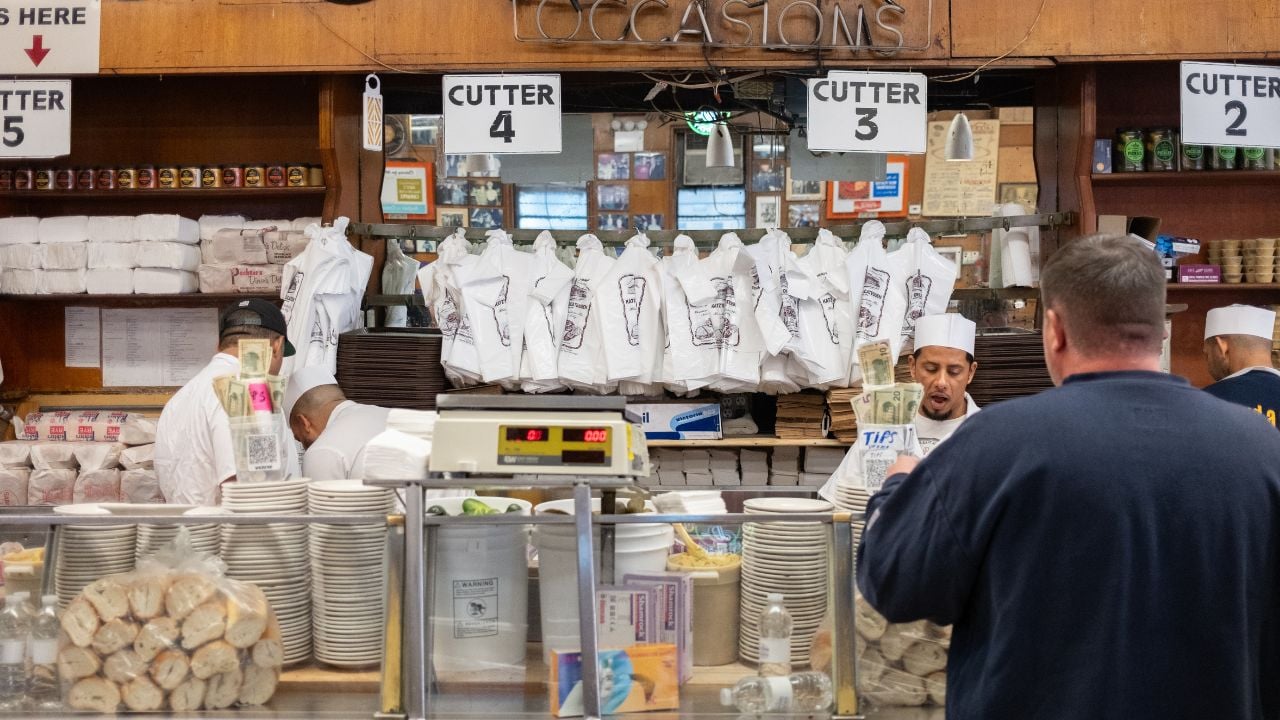
New York City delis put the register by the door and the meat case in back.
Regulars skip the register first.
They walk straight past the chips and the lottery machine to the counter where a sandwich gets built.
A visitor who lines up at the register to order a sandwich just waits behind someone buying a scratch-off ticket.
Wrong line.
The order goes in at the case, and the payment happens after, at the register, on the way out.
2. Saving Hello for the Register
New York City delis split the transaction into two stops, the sandwich case first and the register on the way out, and that split decides where any small talk happens.
Regulars walk up to the case and go straight into the order.
Words cost time there.
Any hello waits for the register, once the sandwich is already wrapped and the visitor is paying on the way out.
A newcomer who opens with a friendly good morning at the case just watches the next few regulars order around them while the counter works through a sandwich that’s already promised to somebody else.
3. Running “Bacon, Egg and Cheese” Together
New Yorkers say “baconeggandcheese” like it’s a single word, and the deli case understands it instantly.
Swap in a roll, a kaiser, or a bagel, and the order still doesn’t slow down.
New Yorkers tack on salt, pepper, and ketchup (SPK) just as fast.
An outsider who spells out “salt, pepper, and ketchup, please” still gets a sandwich.
They also get a look.
New York City delis run on the shorthand, not the full sentence.
4. One Direction, No Backtracking
New York City deli orders move in one direction, main item first, then bread, then toppings, straight through with no backtracking.
A regular ordering a turkey club says the meat, the bread, and every topping in one unbroken line.
No “wait, can I get” halfway through.
Nobody reconsiders the mustard once it’s already been said.
No do-overs.
The person making the sandwich is already moving on the first word.
Stopping to think mid-order just backs up everyone behind.
5. Ordering the “Buttered Roll and Regular”
New York City has an old-school order that sounds like nothing to an outsider: “A buttered roll and a regular.”
The roll is a kaiser, sliced almost through, buttered, and wrapped in wax paper.
“Regular” describes the coffee, and it means milk and two sugars already stirred in, never black.
An out-of-towner who orders “a regular” expecting a plain cup of coffee gets something sweeter than they bargained for.
Every time.
The whole combo runs a few dollars.
Old-school New York City delis ring it up without a single follow-up question.
What “Regular” Means at a New York City Deli
A regular coffee at a New York City deli isn’t a size.
It’s coffee with milk and two sugars already mixed in, the same order every time, no cream-and-sugar packets on the side.
Ask for it black or with the exact ratio spelled out, and the counter needs the extra words because “regular” alone always means the same thing.
6. Calling a Chopped Cheese by Name
Ask for a chopped cheese at a New York City bodega, and nobody explains what’s in it.
The counter scrapes ground beef, diced onions, and melted cheese together on the flat top, then drops it onto a roll with lettuce, tomato, and whatever sauce the regular wants.
Say the name, and the order’s already moving.
A visitor who asks “what’s in it?” gets a patient answer once, maybe twice, from a counter that’s used to the question by now.
A regular never asks.
The line behind them doesn’t slow down either way.
7. Stepping Around the Deli Cat
New York City’s health code bans a cat from living inside any store that sells food, and many delis and bodegas keep a cat anyway.
The cats work the aisles for one reason.
Rats hate them.
Regulars step around a cat asleep by the register or curled up on a shelf without a second glance.
The cat has usually been on that counter longer than many of the regulars have been coming in.
New York City Council member Keith Powers introduced a bill that would legalize the arrangement instead of just tolerating it, with a registration and vaccination program for the cats already on the job.
A visitor who stops to ask why there’s a cat by the register gets a shrug, not an explanation.
8. Using the Deli’s Own ATM
New York City delis often set their own card minimums, and keep their own automated teller machine (ATM) by the door for anyone who comes up short.
Regulars hit the machine before they order instead of walking two blocks to find a bank.
Cash moves faster.
It charges a fee like any out-of-network machine, and New Yorkers pay it without blinking.
A visitor tries to pay $4 for a bagel and coffee on a card.
The counter waves them toward the machine by the door before they’ve even asked what it’s for.
9. Calling It a Hero
New York City delis still call a long sandwich a hero, never a sub and never a hoagie.
The name goes back to the 1930s, when a New York Herald Tribune food writer joked that only a hero could finish a sandwich that size.
The name stuck.
Philadelphia calls the same sandwich a hoagie, and New England calls it a grinder, but order a hoagie at a New York City deli and the counter still hands over a hero.
A visitor who asks for “a sub” gets the sandwich anyway, just under a different name than the one printed on the board behind the counter.
Psst! How much do you know about New York City deli history? Take our quiz and see how many you can get right.
Quiz
NYC Deli History IQ
Answer nine questions on delicatessen history and New York City trivia. We bet you can’t get them all right. Prove us wrong?
Lose your ticket at Katz’s Delicatessen and the register adds how much to your bill?
Why New York City Has so Many Delis
New York City is home to an estimated 13,000 bodegas, more small corner stores than any other American city.
Not by accident.
The word "bodega" comes from Spanish, and it originally just meant a storeroom or a wine cellar.
Hispanic immigrants, many of them Dominican, opened the first wave of them after World War II, wanting a store within walking distance that stayed open when a supermarket didn't.
New Yorkers kept the habit going long after the neighborhoods around any one bodega changed.
A corner without a bodega now feels incomplete.
That density is exactly why the ordering culture stayed so consistent across the five boroughs, every counter running the same unspoken rules as the counter a few blocks away.
The Pace Changes by Neighborhood
New York City delis don't all move at the same speed.
A counter near Wall Street serves traders running on no sleep and zero patience, and the whole exchange there moves fast enough to catch a visitor off guard.
A deli in a quieter part of Queens or Staten Island slows down, and the person behind the counter might ask how someone's day is going.
Outsiders who judge all of New York City by one rushed lunch counter downtown are missing the rest of the city.
The unwritten rules stay the same everywhere, block after block.
Only the tempo changes.
A regular who splits time between a Financial District cart and a Staten Island counter switches gears without thinking about it, clipped downtown and chattier once the ferry crosses the harbor.
Either way, the order still comes out the same, just at a different volume.
9 Wegmans Foods New York Shoppers Grab Instead of Cooking
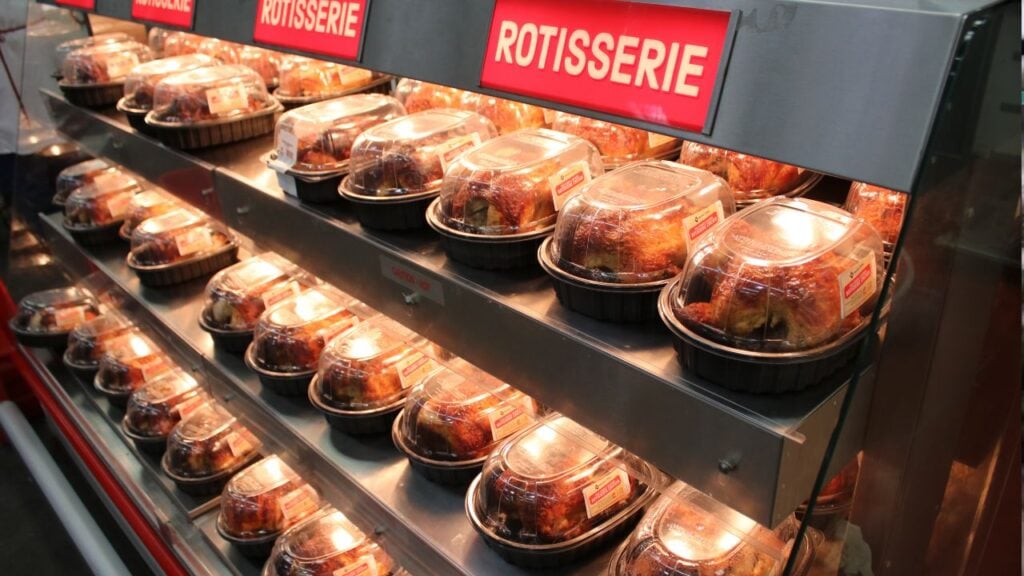
Wegmans poured $36 million into a research kitchen in Rochester, and it didn't teach a single shopper to cook better.
It just filled the prepared foods case with meals New York shoppers grab on the way out the door instead.
9 Wegmans Foods New York Shoppers Grab Instead of Cooking
8 New York Laws From the 1800s That Are Somehow Still on the Books

New York has kept some laws on the books since the 1800s, and a few of them sound too strange to be real.
Lawmakers never repealed them, and they're still sitting in state law today.
8 New York Laws From the 1800s That Are Somehow Still on the Books
