

7 Rude Houseguest Behaviors New York Hosts Consider Grounds for an Early Checkout

New Yorkers are famous for knowing how to make the most of limited space.
But that doesn’t mean every guest gets unlimited freedom.
Even the most welcoming host has a line, and crossing it can turn a friendly stay into an uncomfortable situation.
These are the rude houseguest behaviors New York hosts consider grounds for an early checkout.
Note: This is general information, not legal advice. New York’s sanitation, occupancy, and housing rules vary by city and building and are subject to change.
1. Sticking the Host With a Trash Fine
New York City hosts can end up paying for a guest’s bad sorting habits long after that guest has gone home.
The city’s sanitation department requires paper, metal, glass, and plastic to go out separately from regular trash, and a building that gets it wrong faces fines that rise with every repeat violation.
A guest who tosses a pizza box in with the bottles doesn’t see any of that bill.
The host does.
One sloppy sort from a guest can undo a full year of clean pickups for the host.
How New York City’s Recycling Fines Escalate
New York City’s sorting fine runs on a flat scale that has nothing to do with how many units sit in the building.
A first violation costs $50, a second costs $100, and a third or any after that costs $200, all within the same 12-month stretch.
That clock resets after a clean year, but one bad sort from a guest can restart it for the host.
2. Lighting a Cigarette Indoors Without Asking
New York City requires co-ops and condos with three or more units to write down a smoking policy and hand it to every shareholder and tenant.
Local Law 147 put that requirement in place in 2018, and many buildings used it to go smoke-free inside individual apartments.
A guest who lights up in a unit covered by that policy puts the host on the wrong side of their own building’s rules.
That’s not a great look.
A guest who steps onto the fire escape to light up anyway is still breaking a rule that isn’t theirs to bend, and the host answers for it at the next board meeting.
3. Blowing Past the Building’s Late-Night Hours
New York City logged more than 610,000 noise complaints to 311 in 2024, and noise still tops every other complaint category in the city.
Residential parties and loud music through a shared wall drive a huge share of those calls.
A guest who cranks a speaker after the building’s posted late hours can trigger a call from a neighbor, not the host.
The host answers anyway.
A super or building manager remembers whose apartment the complaint came from.
Repeat calls can turn into a written violation notice from the landlord or the co-op board, and that paperwork follows the host, not the guest.
4. Overstaying a Co-op’s One-Month Guest Window
New York co-op buildings often spell out exactly how long a shareholder’s guest can stay before the board has to sign off.
Many proprietary leases cap that stay at about a month, and only while the shareholder is still living there too.
A guest who settles in past that point, especially once the host leaves town for work, can put the host’s own standing with the board at risk.
It’s weeks, not months.
Hosts who live in a co-op keep a mental calendar running from the moment a guest’s suitcase comes through the door.
5. Showing up With an Uninvited Plus-One
New York’s Property Maintenance Code sets a hard limit on how many people can legally sleep in a room, one occupant to 70 square feet, for homes outside New York City.
New York City keeps a matching rule of its own.
A guest who invites a friend along without asking first can push a bedroom past what that code allows, especially in a smaller apartment already tight on space.
That’s not only an awkward conversation.
A building flagged for overcrowding can face a code violation, and the host is the one whose name sits on the lease.
Ask first.
The math doesn’t stretch just because somebody assumed it would, and a code inspector doesn’t care whose idea the extra guest was.
6. Being Rude to the Building’s Superintendent
New York’s Multiple Dwelling Law requires many larger apartment buildings, from New York City to Buffalo, to keep a janitor or superintendent on call, living in the building or within 200 feet of it.
That super holds spare keys, handles maintenance calls and knows exactly which apartment belongs to which host.
A guest who’s short or dismissive with that staff member doesn’t just have an awkward moment.
The host answers for it.
A super who feels disrespected can report the incident to the building’s management the same day, and that complaint lands on the host’s record, not the guest’s.
One dismissive comment to building staff outlasts the weekend it happened in.
The host is the one who has to smooth things over after the guest has gone home.
7. Expecting Rides From a Carless Host
New York has the second-highest share of car-free households of any state, behind only Washington, D.C.
Statewide, that same analysis puts 29% of New York households without a car to lend out.
A guest who expects the host to drive them to every stop is assuming a car that usually isn’t there.
There’s no car.
Hosts end up rearranging their whole workday around a subway map instead, walking a guest to the platform and hoping they find their own way back.
A guest who won’t learn the subway after the first day gets left to cover their own rideshare since a host only offers so many rides before the offer stops.
Psst! How much do you know about New York’s long history of playing host? Take our quiz and see how many you can get right.
Quiz
New York’s Hosting History
Answer these questions on New York’s biggest moments hosting the world. We bet you can’t get them all right. Prove us wrong?
Everyone credits Gustave Eiffel with a famous New York landmark, but he only engineered its iron skeleton. Which sculptor designed the Statue of Liberty?
The Non-Negotiable No-Boots Rule
New York hosts deal with more snow and slush tracked indoors than hosts in a lot of other states ever see.
Syracuse alone averages about 128 inches of snow a year, one of the snowiest big cities anywhere in the country.
New York's road crews salt every one of those inches, and a guest's boots carry that salt straight across somebody's floor.
New York hosts upstate and down ask guests to leave boots at the door for a reason that has nothing to do with manners.
It's simple upkeep.
Salt-stained grout and a scratched hardwood finish cost money to fix, and a guest who ignores the request twice doesn't earn a third invitation.
8 Upstate New York Towns Even New Yorkers Forget Exist
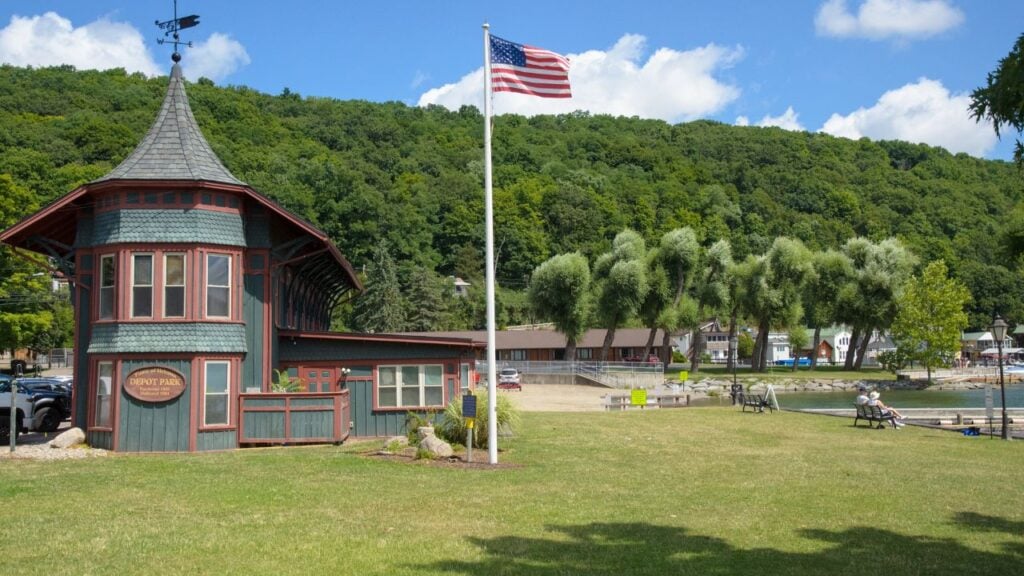
A waterfall tucked into New York's Finger Lakes region drops 215 feet, more than 30 feet taller than Niagara Falls.
Many New Yorkers have never heard of it, along with several small towns that slipped off the map.
8 Upstate New York Towns Even New Yorkers Forget Exist
9 Things New Yorkers Do at a Deli That Confuse Everyone Else
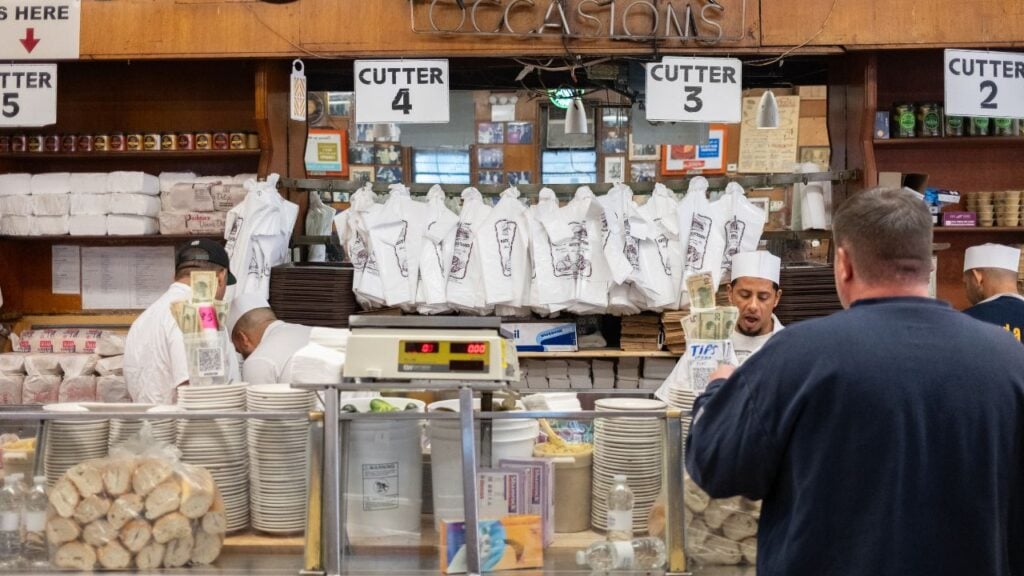
New York City is home to thousands of bodegas and delis, tucked into nearly every block.
Every one of them runs on the same unwritten script, and almost nobody explains the rules to a first-timer.
9 Things New Yorkers Do at a Deli That Confuse Everyone Else
