
6 Things a North Carolina Homeowners Policy Won’t Cover After Wind-Driven Rain

Hurricane Florence came ashore near Wrightsville Beach as a Category 1 storm eight years ago tomorrow, with winds the National Oceanic and Atmospheric Administration clocked at 90 mph.
The wind was the easy part to insure.
Rain pushed into homes for days afterward. Much of what followed sits outside what a standard wind policy pays for.
These are the things a North Carolina homeowners policy won’t cover once wind-driven rain gets into the house.
Note: This is general information, not insurance advice. Coverage and terms are subject to change, so confirm current requirements with the North Carolina Department of Insurance.
1. Wind-Driven Rain With No Storm-Made Opening
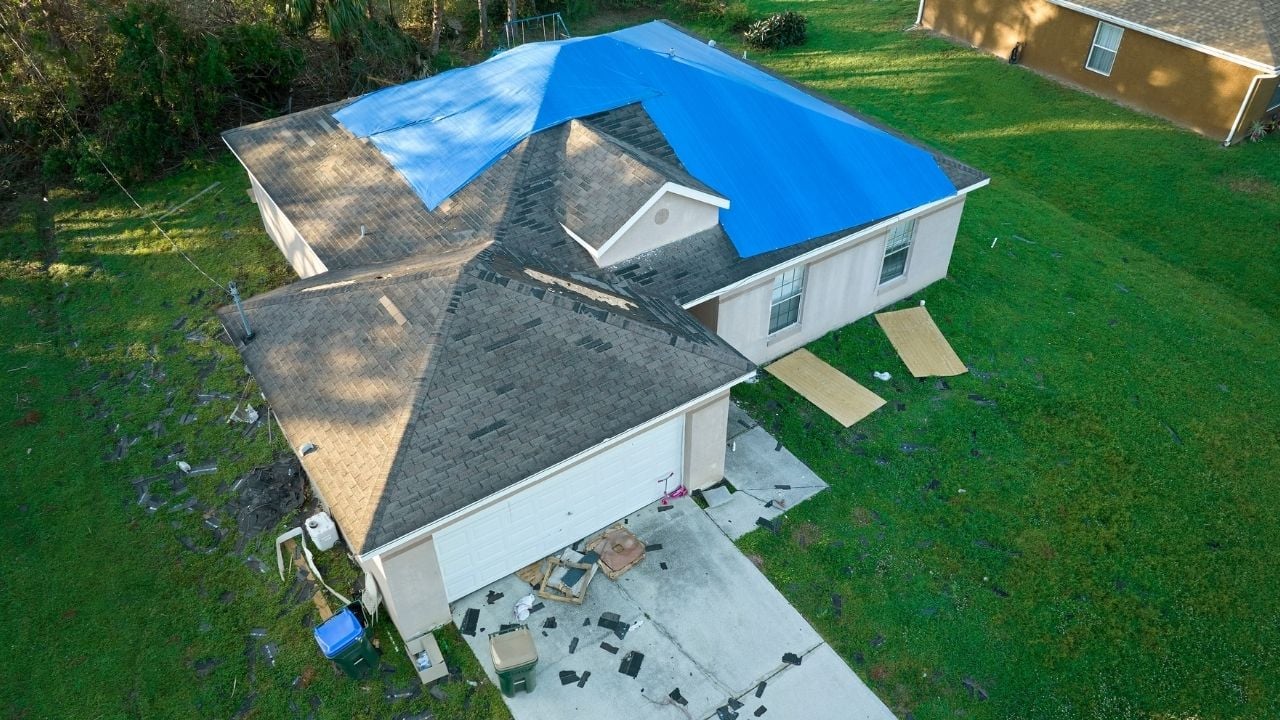
Under a North Carolina homeowners policy, wind-driven rain only counts as covered wind damage when wind or hail tears an opening in the roof or wall first.
Shingles peeled back by a gust or a window shattered by flying debris both qualify.
A cracked seal doesn’t.
Standard homeowners policies exclude rain that gets into a house through a window, door, or wall unless wind or hail damage created that opening first.
That holds even when the wind pushing the rain sideways is exactly what let the water in.
Rain that works its way in around an aging window frame, through a soffit vent, or along worn flashing during that same storm doesn’t clear that bar.
The rain was wind-driven either way.
An insurer can point to the intact roofline and call the loss a maintenance problem instead of storm damage, denying the claim before flood ever enters the conversation.
2. Water Through Your Foundation
A North Carolina homeowners policy’s protection stops right at the foundation once general flooding takes hold in the area.
Wind-driven rain can pool against a house for hours during a slow-moving storm.
Some of it finds a way through the walls or floor of a basement or crawl space.
The state’s own flood insurance guidance says that kind of seepage isn’t a homeowners claim.
It’s a flood claim instead.
Only a National Flood Insurance Program (NFIP) policy or a private flood policy picks it up.
No flood policy, no payout.
An NFIP policy doesn’t cover the hotel bill either if it comes to that, since the North Carolina Department of Insurance’s flood FAQ confirms flood coverage skips loss-of-use and additional living expenses.
A homeowner can watch the same puddle grow for three straight days of rain, and an insurer can still deny the claim.
A slow soak counts the same as a fast rise once it’s coming up from the ground.
3. Sewage Backing Up Your Drains
Once heavy rain overwhelms municipal storm drains during a hurricane, a North Carolina homeowners policy usually excludes what backs up next by default.
Water and sewage push back up through a home’s own pipes instead of draining away.
A standard-form North Carolina policy treats that backup as excluded unless the homeowner paid extra for a sewer and drain backup endorsement.
North Carolina’s building code already requires a backwater valve on any drain or fixture that sits below the top of the nearest upstream sewer manhole on the street.
The code doesn’t bend.
A missing or broken valve gives an insurer one more reason to deny the claim outright.
Psst! How wind-and-rain-ready is your North Carolina homeowners policy? Run through this checklist and see where you stand.
4. Mold From Rain That Never Stopped Coming In
A North Carolina homeowners policy treats mold two different ways.
The difference comes down to how the water got in and how fast it stopped.
Wind-driven rain that soaks a wall in one afternoon, the kind that comes through a hole a storm just tore in the roof, usually dries out before mold gets a foothold.
That sudden, covered water damage generally keeps its mold coverage too.
Speed is the difference.
Hurricane Florence made the opposite case.
Its rain sat over eastern North Carolina for days, working through the same worn seals and vents for as long as the storm stalled offshore.
Insurers can call that kind of slow, repeated entry seepage instead of storm damage, a category standard homeowners forms exclude on their own terms.
That reclassification hands the insurer its argument.
The mold that grows out of days of wind-driven rain seeping in slowly inherits that same exclusion, so a homeowner ends up paying out of pocket for both the water and everything it grew afterward.
5. Your Whole Claim, Not Just Part
Once a court decides floodwater played any part in a loss that wind alone would have covered, a North Carolina homeowners policy can throw out the entire claim.
The clause behind that is called anti-concurrent causation.
It says an excluded peril kills coverage for the whole loss, not just its own share of it.
North Carolina courts have generally enforced anti-concurrent-causation clauses in property insurance claims.
That’s the opposite of splitting the damage down the middle.
All or nothing.
Say a wind claim totals $40,000.
A homeowner can still lose every dollar of it because floodwater also touched the same wall, rather than collecting for the wind portion and fighting over the rest.
Where Wind-Driven Rain Ends and Flood Begins
A North Carolina homeowners policy draws a hard line between wind-driven rain and flood.
The North Carolina Department of Insurance’s consumer guidance applies that same split to every private insurer in the state, not just the companies that sell coastal policies.
Water that rises up from outside, through a door, a foundation crack, or a storm-surge tide, counts as flood damage instead, no matter how hard the wind is blowing at the time.
A single storm can trigger both kinds of damage in the same house within the same hour, which is exactly the scenario the anti-concurrent-causation clause above is built around.
6. Your Hotel Bill Without a Covered Opening
Additional living expenses (ALE) on a North Carolina homeowners policy, the hotel and meal money while a home is unlivable, only pay out when a covered peril caused the damage.
A roof torn open by wind qualifies without much argument.
The claim moves fast.
Wind-driven rain that seeps in through a soffit vent or a worn window seal, the same gap that failed the wind-damage test earlier, doesn’t clear that bar either.
Same rain, no opening, no ALE.
A family that would have qualified for ALE if a shingle had torn instead ends up covering weeks in a hotel out of pocket because the water came in through a gap wind never physically broke open.
Mismatched Coastal and Inland Deductibles
On North Carolina’s coast, a homeowners policy often doesn’t include wind coverage at all.
Many insurers there pull windstorm and hail out of the standard policy and route it instead to the North Carolina Insurance Underwriting Association, the state-created wind pool known as the Beach Plan.
Same state, different math.
State law sets a floor under that pool’s deductible.
The pool must offer a deductible for named storm wind and hail losses of at least 1% of the insured value on every policy it writes.
That means a coastal home insured for $300,000 carries a wind deductible of at least $3,000 before the pool pays a dollar.
Move inland, and many insurers keep wind coverage bundled into the regular homeowners policy instead of splitting it off to a separate pool.
The named-storm or windstorm deductible there still runs as a percentage of dwelling coverage.
Under the state’s own examples, a 2% deductible on a $300,000 home works out to $6,000.
A 1% deductible on a $200,000 home works out to $2,000.
But an inland insurer sets that percentage on its own single policy, not through a wind pool’s operating rules.
One coastal homeowner can end up juggling two separate deductibles after a hurricane, a standard-policy deductible and a bigger Beach Plan deductible.
The Beach Plan’s own rates carry a 5% surcharge over the North Carolina Rate Bureau’s manual rate for wind and hail alone, and a 15% surcharge when wind and hail ride along with a full homeowners policy.
7 Cook Out Habits That Separate North Carolina Regulars From Everyone Else

Cook Out ran more than seventy stores before it ever left North Carolina.
Regulars there skip the a la carte menu, know their tray number, and never show up right at the dinner rush.
7 Cook Out Habits That Separate North Carolina Regulars From Everyone Else
9 Mistakes First-Time Visitors Make on North Carolina’s Blue Ridge Parkway

One seven-mile stretch of the Blue Ridge Parkway logged 144 crashes in six years.
A flat 45 mph speed limit and thin cell coverage catch out many first-time drivers who expect it to feel like a highway.
9 Mistakes First-Time Visitors Make on North Carolina’s Blue Ridge Parkway
