
6 Rules That Decide Who Pays When a Neighbor’s Cattle Get Out in Texas

A bull went through a broken gate latch on a Wilson County ranch one December night and onto State Highway 123.
A pickup met it in the dark.
Who paid for that damaged truck relied on details the driver had no clue about when he left the house.
These are the rules that decide who pays when a neighbor’s cattle get out in Texas.
Note: This is general information, not legal advice. Fence, stock law, and livestock liability rules vary by county and are subject to change.
1. No One at Fault
New Texas landowners inherit a legal head start many of them never expect: Nobody is automatically at fault when a cow gets loose.
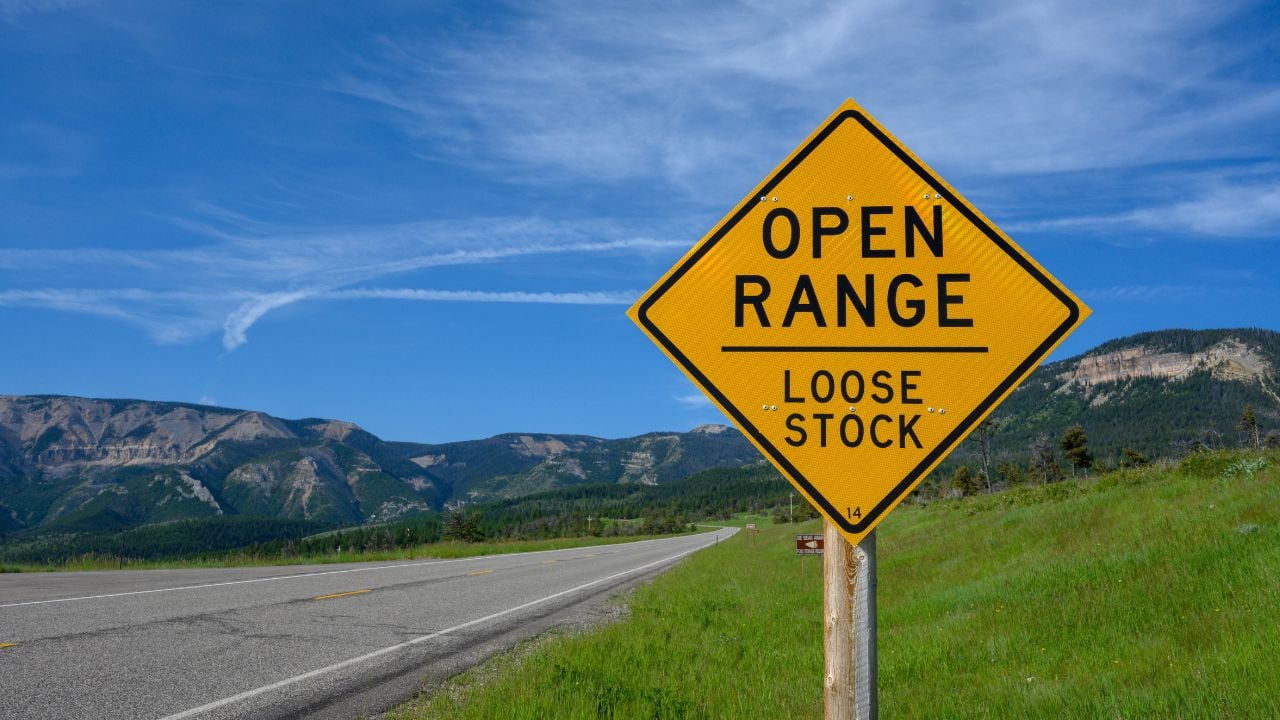
That’s the open range rule, and it goes back to 1893.
The Texas Supreme Court held that ranchers could let their animals roam across unfenced land, and that ruling still anchors every stray-cattle case decided today.
A 1999 case made the rule concrete.
A horse wandered onto an Upshur County farm-to-market road, and a driver’s car hit it.
In Gibbs v. Jackson, the Texas Supreme Court ruled the horse’s owner owed the driver nothing because Upshur County had never voted to close the range.
Not one dollar changed hands.
2. A County Vote to Flip the Bill
A Texas county can strip cattle owners of that open range shield with a single countywide vote.
The Agriculture Code has let voters in any county or precinct hold a local stock law election since 1876.
Once a majority says yes, cattle owners in that area have to keep their animals contained or answer for letting them roam.
Twenty-two counties can’t hold that cattle vote at all, no matter how residents feel.
Hardin, Jefferson, Wharton, and nineteen others are locked into open range for cattle by state law, permanently.
Even where a stock law passes, the bar for collecting is higher than a driver might expect.
A 2010 ruling, Rose v. Ben C. Hebert Heirs, found that owning the pasture a bull escaped from isn’t enough on its own.
It’s not always a blank check.
Ownership alone isn’t evidence.
3. A Stricter Rule on State Highways
Texas cattle answer to a stricter, separate rule wherever a state or U.S. highway comes into play.
Section 143.102 of the Agriculture Code bans knowingly letting a cow, bull, or steer wander onto a highway right-of-way.
Breaking it’s a Class C misdemeanor.
That word, knowingly, does all the work.
It’s not enough that the cow got out, or even that the fence was old.
Knowledge beats blame every time.
The owner has to have known the animal was likely to reach the highway and let it happen anyway.
That standard is what saved the rancher in the case that opened this article.
In Pruski v. Garcia, the Texas Supreme Court ruled the highway rule is the only rule that counts on a state highway, even in a county with a stock law.
The driver couldn’t prove the rancher knew her gate latch was likely to fail.
What “Knowingly Permitted” Means for Cattle Owners
For a Texas cattle owner, “knowingly permitted” means actual awareness of a problem, not bad luck.
If the same fence gap let cattle out twice last month and nobody patched it, a third escape can count as knowing.
If a storm snaps a fresh wire the same night a cow gets out, the owner almost certainly isn’t liable.
4. The Neighbor’s Job to Keep Cattle Out
The fence-out doctrine hands Texas cattle owners a second break.
In open range areas, a rancher never has to fence cattle in.
The job of keeping them out belongs to the neighbor who doesn’t want cattle around.
Texas rejected the old rule that made a livestock owner responsible for confining every animal.
A landowner who wants a garden or a crop free of cattle has to build a fence.
Skip that fence, and the risk sits with the landowner.
A court generally won’t award damages for whatever cattle eat or trample.
The math surprises many newcomers.
They expect the rancher to keep animals contained, the way it works in many other states.
Texas runs the opposite direction.
5. Knowing Neglect in Stock Law Counties
This rule about who pays doesn’t vanish once a county votes in a stock law.
Section 143.082 of the Agriculture Code makes it a Class C misdemeanor to knowingly permit cattle to run at large in a county that has adopted the local stock law.
That word, knowingly, carries the same weight here that it does on a state highway.
A fence that fails without warning still points to bad luck, not a violation.
The standard shifts once an owner has reason to know an animal keeps getting loose and does nothing about it.
Prosecutors and courts look at what the owner knew, not simply whether the fence held.
Knowledge decides it.
Psst! How much do you know about the wild history behind Texas cattle country? Take our quiz and see how many you can get right.
Quiz
Texas Cattle Country Trivia
Answer these questions on Texas ranching history and open range lore. We bet you can’t get them all right. Prove us wrong?
The word “maverick,” meaning an unbranded stray, comes from a Texas rancher named Samuel Maverick. What happened to his herd?
6. The Bill for Finding a Stray
Texas landowners who find a neighbor's cattle on their property face a separate set of rules that have nothing to do with fault.
State law calls a stray animal an estray, and a process follows for handling it.
Report it to the county sheriff as soon as reasonably possible.
There are no exceptions.
Wait past five days.
Under Section 142.006 of the Agriculture Code, the right to collect for feeding the animal and any damage it caused can disappear.
Report in time, though, and the owner has to pay every expense of caring for the animal, no argument.
The sheriff notifies the owner and gives them five days to reclaim the animal and settle up.
No owner ever turns up.
After 18 days, the county can sell the animal, covering costs first and the landowner's claim second.
Whatever's left after that goes to the original owner, if the county can find them.
Unclaimed money lands in the county's jury fund, where that owner still has 180 days to claim it.
9 Texas HOA Rules Owners Find Out About After They Buy
Texas has more homeowner associations than every state except California and Florida, covering an estimated 2.8 million houses.
Some of those rules protect a new owner more than they expect, and others don't show up until reality collides with the rulebook.
9 Texas HOA Rules Owners Find Out About After They Buy
9 Texas Small Towns Locals Protect From Tourist Guides
Ask what holds the cable steady on the Los Ebanos ferry, and the answer has nothing to do with a winch or a dock cleat. A Texas ebony tree, rooted on the riverbank for generations, does the job instead.
Some Texas towns couldn't handle a crowd even if they wanted the traffic, and locals would rather keep it that way.
