

4 Arguments Virginians Have About Which Half of the State Counts as the South

The U.S. Census Bureau counts every inch of Virginia as the South, from the Blue Ridge to the D.C. suburbs.
A Loudoun County commuter would beg to differ.
These are the arguments Virginians have about which half of the state counts as the South.
1. James River Line
Ask Virginians where the state’s South begins.
Many point straight at the James River.
Southside Virginia is the traditional name for the stretch south of the James, east of the Blue Ridge, and north of the North Carolina line.
The river isn’t a metaphor.
Lynchburg grew into a tobacco-processing hub for that stretch.
Three separate commercial tobacco belts once carved up the region’s farmland.
That tobacco economy never touched the rest of Virginia the same way.
Southside’s population kept shrinking into this decade, too.
Henry County lost more than 4% of its residents between 2020 and 2022, the second-steepest two-year drop of any Virginia locality.
The University of Virginia’s Weldon Cooper Center for Public Service tracked the decline.
Textile mills that replaced the old tobacco jobs closed too, in the wave of factory work that left the country after the North American Free Trade Agreement (NAFTA) took hold.
Many longtime Southside residents still use the name as shorthand for the Virginia that isn’t Northern Virginia.
The Census List Includes Some Surprising Neighbors
Virginia’s spot in the Census Bureau’s South Atlantic division also covers Delaware, Maryland, and Washington, D.C.
Few Virginians would call a Washington commuter suburb Southern, and that’s exactly why the James River argument stays a kitchen-table debate instead of a settled fact.
2. Northern Virginia, Not the South
Northern Virginia’s commuters fill the roads into Washington, D.C. by the tens of thousands every morning.
Arlington, Fairfax, and Loudoun counties anchor that commute.
Prince William County residents join from the outer edge of that same federal orbit.
The University of Virginia’s Cooper Center found that federal civilian jobs cluster heavily in the Northern Virginia and Hampton Roads regions.
Just three counties statewide hold nearly 40% of Virginia’s entire federal civilian workforce, per that same research.
That’s a company town.
Axios’s 2024 feature on Virginia’s identity fight raises the same doubt, pointing to Northern Virginia’s leftward political drift as one of the arguments against calling the whole state Southern.
Northern Virginia still swung 8 percentage points toward Trump between 2020 and 2024.
That shift was bigger than the rest of the state saw, according to the University of Virginia’s Center for Politics.
Even so, Northern Virginians make the weakest case for Virginia’s Southern side of any of the four regions.
3. Appalachian Claim
Twenty-five counties and eight independent cities in Virginia’s far southwest carry an official Appalachian Regional Commission designation.
That designation ties them to the same mountain identity as eastern Kentucky and the coalfields of West Virginia.
History split them apart.
Coal, not cotton, built towns like Wise and Norton.
That economic history sets the region apart from both the plantation belt to the east and the government paychecks up north.
The commission has backed the region with $3.4 million for local history, culture, and outdoor-recreation projects, one piece of the $15.4 million it’s investing across Virginia this fiscal year.
Southwest Virginia’s mountain communities line up culturally with Appalachia first and the rest of the Old Dominion second.
That order holds long before anyone gets to a Tidewater plantation or a Northern Virginia office park.
The Appalachian Regional Commission‘s map runs from southern New York to northern Mississippi.
An Appalachian identity was never a Southern identity to begin with.
Claiming it pulls Southwest Virginia’s counties out of the state’s Southern argument entirely, not into a stronger version of it.
Psst! How well do you know the lines that divide Virginia? Take our quiz and see how many you can get right.
Quiz
Virginia’s Invisible Borders
Answer these questions on the borders, splits, and old rivalries that carve up Virginia. We bet you can’t get them all right. Prove us wrong?
Which of Virginia’s borders does the famous Mason-Dixon Line touch?
4. Accent Test
Virginia Tech linguist Abby Walker has documented a Tidewater accent in the east and a still-resilient Appalachian accent in the southwest.
Both are distinct enough that outsiders can often place a speaker's home region.
You can hear the border.
Richmond and the Piedmont carry Southern-shifted vowels, the kind linguists call "o-fronting."
Northern Virginia's speech has flattened toward a generic Mid-Atlantic sound after decades of newcomers.
City dwellers across Virginia tend to carry less pronounced accents than their rural neighbors, Walker's research shows.
Walker ties that pattern to steady migration into the state's biggest metro areas.
Virginians argue over accents out loud more than they argue over almost anything else in this debate.
Ask a Virginian to say "house" or "about," and many can guess whether they're from south of the James, the mountains, or a Metro stop in Arlington.
Southern Virginia Rebrand
Virginia's tourism marketers have weighed in on this fight too.
Longtime state senator Frank Ruff pushed the commonwealth to rename the Southside region "Southern Virginia."
Virginia Tourism rolled out a full marketing plan under that new name by 2011.
He argued the older name sounded too much like Southside Chicago or Southside Philadelphia on a map nobody wanted to visit.
Ruff pointed to Lake Gaston's freshwater fishing and water sports as exactly the kind of asset the old label buried.
Ruff calls the rebrand a success, pointing to the wine trails, heritage tourism routes, and rail-to-trail projects that have grown under the "Southern" name since.
Treating "Southern" as an asset instead of a label to avoid is the whole bet behind the rename.
How the State Votes
The four-way argument above shows up at Virginia's ballot box too, split almost county for county.
Fairfax County alone gave Kamala Harris about 366,000 votes to Donald Trump's roughly 173,000 in 2024, according to the Fairfax Times.
Wise County, deep in Southwest Virginia's coalfields, went the opposite direction that same night.
It gave Trump 81% of its vote to Harris's 18%, per results compiled by a Roanoke television station (WSLS).
The results split hard.
Statewide, Harris still carried Virginia, winning 51.83% to Trump's 46.05%, according to the Virginia Public Access Project.
That statewide number needed Fairfax's nearly 192,000-vote margin to outweigh Wise and the dozens of counties that voted like it.
9 Virginia Small Towns That Feel Frozen in the 1950s
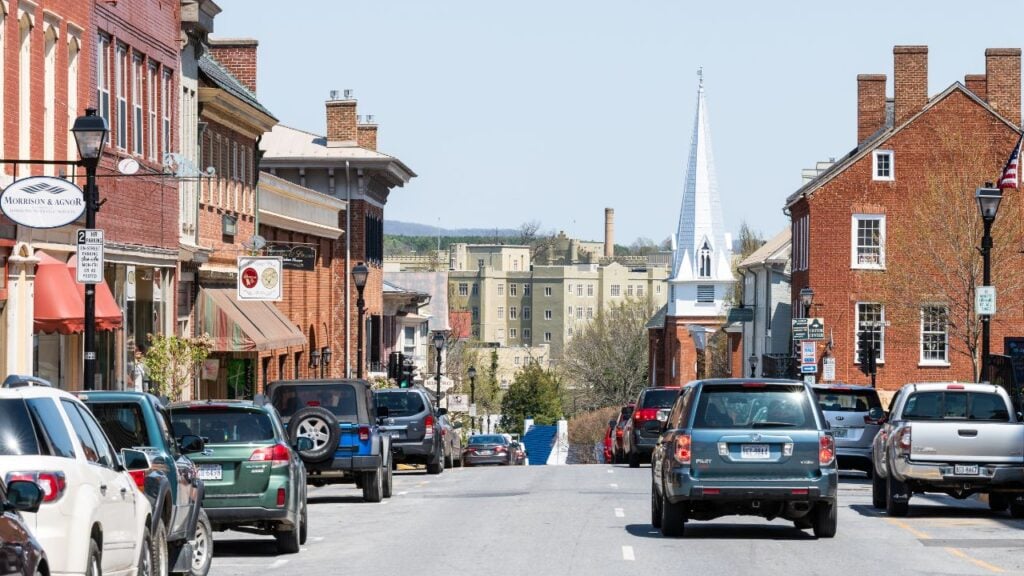
One Virginia drugstore has poured milkshakes from the same marble counter and the same five stools since before Elvis Presley ever played a Virginia show.
A handful of Virginia's small towns still run daily life almost exactly the way they did seventy years ago, soda fountain included.
9 Virginia Small Towns That Feel Frozen in the 1950s
9 Virginia Backroads Locals Take to Skip the Interstate
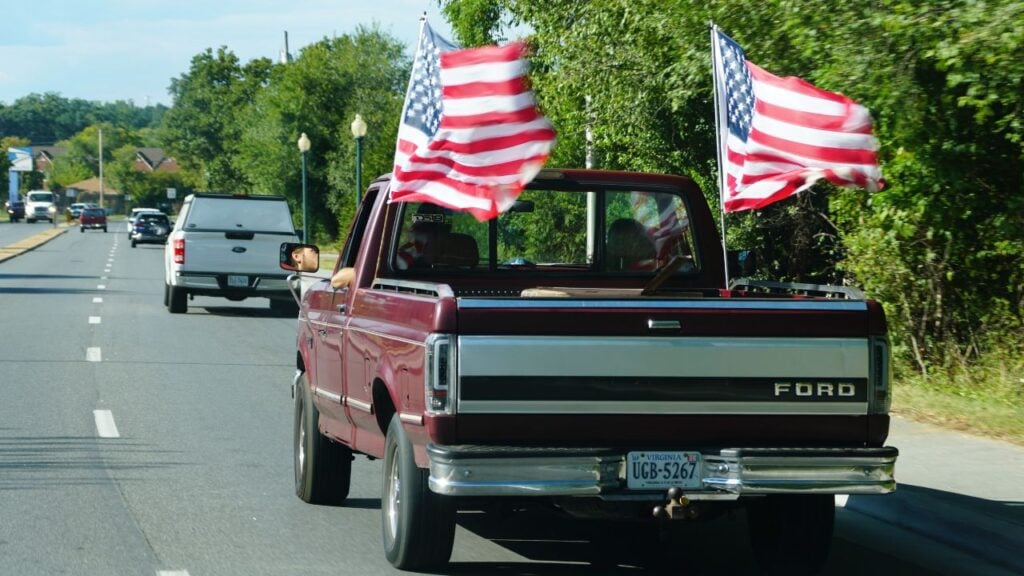
Richmond drivers lost 40 hours to rush-hour traffic in 2025, nine more hours than the year before.
Many Virginians never spend a single one of those hours sitting in it because they know which back roads run parallel to the interstate the whole way.
