
9 Virginia Small Towns That Feel Frozen in the 1950s

A soda fountain in one Virginia drugstore has poured shakes from the same marble counter and the same five stools since before Elvis Presley ever played a single Virginia show.
It’s one of several Virginia small-town fixtures that still run exactly the way they did in the 1950s.
These are the Virginia small towns where the 1950s never left.
1. Lexington
Lexington’s Friday-night movie tradition hasn’t changed hands the way many small-town businesses eventually do.
Hull’s Drive-In opened on Route 11 just north of town in August 1950, back when it was still called the Lee Drive-In.
Sebert Hull bought the place and put his own name on the marquee in 1957.
The theater went dark for two summers after Hull passed away in the late 1990s.
A group of locals who called themselves Hull’s Angels signed a lease with an option to buy, then raised close to $75,000 from around 600 neighbors to get the projector running again.
That rescue is why Hull’s now runs as one of only two drive-in theaters left in the entire country owned and operated as a nonprofit.
No chain, no shareholders.
Just a screen, a gravel field, and 319 parking spaces filling up Friday through Sunday, March through October.
2. New Market
New Market’s Southern Kitchen opened around 1955 just off Route 11.
The building still looks almost exactly the way it did that year.
Its neon sign still buzzes over the parking lot after dark.
Inside, the counters and booths still wear their original boomerang-patterned laminate, and the floor is the same muted linoleum from opening week.
Regulars order the fried chicken without looking at a menu.
Some drive an hour just for the peanut soup.
The exterior and interior have changed little since opening day.
The people running Southern Kitchen today show no sign of wanting that to change.
That’s not a marketing line.
It’s the whole business plan.
3. Stephens City
Stephens City still fills a gravel lot with cars every warm-weather weekend, the same way it has since June 1956.
The Historic Route 11 Drive-In opened that month with one big screen that could hold 240 cars.
A second screen went up in 1989 for another 144 cars, but the original speaker poles along the front rows never left.
Drivers can still hook a metal speaker onto the window or just tune the car radio to the theater’s frequency instead.
Digital projectors replaced the old reels in 2013, paid for partly through donations from the same families who keep showing up.
New owners took the theater over in 2026 and had to give it a fresh name after losing the rights to the old one.
The double feature never stopped, though.
Neither did the cars.
4. Staunton
Staunton’s Wright’s Dairy-Rite has served customers from the same curbside stand since March 1952, when Forester and Alka Wright opened it as a frozen custard stand.
The Wrights kept building onto it right through the rest of the decade.
They added hot food to the menu by the mid-1950s, then kept expanding the building until Wright’s had grown into a full-service drive-in restaurant by the time the decade ended.
Diners today order the same way regulars did back then, through a speaker or a phone at the table, with a carhop bringing the food out to the car.
Founders’ descendants James Cash and Shirley Wright McKee still run the place.
The only major change came in 1990, when they added an indoor dining room.
Everything else stayed the same.
5. South Boston
South Boston Speedway’s oval hasn’t moved an inch since it opened on August 10, 1957.
Its corners still bank at 12 degrees, the same angle it opened with.
The track runs about a dozen race nights a year.
Stock car racing’s biggest series (NASCAR) first raced there in 1960, and it kept coming back for more than a decade.
Richard Petty alone won five of those races before the series ran its last one there in 1971.
The big series left.
South Boston never needed it to keep going.
Local late-model stock cars fill the grandstands instead.
The track still runs an Independence Day weekend race as one of its biggest nights of the year.
Nobody in Halifax County calls a Saturday night at the track nostalgic.
They just call it Saturday night.
6. Remington
Remington’s drugstore still pours milkshakes from a counter installed generations before many of its regulars were even born.
Remington Drug Co.’s marble soda fountain and its five red stools came out of a Culpeper pharmacy renovation back in the 1930s, salvaged whole and set up on Main Street.
The counter was already old news by the time Elvis played his first Virginia show in 1955.
It’s still pouring shakes, malts, and sundaes today, Monday through Friday, from a rotating list of eight flavors.
Nothing moved.
Same marble, same five stools, same spot by the door.
7. Marion
Marion keeps two pieces of the 1950s running side by side, a movie screen and a hot dog stand.
Park Place Drive-In was originally constructed in 1954.
USA Today ranked it the sixth-best drive-in theater in the country in May 2025.
Its own site confirms the screen is running again for the 2026 season.
A few miles down Lee Highway, the Dip Dog Stand has served its skinny, deep-fried corn dogs since 1957.
Its sign still reads “Home of the Original Dip Dog.”
Regulars call it a Smyth County icon.
They still line up at the same stand today.
Both still run every year.
8. Abingdon
Abingdon opened the Moonlite Drive-In on June 9, 1949, with a screening of Down to Earth starring Rita Hayworth.
The screen kept running without a single break through the rest of the 1950s.
That unbroken run is why the Virginia Landmarks Register and the National Register of Historic Places recognized the Moonlite in 2007.
The drive-in finally closed in 2013, more than sixty years after that first Rita Hayworth screening.
New owners bought the property in 2024.
A 15-month renovation followed.
The Moonlite reopened for the 2025 season.
Its 2026 season officially opened on March 20.
The original screen tower never came down.
Locals never left either.
9. Front Royal
Bing Crosby brought the world premiere of his film Riding High to Front Royal on April 1, 1950.
The screening worked as a charity fundraiser: It raised $6,500 to build a new athletic field named in his honor.
More than 20,000 spectators packed the town that day, more than triple Front Royal’s population at the time.
The day added a parade, a key-to-the-city ceremony, and appearances from Virginia’s governor and both U.S. senators.
Nobody stayed home that day.
Bing Crosby Stadium still hosts games today.
It’s the home field for the Front Royal Cardinals, a team in the Valley Baseball League, founded in 1984.
Buchanan
Buchanan gave its Main Street movie house a full Moderne renovation in 1949.
The work is still standing almost exactly as the crews left it.
The Buchanan Theatre first opened in 1917 as the Star Theatre, then took its current name in 1931.
The big change came after World War II, when owners gave the building a Moderne face-lift: A triangular neon marquee, a knotty-pine paneled lobby, and a Streamline-style concession stand.
Floods forced the theater to close in 1985.
It sat empty for 14 years.
New owners reopened it in 2002 and kept every one of those postwar details in place.
The Buchanan Theatre earned a spot on the National Register of Historic Places in 2019, as part of the town’s downtown historic district.
What Buchanan’s Historic Listing Does
Buchanan’s 1949 movie-house renovation earned its spot on the National Register of Historic Places in 2019, and many visitors assume that freezes a building exactly as it looked the day the paperwork went through.
It doesn’t work that way.
A National Register listing mainly opens the door to tax credits for restoration work and flags a building as historically significant.
It doesn’t stop a private owner from repainting, remodeling, or even tearing the place down, unless local zoning adds its own rules on top.
The knotty-pine lobby and the neon marquee survived because Buchanan’s owners wanted them to, not because a federal listing forced their hand.
Chincoteague
Chincoteague held onto its only movie screen even as many small towns lost theirs.
The Island Theatre has run continuously on that same screen since 1945.
The name flipped to Island Roxy sometime in the 1980s, then switched back to Island Theatre in 2013.
Its biggest night came in 1961, when 20th Century Fox premiered Misty right there on the island.
The pony playing Misty walked down the aisle before the screening started.
Chincoteague pressed her hoofprints into the sidewalk out front.
The theater still screens the film free once a year.
The town hasn’t forgotten it.
Psst! How much do you know about Virginia’s small-town history? Take our quiz and see how many you can get right.
Quiz
Virginia Small-Town IQ
Answer these questions on Virginia’s small-town and 1950s history. We bet you can’t get them all right. Prove us wrong?
In 1933, what could a Depression-era visitor trade for a ticket at Abingdon’s Barter Theatre instead of paying 35 cents in cash?
Wytheville
Wytheville's Main Street hot dog stand hasn't budged from its spot since the 1920s.
Skeeter's has served hot dogs from the same walk-up stand for about a century now.
Regulars will tell you the owners know better than to touch a thing.
The counter still seats customers on the same bar stools, next to shelves of vintage Coca-Cola bottles nobody's ever cleared out.
The building itself carries its own piece of history.
Its upper floor is where Edith Bolling Wilson, who went on to become First Lady, was born.
Steam rises off the buns before the napkin even hits the counter.
Nobody rushes a Skeeter's order.
The line does the job of a waiting room, and everybody in it already knows exactly what they're ordering before they reach the window.
10 Things Virginia Grandparents Did That Their Kids Would Never Allow Now
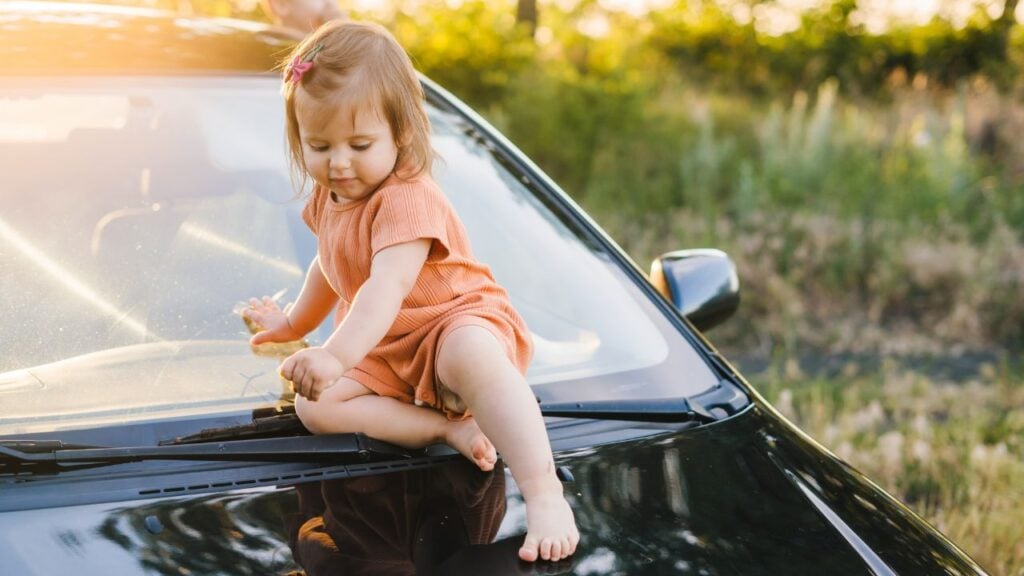
Nearly half of American kids walked or biked to school alone in 1969, and by 2009 that number had dropped to just 13%.
Letting kids roam the neighborhood unsupervised was just the start of what Virginia's grandparent generation got away with.
10 Things Virginia Grandparents Did That Their Kids Would Never Allow Now
7 Kroger Perks Virginia Shoppers Over 60 Keep Missing

Virginia's Kroger stores ended their nickel-off-every-dollar senior discount back in 2017.
What replaced it doesn't work anything like a Tuesday-only discount, and many shoppers over 60 still haven't caught on.
