

6 Contract Terms Californians Sign Without Reading, and What You Give Up

A California couple’s fight over $30.22 in sales tax on a free cell phone reached the U.S. Supreme Court in 2011.
They lost.
These are the contract terms Californians sign without reading, and what you give up.
Note: This is general information, not legal advice. Contract terms and consumer-protection rules are subject to change.
1. Automatic-Renewal Clauses
Automatic-renewal clauses turn one click into a bill that repeats until you catch it.
California tightened the rules on these under Assembly Bill 2863 (AB 2863), which took effect statewide in July 2025.
A company now has to let you cancel through the same channel you used to sign up, so an online signup can’t force a phone call to get out.
It also has to send an annual reminder naming the price and how to cancel, and give you 7 to 30 days’ notice before a renewal price jumps.
Many Californians never read the renewal date at all.
By then it’s too late.
The charge lands first, and the deadline that would have let them out for free is already behind them.
2. Non-Refundable Deposit Clauses
Sign a non-refundable deposit clause, and you hand over money before a company lifts a finger.
On a home-improvement job, that number has an actual ceiling: A contractor can’t collect more than $1,000 or 10% of the contract price up front, whichever is less.
A contract asking for more than that before the crew shows up is already breaking state law.
Outside home improvement, there’s no such ceiling.
Nothing keeps it from rising.
A photographer, a caterer, or a moving company can print “non-refundable” on a deposit worth thousands of dollars.
Unless a cancellation right applies to that category, the signer has agreed to lose every cent of it if plans change.
3. Liquidated Damages and Early-Termination Fees
Liquidated damages clauses fix your penalty for backing out of a deal on the day you sign, not the day you leave.
In a personal or household contract, Civil Code 1671 voids one of these flat fees unless two things are both true.
Figuring out the actual damage had to be hard to pin down when you signed, and the number had to be a fair stand-in for it.
A gym charging a flat $300 to walk away from a $40 add-on has a hard time meeting that bar.
Almost nobody raises it.
Many people see the flat early-termination fee, pay it, and give up the one chance they had to make the business prove the number was ever fair.
Psst! How much do you know about the fine print you’ve already signed? Take our myth-or-fact challenge and see how many you get right.
4. Arbitration and Jury-Trial Waiver Clauses
Arbitration and jury-trial waiver clauses take away your courtroom option before any dispute ever arises.
That’s the clause behind the $30.22 Supreme Court case from the intro.
The Concepcions wanted to sue AT&T Mobility as part of a class action over that sales tax, but their contract routed every dispute to individual arbitration instead.
The Supreme Court sided with AT&T.
That settled it.
The same kind of clause stands nationwide today, California included.
Sign an arbitration clause, and you lose the option to sue as a group, even when thousands of other customers have the exact same complaint.
Each person is stuck arguing it alone, in front of a private arbitrator instead of a jury.
5. Liability Waiver Clauses
Sign a liability waiver clause, and you trade your right to sue over an ordinary accident.
In return, you get to walk onto a trampoline court or a climbing wall in the first place.
California courts will uphold a clearly written release for an everyday mishap, so signing one forfeits your right to sue over a routine fall or strain.
There’s a hard limit, though.
Civil Code 1668 voids any clause that tries to excuse a business from its fraud, willful injury, or violation of the law, no matter how the waiver is worded.
A gym can walk away from a routine sprained-ankle claim, but California courts have gone further, refusing to let a liability waiver cover gross negligence either.
6. Venue and Choice-of-Law Clauses
Sign a venue and choice-of-law clause, and long before any dispute exists, you’ve settled whose courthouse and whose state law you’re stuck with.
Many national services print a line sending every claim to their home state’s courts under that state’s law, not California’s.
Sign that, and it can mean losing access to state protections like the Consumers Legal Remedies Act, the law that gives Californians a class-action path against unfair business practices.
Courts don’t automatically honor every one of these clauses.
Someone has to object first.
In a 2001 ruling, a California appeals court refused to enforce a Virginia venue clause from America Online (AOL) against California subscribers.
Enforcing it would have stripped away rights state law doesn’t let a contract waive.
A signer still has to raise that fight, though, and many never know the option exists.
Which Contracts Carry a Three-Day Right to Cancel
California’s right to cancel doesn’t ride along with every contract you sign.
It only shows up on a short list.
A sales pitch made at your door, or somewhere other than the seller’s regular place of business, carries it, and so does a home-improvement contract signed at your kitchen table.
Weight-loss and dating-service contracts carry it too, among a few other named categories.
A health-studio membership gets a longer window instead, a minimum of five business days under a separate statute, so it was never part of this three-day list to begin with.
Sign a lease, a phone plan, or a furniture purchase inside a store, and no statewide cooling-off period exists for it at all.
Nobody plans for that.
That’s the gap almost nobody expects until they go looking for an exit that isn’t there.
The Clock on California’s Right to Cancel
California counts its cancellation windows in business days, not calendar days.
A Friday-afternoon signature effectively buys until the following Wednesday to change your mind, since Saturdays, Sundays, and holidays don’t count toward the total.
Californians 65 and older get five business days instead of three on a home-solicitation contract, and a health-studio membership carries a five-business-day window no matter the signer’s age.
Canceling has to happen in writing, addressed to the seller, and a phone call or a verbal heads-up doesn’t satisfy it.
When Courts Undo a Clause
California courts don’t treat a signature as the end of the conversation.
Civil Code 1670.5 lets a judge throw out an entire clause, or trim just the worst part of it, when the clause was unconscionable the moment you signed it.
That takes two things at once.
There was little or no chance to negotiate the fine print, and the term itself was so lopsided it doesn’t pass a plain read.
Neither one alone is enough.
A $2,000 early-termination fee tacked onto a $40-a-month add-on is the kind of mismatch a court has room to knock down under that standard.
Raising it means saying so in writing, and early, rather than hoping a customer-service line notices on its own.
9 California Wildfire Insurance Rules Homeowners Learn Too Late
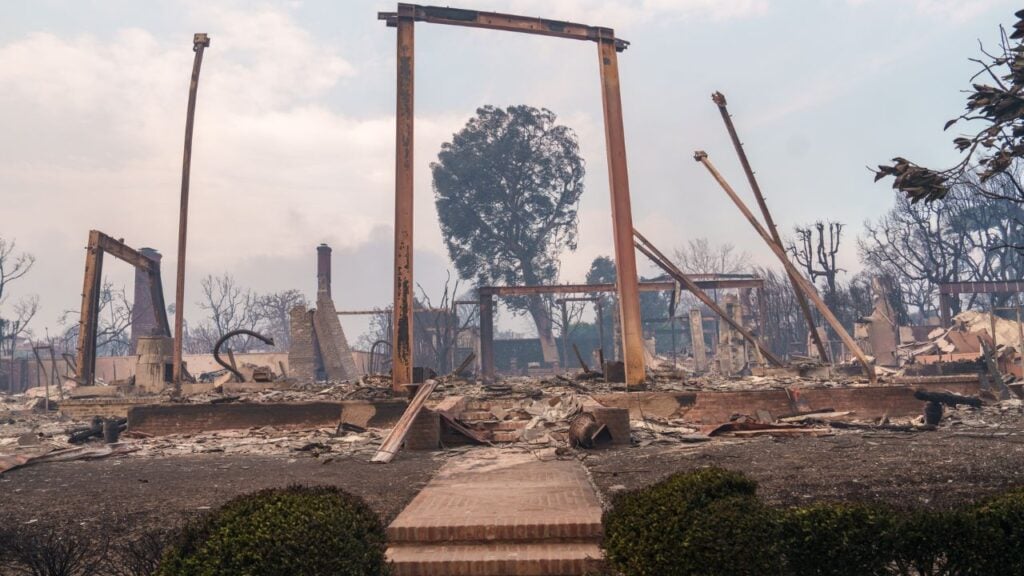
A homeowners policy in California doesn’t automatically mean full wildfire protection, and many homeowners assume it does right up until they file a claim.
California’s FAIR Plan (Fair Access to Insurance Requirements), the coverage backstop many high-risk homeowners end up on, insures against fire and almost nothing else.
9 California Wildfire Insurance Rules Homeowners Learn Too Late
9 Everyday Phrases That Drive Californians Up the Wall

California is home to about 39.5 million people spread across a coastline, a desert, and mountains that see snow every winter.
Many out-of-staters still picture one long beach town, and a short list of offhand comments never fails to make Californians grit their teeth.
