
7 Subway Habits That Mark Someone as a New York City Visitor From the Suburbs

The MTA charges $3 for a single subway ride now, a dime more than before January’s increase.
The fare isn’t what gives anyone away.
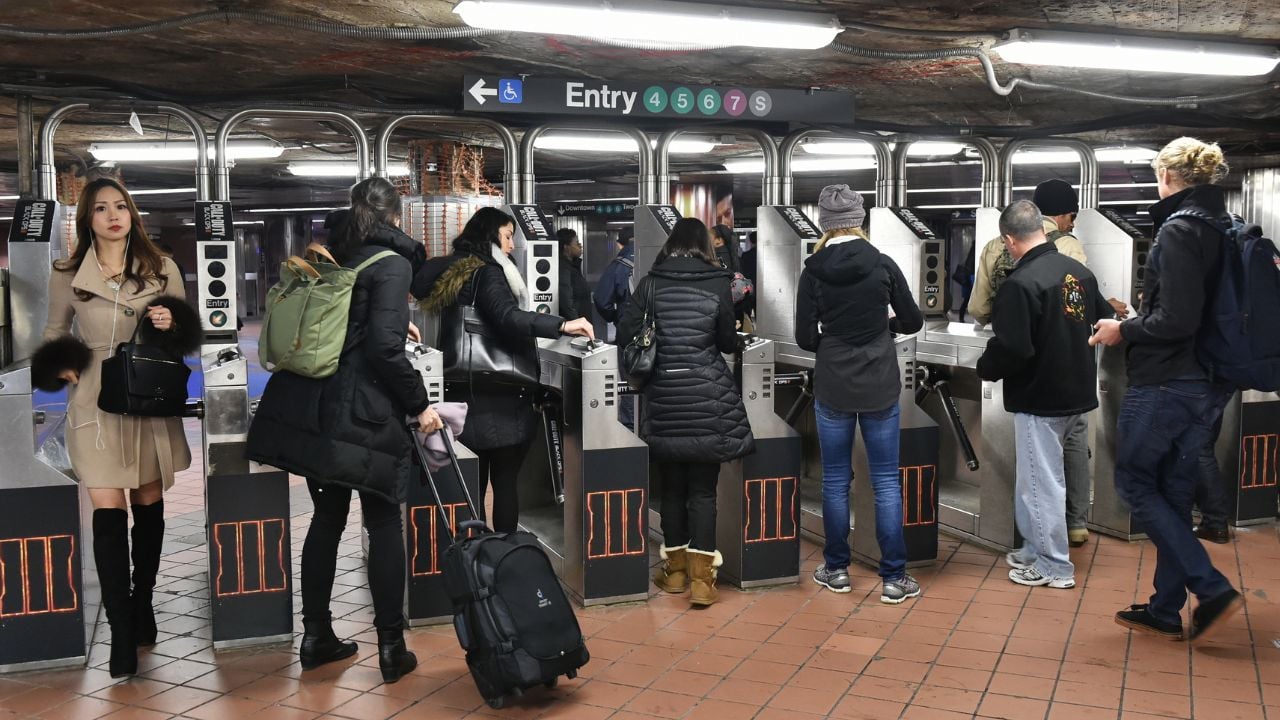
What gives them away happens at the turnstile, in the half second before the tap, and locals clock it without looking up.
These are the subway habits that mark someone as a New York City visitor from the suburbs.
1. Switching Cards Between Rides
New York City’s subway now runs on whichever card or device a rider taps, and OMNY, the MTA’s tap-to-pay fare system, treats each one as a separate account.
A commuter who taps in with a debit card in the morning and taps a phone on the way home starts a fresh record each time.
The MTA’s transfer rule is plain: Use the same card or device on both legs of a trip within two hours.
Switch cards mid-trip, and OMNY charges a fresh fare instead of granting the free transfer.
Nobody warns you.
A longtime New York City resident settles on one card and stops thinking about it.
A suburban rider juggling a wallet card for work and a phone for everything else keeps breaking that transfer without noticing.
2. Tapping Twice for the Family
New York City’s OMNY system lets a rider tap once for a companion.
The same card or phone can tap again for up to three more people on a single trip.
Each extra tap counts as a full fare, not a shared ride.
The catch is timing.
A card or phone tapped for the very first time that day needs about a minute before OMNY will accept a second tap from it.
Visiting from the suburbs, your transit card probably comes out of the wallet once or twice a month, if that.
That spacing is exactly what triggers the one-minute pause.
A spouse or a kid waits at the reader while the light stays red.
That one-minute pause catches any card that sits unused, whether it belongs to a weekend visitor or to a kid whose parent just handed over the family card.
3. Hunting for a Weekly Pass
New York City commuters used to buy a paper Unlimited MetroCard for the work week, and OMNY got rid of that whole product.
The base subway fare runs $3 a ride now, a dime more than before a January increase the MTA phased in.
There’s no pass counter.
A suburban rider standing at a vending machine, tapping through the touchscreen for a weekly pass, doesn’t find one because it isn’t there anymore.
OMNY caps the total automatically instead, and the math behind that cap is worth knowing before a suburban rider assumes they’re being overcharged.
The Math Behind OMNY’s Weekly Cap
OMNY charges no more than $35 for New York City subway and local bus rides in any 7-day period, or $17.50 for a registered reduced-fare rider.
In practice, that means paying for around a dozen rides in a week and riding free the rest of the way.
Free transfers don’t count toward that total.
The cap only tracks automatically when a rider uses the same card or device for all seven days.
4. Spending Down an Old MetroCard
New York City stopped selling MetroCards for good on Dec. 31, 2025, though existing balances still ride the subway for now.
The MTA hasn’t set a final cutoff date for accepting them, so an old card with money loaded on it still works at the turnstile.
Nobody’s rushing that deadline.
Many New York City residents already switched to a tap months ago.
Still got $20 loaded on a MetroCard from last spring?
A suburban commuter who only rides the subway twice a month is exactly the rider still spending that balance down, one trip at a time.
MetroCard balances stay good for two years past the card’s printed expiration date before the MTA reimburses whatever’s left.
5. Checking the App at the Turnstile
OMNY’s weekly cap runs in the background on every New York City subway rider’s card, with no receipt and no running total posted anywhere on the turnstile.
A rider has to open the OMNY app or log into an online account to see trip history and track progress toward the $35 cutoff.
Nothing on the card shows this history.
Phone out, thumb on the app, standing mid-platform: That’s a suburban rider checking whether this week already crossed the free threshold.
A New York City commuter riding the same five days every week already knows the answer by feel.
6. Treating a Day Like One Long Transfer
New York City’s free subway transfer holds for exactly two hours after the first tap, not for however long an outing runs, per the MTA’s fare rules.
What happens when a doctor’s appointment turns into lunch, then a second subway ride to a museum, all in one day?
A suburban commuter treats the whole outing like one continuous trip in their head.
OMNY still charges a second fare.
Three hours between two taps triggers that fresh charge automatically, with no warning and no receipt.
7. Tapping Again at a Free Transfer
Many line changes inside a New York City subway station need no second tap at all, since a rider never leaves the paid area.
A suburban visitor unsure which rule applies walks up to a reader at a transfer point and taps anyway, just to be safe.
OMNY already logged the free transfer.
The MTA names only a short list of station pairs that require a fresh tap to connect for free.
Two of them are the Lexington Avenue stations at 59th and 63rd Street.
Everywhere else, walking through is the whole transfer.
Psst! How much do you know about the history behind New York City’s subway? Take our quiz and see how many you can get right.
Quiz
NYC Subway History IQ
Answer these questions on how the subway got its start. We bet you can’t get them all right. Prove us wrong?
New York City’s subway didn’t start as one system. How many separate companies ran it in the early 1900s?
The Scale of the Suburban Commute
New York City's two commuter railroads move a serious share of the suburban ridership headed for its subway system every weekday.
The Long Island Rail Road and Metro-North Railroad set a single-day combined ridership record of 540,688 riders on May 20, 2025, according to the governor's office.
That's a lot of transfers.
A meaningful share of those riders continues on to the subway once they reach Penn Station, Grand Central, or an outer-borough terminal.
Every one of them taps through the same OMNY readers as a weekend visitor, on the same $3 fare.
7 New York City Sidewalk Rules Homeowners Get Fined For
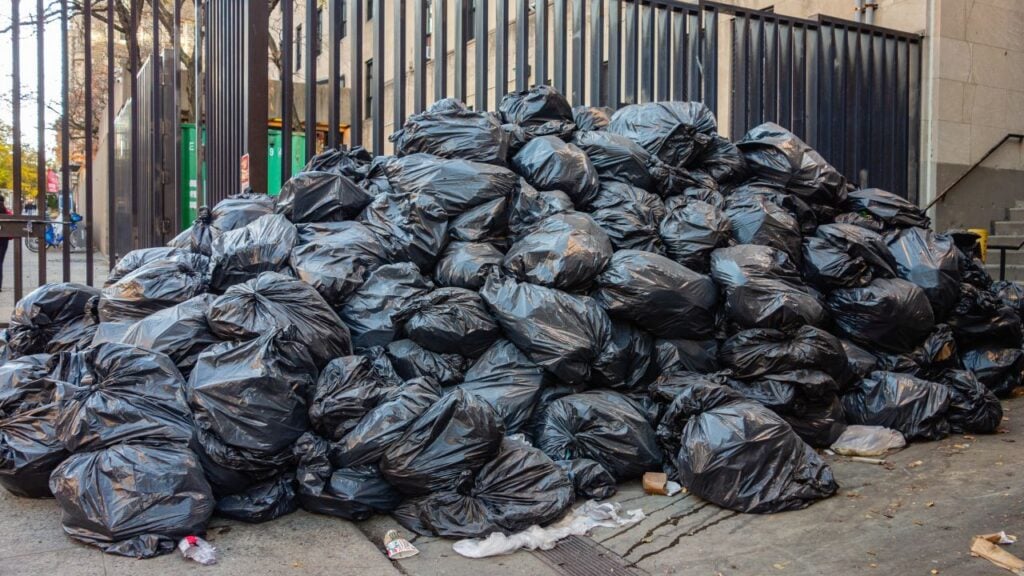
Two different New York City agencies patrol the sidewalk outside a homeowner's front door, and neither one checks with the other before mailing a ticket.
The Department of Sanitation watches the snow and the trash, while the Department of Transportation covers everything else, right down to a fence line.
7 New York City Sidewalk Rules Homeowners Get Fined For
9 New York State Fair Habits That Give Away a First-Timer

The Great New York State Fair packs close to a million people through the Onondaga County fairgrounds every year, and the newcomers stand out fast.
Regulars move through that crowd like they've done it dozens of times because many of them have.
