
8 Old Household Rules Florida’s Gen Z Can’t Believe Were Normal

Florida handed a 16-year-old a full, unrestricted driver’s license for decades, with no supervised hours, no curfew and no passenger limit.
Nobody thought twice about it.
That ended in 1996, when Florida became the first state in the country to require a graduated license.
It wasn’t the only rule that had to go.
These are the old household rules Florida’s Gen Z can’t believe were normal.
Note: This is general information, not legal advice. Florida’s truck-bed, bicycle helmet, and driver’s license laws are subject to change, so confirm the current requirements with the Florida Department of Highway Safety and Motor Vehicles.
1. No Car Seat Required
Car seats weren’t required for a baby’s ride home from the hospital anywhere in the country until the late 1970s.
Tennessee passed the nation’s first child-restraint law in 1977, after a Murfreesboro pediatrician convinced state lawmakers that a seatbelt built for an adult does nothing for an infant.
Every other state followed.
By 1985, all 50 states had adopted some version of the law.
The new laws mostly covered babies and toddlers.
Older kids still rode loose in the back seat, seatbelt or not, and nobody thought twice about it.
2. Riding Loose in the Truck Bed
Riding in the open bed of a pickup truck, even at highway speed, broke no Florida law for a kid of any age until 2006.
A statute added that year finally barred a minor from riding in an open truck bed on a limited-access highway, unless the truck had seating and restraints built in.
Before that, anything went.
Kids rode back there to the beach, to a Little League game, or to a grandparent’s house down a two-lane road.
The ride was completely legal the entire way.
Florida still lets an adult ride in a truck bed under many circumstances.
A county can even vote to exempt itself from the rule for minors.
3. No Helmet on the Bike
A bike helmet wasn’t required for a Florida kid of any age before January 1, 1997, when the state’s helmet law finally took effect.
Researchers at the University of South Florida’s College of Public Health measured helmet use in Hillsborough County at about 3%.
Not exactly reassuring.
Almost nobody wore one.
A kid could ride to a friend’s house down a busy county road with nothing but hair between their head and the pavement.
No officer could do a thing about it.
What Florida’s Helmet Law Covers Today
Florida’s bicycle helmet law only applies to riders under 16, so an adult can legally ride bare-headed anywhere in the state.
Florida’s courts dismiss a first violation once the rider’s family shows proof of buying a helmet.
The helmet also has to meet a federal safety standard, not just look the part.
4. Walking to School Alone
Walking to school alone was a normal household rule for American kids in elementary school, not the exception.
Six-year-olds walked several blocks to school with a sibling or a neighbor, crossing a couple of intersections along the way with nobody trailing behind in a car.
A federal household travel survey found that 48% of kids ages five to fourteen walked or biked to school in 1969.
That share had fallen to 13% by 2009.
Nobody sounded an alarm.
Psst! How much do you know about the household gadgets that shaped decades of American family life? Take our quiz and see how many you can get right.
Quiz
Old-School Household IQ
Answer these questions on the gadgets and products that shaped decades of American households. We bet you can’t get them all right. Prove us wrong?
The first countertop microwave oven for home kitchens went on sale in 1967 for about how much?
5. Lawn Darts in the Yard
Lawn darts were common enough in American backyards that the U.S. Consumer Product Safety Commission eventually banned them outright for home use in 1988.
A backyard game of tossing foot-long metal spikes at a plastic ring, with younger siblings running around nearby and no adult watching, raised zero red flags in yard after yard.
The heavy, metal-tipped darts had been tied to three deaths since 1970 and about 700 emergency-room injuries a year, mostly among kids, before the ban finally took effect.
Parents handed them out anyway.
6. The Clean-Plate Rule, No Excuses
Finishing every bite on your plate wasn't just a house rule.
That habit traced back to a government campaign from World War II.
The Clean Plate Club started in 1941 at one Navy officer's kitchen table in Illinois.
The U.S. Department of Agriculture took the program nationwide by 1943 to cut down on wasted food.
Wasting food felt unpatriotic.
Parents who grew up pledging to finish their milk and vegetables carried that same expectation to their kids' dinner tables for decades.
The war that started it had ended long before.
7. Full License at 16
A full, unrestricted driver's license used to mean exactly that in Florida.
No curfew, no passenger limit, and no minimum number of supervised hours stood between a 16-year-old and driving alone.
Not anymore.
That changed in 1996, when Florida became the first state in the country to adopt a graduated license program.
Every state has one now.
8. Home Alone After School
A house key on a string around the neck was standard gear for millions of American kids once dual-income households became common.
Nobody questioned it.
The U.S. Census Bureau counted about 2.1 million children ages five to thirteen coming home to an empty house in 1984, about 7% of that age group nationwide.
Almost one in ten regularly went three hours or more without an adult in the house.
Kids let themselves in, locked the door behind them, and knew not to answer it for anyone, all without a phone to check in if something went wrong.
Why the Rules Finally Changed
That old household rule didn't survive once researchers started counting crashes.
A federally funded review found that graduated licensing programs reduced fatal crashes among 16- and 17-year-old drivers by 8% to 14%.
Not a small drop.
Nighttime driving restrictions alone cut fatal nighttime crashes by about 10%.
A 16-year-old in 1985 went from a written test straight to a full license, with none of today's staged restrictions in between.
9 Florida Flea Market Mistakes That Mark You as a First-Timer
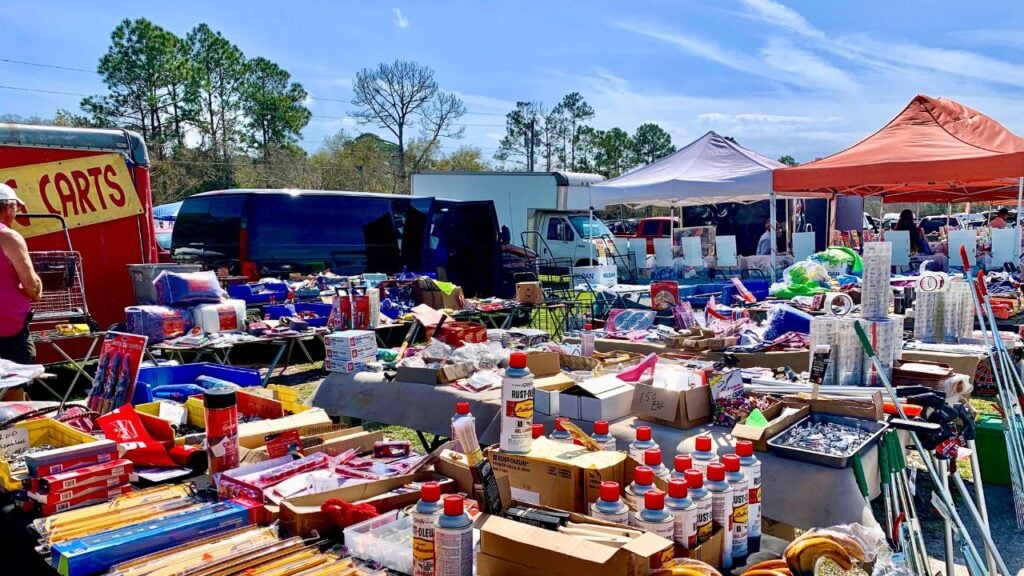
One of Florida's biggest weekly flea markets packs a week's worth of shopping into one single morning at the Webster market.
Show up on the wrong day, and a first-timer finds an empty gravel lot instead of the bargains everyone talks about.
9 Florida Flea Market Mistakes That Mark You as a First-Timer
9 Bad Driving Habits That Give Away a Florida Transplant
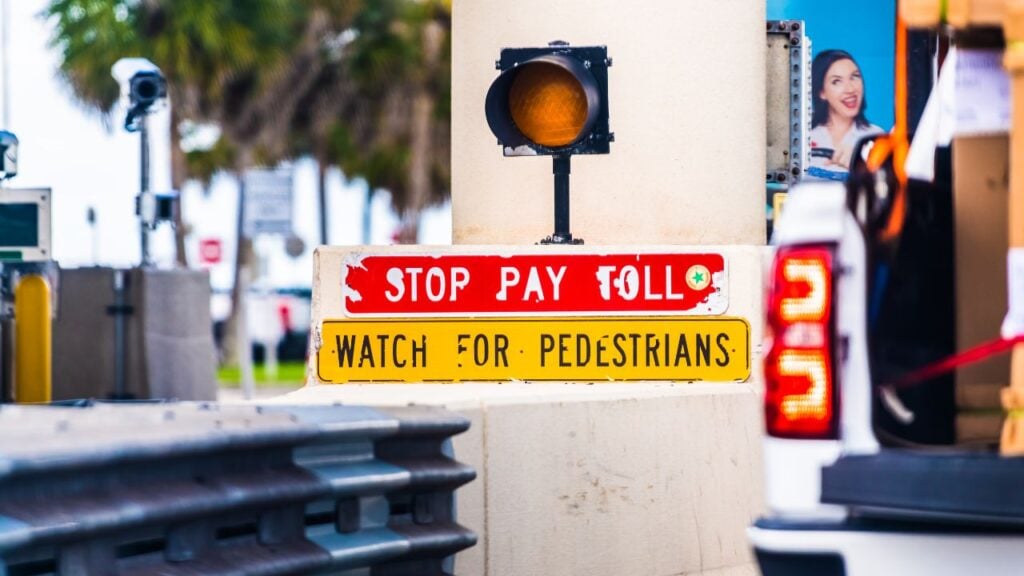
Florida can fine a driver up to $500 for a habit that many newcomers never realize is even illegal.
Every state teaches a different version of the rules of the road, and Florida's version rarely matches what a transplant learned back home.
