
10 Household Products Ohioans Are Better Off Buying New

Ohio’s bedding code requires anyone reselling a used mattress to have it professionally sterilized and tagged with a state registration number.
Almost nobody at a yard sale has done that.
These are the household products Ohioans are better off buying new.
Note: This is general safety information, not legal or medical advice. Product standards and state resale rules are subject to change, so check an item’s recall status at NHTSA.gov or CPSC.gov before buying it used.
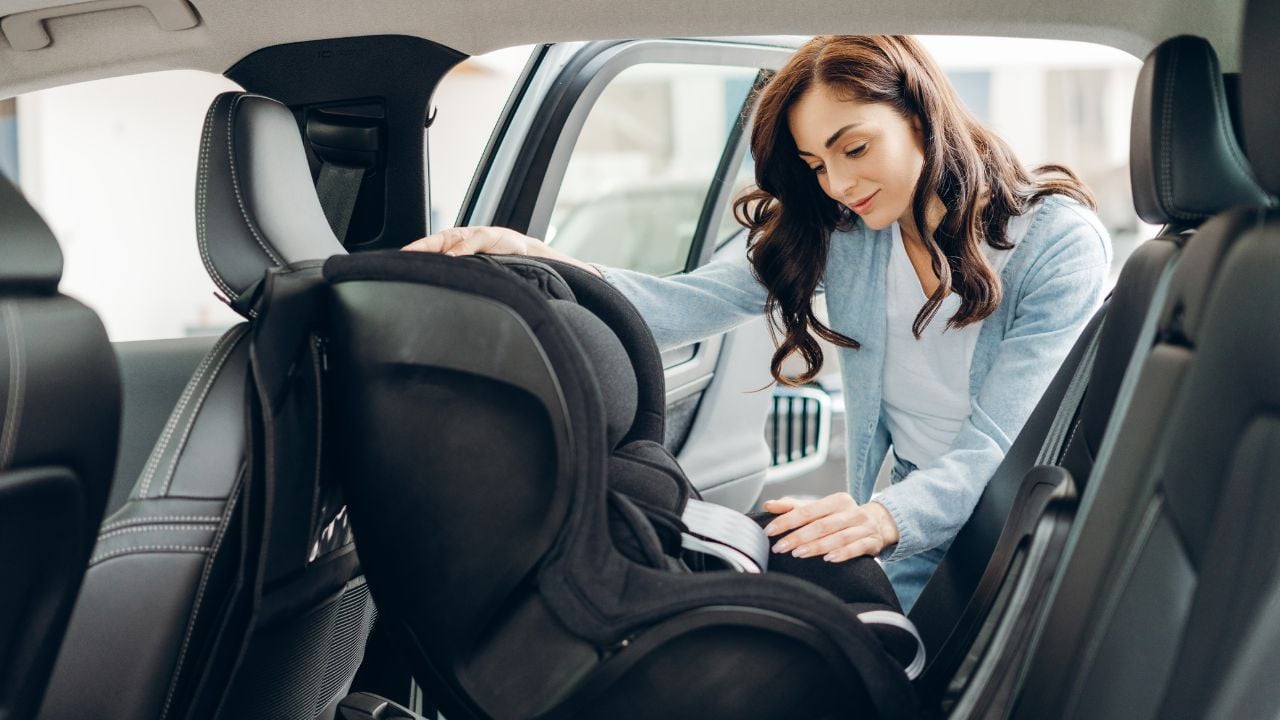
1. Car Seats and Booster Seats
A car seat’s entire job is to work exactly once, perfectly, on the one day nobody sees coming.
A used seat might have already taken that hit, in a fender-bender nobody thought was worth mentioning.
The plastic shell can crack on the inside and still look flawless from across a yard sale table.
The National Highway Traffic Safety Administration (NHTSA) publishes a used car seat checklist that tells buyers what to confirm before trusting one with a child.
That means a crash history, a manufacture date, an intact instruction book, and an open recall, all checked before the harness ever buckles.
Many manufacturers also set an expiration date on the seat itself, often six to ten years from manufacture, since the plastic shell and padding weaken with heat and age.
Age matters more than looks.
Checking a Car Seat’s Recall History
A car seat’s manufacture date and model number sit on a tag under the base or cover.
Those two details unlock everything else.
NHTSA.gov keeps a searchable recall list sorted by brand and model.
A five-minute search beats a guess.
2. Bicycle Helmets
A bicycle helmet is built to protect through exactly one hard hit, never a second.
Every helmet sold in the United States has to meet a federal standard the Consumer Product Safety Commission (CPSC) put in place in 1999.
It covers impact absorption and strap strength.
The foam liner inside crushes to absorb that hit.
Once it’s compressed, it stays that way.
There are no exceptions.
A helmet at a yard sale could look flawless and still be used up already.
Nobody selling it can prove otherwise.
3. Cribs and Bassinets
A crib only has one requirement: Keep a sleeping baby inside it, safely, every night.
Federal rules for cribs changed hard in 2011.
The Consumer Product Safety Commission (CPSC) banned the traditional drop-side rail that year.
It also tightened slat spacing to no more than 2 3/8 inches, about the width of a soda can.
A crib built before that update was never tested against the newer rule.
There’s no way to tell.
CPSC’s guidance points out that a crib’s compliance can’t be confirmed just by looking at it.
The mattress support, hardware, and slats all had to pass new durability testing to comply.
A missing screw or a swapped mattress support can turn a once-safe crib into a hazard no parent would choose on purpose.
Bassinets and cradles answer to a separate federal rule in the Code of Federal Regulations (CFR), 16 CFR 1218.
The rule is built on a safety specification from ASTM International (ASTM), an independent standards group, and enforced by the same CPSC that oversees cribs.
A pre-standard bassinet was never held to that testing, the same gap a crib built before 2011 carries.
4. Motorcycle Helmets
A motorcycle helmet works the same way a bicycle helmet does, just at higher speeds and higher stakes.
The Snell Memorial Foundation, an independent nonprofit that has tested helmets since the 1950s, recommends replacing one after five years of normal use.
Pads flatten.
Straps stretch.
There’s no way to know how much wear a used one already took.
A hidden drop, years of sun on a display shelf, or sweat that broke down the liner’s glue would all look the same from the outside.
A crushed liner can’t protect twice.
5. Mattresses
Ohio treats a used mattress as a regulated product, not just a piece of furniture with a story.
Under Ohio’s bedding code, anyone reselling a secondhand mattress or piece of upholstered furniture must have it professionally sterilized and tagged with a state registration number.
That rule doesn’t bend.
Without a yellow tag proving the sterilization, the sale itself is against the law.
Dust mites, allergens, and years of a stranger’s use don’t show up in a listing photo.
A brand-new mattress arrives sealed, with none of that history attached.
6. Smoke and CO Detectors
A smoke detector has exactly one sensor.
That sensor gets less reliable every year it sits on a ceiling.
The National Fire Protection Association (NFPA) recommends replacing a smoke alarm 10 years from its manufacture date.
A combination smoke and carbon monoxide (CO) alarm needs replacing every five to seven years instead.
The sensor inside loses accuracy long before the plastic housing looks worn.
A used detector carries somebody else’s clock.
It’s already running.
There’s no way to reset it, and no way to see it from across a room.
7. Space Heaters
A space heater plugs in fast and heats one room fast.
That’s exactly why it ends up too close to curtains, bedding, or a stack of laundry.
The National Fire Protection Association (NFPA) ties space heaters and heating stoves to roughly 11,275 home fires and 333 deaths a year in its latest national data.
Newer heaters are required to include an automatic shutoff that cuts power the instant the unit tips over.
An older, secondhand heater bought before that became standard might not have an automatic shutoff at all.
No sticker warns you.
Only the manufacturer’s specifications can confirm which side of that line a used heater falls on.
That sheet rarely follows a heater to a resale table.
8. Breast Pumps
A breast pump touches skin and pulls fluid through tubing and valves that are almost impossible to fully see inside.
The Food and Drug Administration (FDA) classifies a breast pump as a single-user medical device.
It’s built and approved for one owner, not a resale chain.
A previous owner’s cleaning routine is impossible to verify after the fact.
FDA guidance says infectious particles can survive inside a pump’s parts even when the outside looks spotless.
Looks lie.
Buying a used pump can also void the manufacturer’s warranty, since a warranty rarely transfers to a second owner.
9. Humidifiers
A humidifier holds standing water for hours at a time.
That’s exactly the condition mold and bacteria need to grow.
The Environmental Protection Agency (EPA) recommends emptying, drying, and cleaning a portable humidifier’s tank every third day.
That keeps scale and microorganisms from building up.
Once mineral scale coats the inside of an aging tank, it’s tough to fully clean out again.
EPA guidance notes that scale becomes a breeding ground for the same microorganisms a humidifier is supposed to keep in check.
That same EPA guidance tells owners to throw out a humidifier’s demineralization cartridge or filter at the end of every season.
There’s no reliable way to know how much longer a used filter can still pull minerals from the water.
A secondhand humidifier’s filter carries that unknown mileage already, often logged over several seasons nobody tracked.
A used unit already carries that scale.
It often holds old water, too.
No label lists how often anyone cleaned it.
Nothing about it shows.
Psst! How careful is your next secondhand buy? Run through this checklist and see where you stand.
10. Upholstered Furniture
Upholstered furniture, like a secondhand sofa or recliner, can hold more in its seams than a worn cushion or a faded pattern lets on.
A buyer won’t spot what’s hiding there just by looking it over.
Bed bugs are expert hitchhikers.
Upholstered furniture is one of the easiest places for them to travel unnoticed.
They can survive up to a year without feeding.
It needs no meal.
Oklahoma State University Extension’s guidance on thrift shopping points to seams, tufting, and the underside of cushions as the exact spots an infestation hides before anyone notices.
Ohio’s bedding law reaches this furniture too: A reseller must have an upholstered piece professionally sterilized and tagged with the same state registration number a mattress carries.
A new piece of furniture carries none of that history.
A used piece of furniture might carry someone else’s entire infestation, delivered straight to a living room.
8 Bad Aldi Habits That Undo an Ohio Shopper’s Savings
An Aldi-commissioned pricing report found shoppers save up to 36% compared to traditional grocery stores, and Ohio has more than 100 Aldi locations to prove it.
A few checkout habits cancel out those savings before the receipt even prints.
8 Bad Aldi Habits That Undo an Ohio Shopper’s Savings
8 Ohio Fence Rules That Turn Neighbors Into Enemies

Ohio gives a misplaced fence 21 years to become the legal property line, whether a neighbor ever agreed to it or not.
That’s far from the only Ohio fence rule that catches homeowners off guard.
