
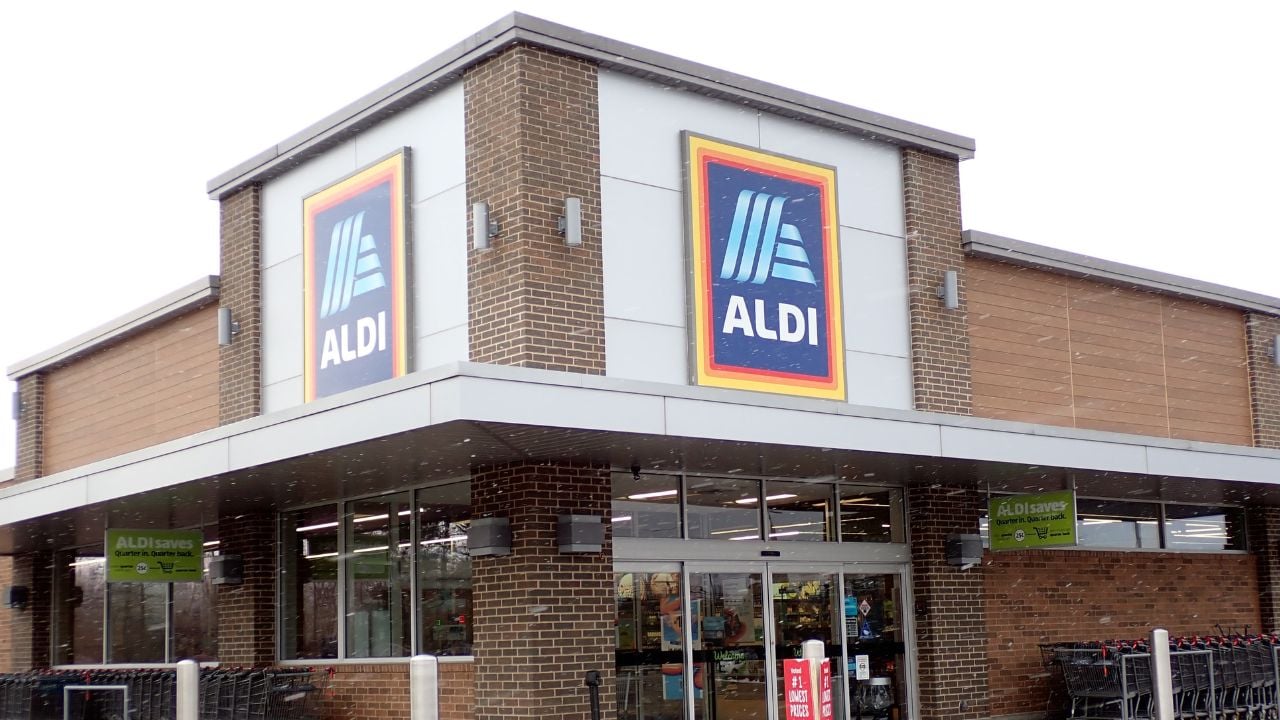
8 Bad Aldi Habits That Undo an Ohio Shopper’s Savings

An Aldi-commissioned pricing report found Aldi shoppers save up to 36% compared to traditional grocery stores.
That’s significant savings for Ohioans, who have access to over 100 Aldi stores across the state.
These are some of the bad habits to watch out for so that you don’t undo the savings Aldi hands you.
1. Defaulting to Curbside Pickup
Aldi runs its pickup and delivery orders through Instacart at stores across Ohio, from Cincinnati to Cleveland.
Order that way every week, and the shelf price stops being the price a shopper pays.
A pricing breakdown of Aldi’s Instacart listings found items running about 12% higher than the same products cost walking the aisles.
That adds up fast.
A block of Happy Farms string cheese, for example, ran $2.79 in the store and $3.09 through the app.
Many pickup and delivery orders also skip the savings from Aldi’s own weekly ad, since sale pricing doesn’t always carry over to online orders.
A shopper who leans on convenience pays that markup order after order.
What an Aldi Pickup Order Costs
Instacart adds its own service fee, delivery fee, and tip prompt on top of Aldi’s per-item markup, so the total goes up twice before checkout.
On a $120 Aldi cart, that item-level markup alone runs about $14, the same close-to-12% average a pricing breakdown found across a typical order, before any of Instacart’s own fees show up.
A shopper who shops in person twice a month and orders pickup the other two weeks still eats that markup on half of every month’s groceries.
2. Skipping the Morning Markdown Cart
Aldi’s clearance stickers show up on meat, dairy, and other perishables nearing their sell-by date, usually early in the day.
The cut runs anywhere from a dollar or two off to 50% or more off.
Worth the extra minute.
Multiple stickers on one package stack together, so the total of every sticker is the price cut that counts.
A five-pound organic chicken listed at $15 can drop to $7.50 once the second sticker lands, half off before it ever reaches the register.
Shoppers who never wander past the markdown cart before mid-morning miss the cut entirely and pay full shelf price without knowing there was ever a discount to find.
3. Ignoring the Receipt on a Markdown
At Aldi, a red-sticker discount doesn’t scan in automatically at checkout.
That’s an easy miss.
A cashier keys the markdown in by hand instead.
A missed or mistyped code means a shopper pays full shelf price for an item that was marked down in the aisle, without ever noticing the gap.
A quick glance at the receipt before leaving the store catches it, and Aldi’s customer service desk corrects a wrong ring-up on the spot.
4. Skipping Aldi’s Free Redo
Aldi backs its own private-label groceries with a promise it calls the Twice as Nice guarantee.
Dislike an Aldi-exclusive food item, and Aldi refunds the purchase and hands over a free replacement, as long as the shopper brings back the receipt, the packaging, and whatever’s left of the product.
The guarantee covers Aldi-exclusive food items with a quality problem, including food-category Aldi Finds, but it skips national brands, alcohol, and non-food Aldi Finds like electronics.
That’s a free do-over.
Many shoppers skip it anyway, tossing a disappointing product and switching back to the pricier name-brand version on their next trip.
That’s paying twice for the same mistake.
Psst! How much do you know about Aldi’s backstory? Take our quiz and see how many you can get right.
Quiz
Aldi Insider Quiz
Answer these questions on Aldi’s backstory and how the stores run. We bet you can’t get them all right. Prove us wrong?
An Aldi sister company secretly owns which grocery chain millions of Americans shop every week?
5. Buying a Fresh Bag Every Trip
Aldi's checkout line charges for every bag, about $1.09 for a reusable bag and roughly 12 cents for a paper bag.
Many Ohio shoppers already own a stack of Aldi's reusable bags.
The habit is leaving them in the trunk or by the back door instead of carrying them inside.
A shopper who forgets them buys a brand-new bag at the register almost every visit.
It's reusable in name only.
6. Treating the Center Aisle Weekly
Aldi restocks its center aisle, nicknamed the "Aisle of Shame" by regulars, with limited-time Aldi Finds every Wednesday.
Everything from patio furniture to seasonal snacks shows up there, gone for good once the shelf empties.
Gone within days.
That's the appeal, and it's also the trap.
The largest of Aldi's dedicated Aisle of Shame Facebook groups counts close to 3 million members, all watching for the exact week an item drops.
A shopper who stops through that aisle out of habit every week fills a cart with things never on the list.
A shopper buying on impulse skips the budget.
A shopper who keeps grabbing extras erases whatever the private-label staples just saved.
7. Chasing a Coupon Across Town
Aldi's registers don't accept manufacturer coupons.
About 90% of what's on Aldi's shelves is the store's own private-label brand, items that never had a manufacturer coupon attached to begin with.
Some shoppers hang onto a coupon for a name-brand item anyway, then drive across town to redeem it, assuming the coupon price beats Aldi's everyday shelf price.
It usually doesn't.
That second trip costs gas and time.
That other store still rings up the rest of the cart at its own regular prices, not Aldi's.
8. Making a Second Stop for Basics
Aldi's smaller stores stock a fraction of what a full-size supermarket carries.
The gap shows up fast.
As few as two ketchup varieties sit on the shelf, both Aldi's own label, with nothing from a bigger name brand.
That trade-off is part of the math behind Aldi's pricing edge.
An Aldi-commissioned economic impact report from Ernst & Young's consulting arm, released in January 2025, put shopper savings at up to 36% on an average trip, a gap that starts with carrying fewer brands.
A shopper whose list calls for one particular national brand makes a second stop at another store to fill the gap.
A shopper making that second stop pays regular prices there, waits through a second checkout line, and risks grabbing one more thing that wasn't on the list.
Kroger, Giant Eagle, and Meijer are the usual second stop for the gap Aldi's shelves leave in Ohio, and none of them price-match Aldi on what a shopper picks up there.
A shopper who starts at Aldi and finishes at one of those stores pays Aldi's discount on part of the cart and full price on the rest.
9 Grocery Aisles That Look Completely Different in Ohio Than They Did 20 Years Ago
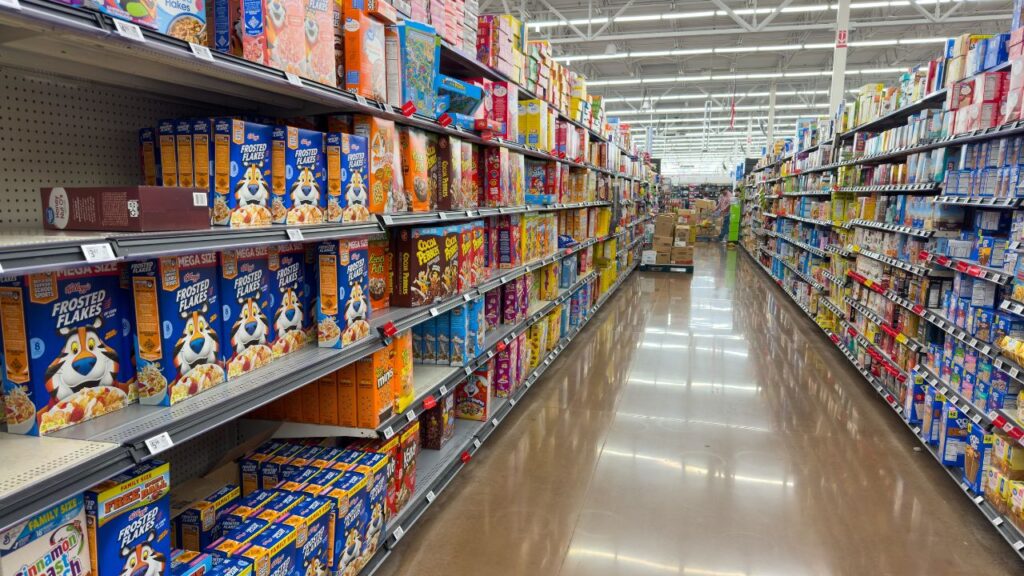
A shopper in an Ohio grocery store walks past a dark, empty window built right into the wall, the glass gone and the teller counter cleared out years ago.
That corner used to be a full bank branch tucked inside the store, and it's just one of the aisles that looks nothing like it did twenty years back.
9 Grocery Aisles That Look Completely Different in Ohio Than They Did 20 Years Ago
10 Things That Surprise First-Time Meijer Shoppers in Ohio
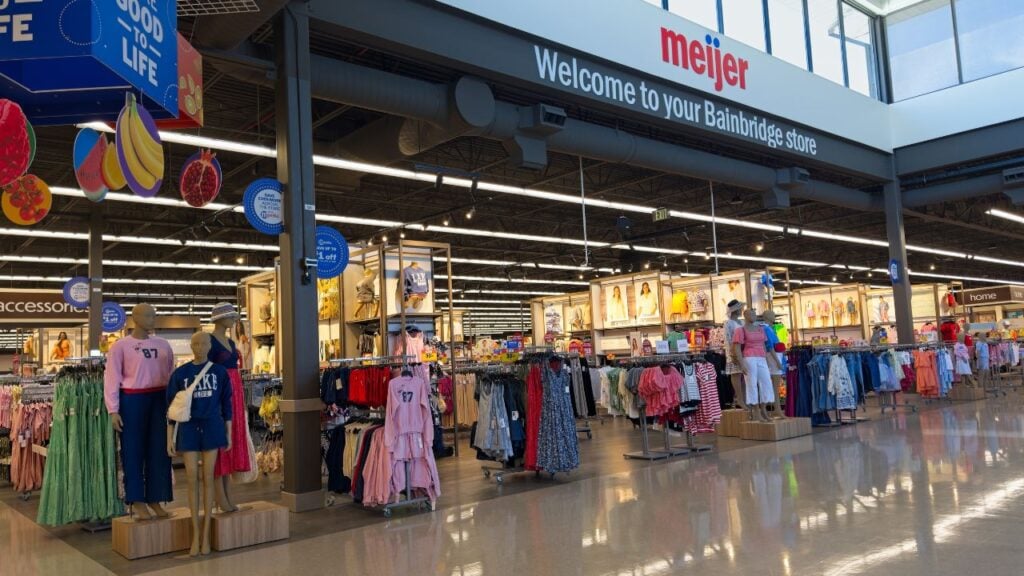
A shopper on a first Meijer run in Ohio needs more from their phone than from their grocery list, with two separate apps in play before they even reach the registers.
One saves money at checkout, and the other opens a cooler that many first-time shoppers never even notice.
