
10 Humidity Problems Mississippi Homeowners Often Mistake for Something Else

Not every problem inside a Mississippi home starts with a leak, a faulty part, or poor workmanship.
The state’s humid air can create damage that points homeowners toward an entirely different explanation.
These are the humidity problems Mississippi homeowners frequently mistake for something else.
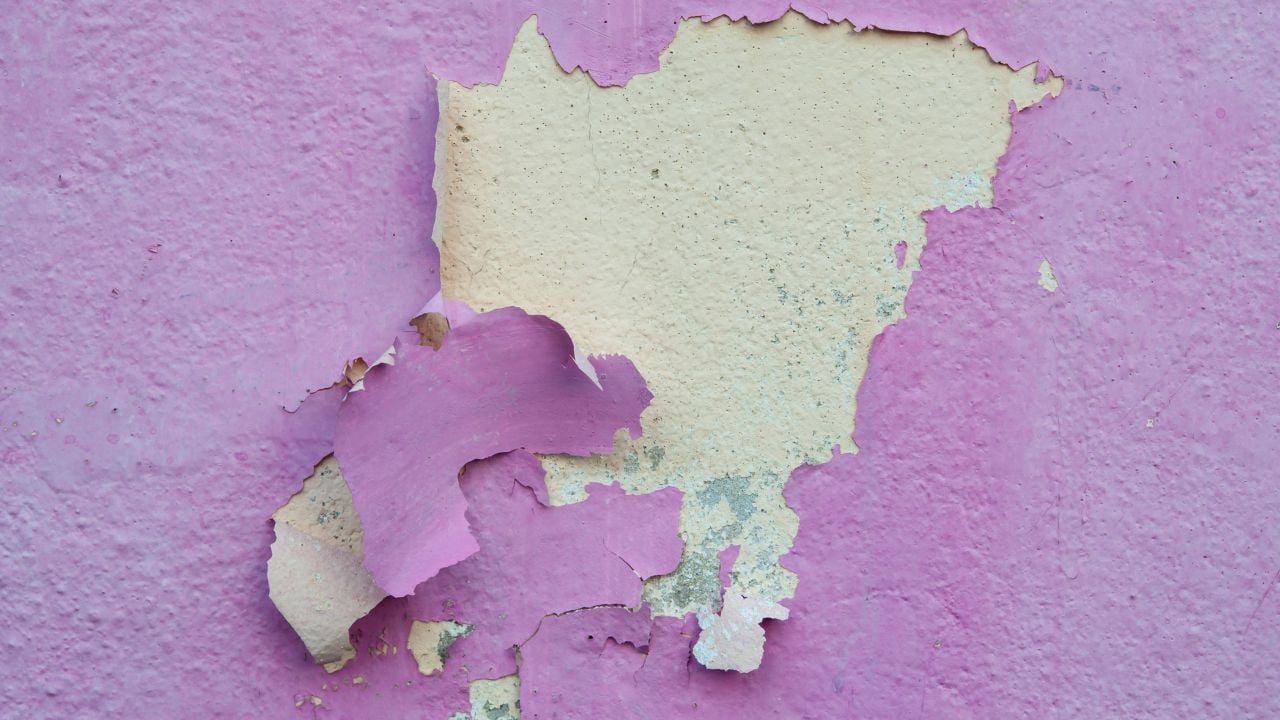
1. Peeling or Bubbling Paint
A homeowner staring at bubbled paint on a sun-baked Mississippi exterior wall usually blames the paint itself, figuring the crew used a cheap brand or rushed the job.
The problem often starts inside the house.
Cooking, showers, and everyday breathing send water vapor into exterior walls.
Purdue University’s Cooperative Extension Service says that vapor condenses inside the wall when there’s no proper barrier to stop it, and that’s what pushes the paint loose from underneath.
Purdue wrote that guidance for cold winter climates, where moisture drives from a heated interior toward a cold exterior.
Mississippi’s humid summers push that moisture the other way, with air-conditioned indoor surfaces pulling humidity in from outside, according to Building Science Corporation’s research on hot-humid climates.
It isn’t the paint’s fault.
A homeowner keeps repainting that same spot every few years without ever fixing the moisture behind it.
2. Hardwood Floors That Cup
Mississippi’s humid air can warp a hardwood floor without any pipe ever bursting underneath it.
That reaction is called cupping, and it doesn’t take a flood to start it.
A moisture imbalance between the top and bottom of a board is enough on its own, whether it’s a drop in the room’s humidity above or damp working up from below.
Mississippi’s swing between a dry, air-conditioned house and muggy air outside is enough to cause that imbalance.
Nothing had to leak first.
The location gives it away, since cupping spread evenly across a room usually points to humidity, while damage clustered around one appliance or wall points to an actual leak.
3. Doors and Windows That Stick
A front door that suddenly drags across the threshold sends many homeowners looking for a bad hinge before they look at the weather.
Wood tells a different story.
A door or window frame absorbs moisture straight out of humid air and swells across its width and thickness.
Wood’s equilibrium moisture content rises right along with relative humidity, Oregon State University’s Extension Service explains, which is why that swelling doesn’t need a rainstorm to happen.
That swelling is enough to jam it tight against the frame.
The fix usually isn’t hardware.
A door that sticks every August and swings free again by November is following the humidity, not a construction flaw.
4. White Residue on Brick Walls
Across Mississippi, a chalky white film spreading over a brick foundation wall usually sends a homeowner reaching for a pressure washer, assuming the brick just needs a scrub.
Scrubbing treats the symptom, not the source.
Home inspectors call that film efflorescence.
The International Association of Certified Home Inspectors explains that moisture wicks dissolved salts up through brick or concrete, leaving the salt behind once the water evaporates.
Humidity itself changes how the efflorescence forms, the Concrete Masonry and Hardscapes Association notes, since a slower evaporation rate lets more salt migrate to the surface.
Water vapor from inside a home can also condense inside a wall and feed the same white residue, the group adds, without any rain ever touching that wall directly.
That’s the giveaway.
Water is moving through that wall somewhere.
Wash it off, and it usually comes back within a season if nothing stops the moisture feeding it.
5. Musty Smell With No Mold
Homeowners who catch a musty smell in a closet but can’t find any mold often chalk it up to a house that needs a deeper cleaning.
Clean isn’t the problem.
The Environmental Protection Agency’s mold guidance puts the danger line at 60 percent relative humidity indoors, ideally between 30 and 50 percent.
The smell shows up first.
A hygrometer from the hardware store settles the question faster than another round of scrubbing.
Psst! How humidity-ready is your Mississippi home? Run through this checklist and see where you stand.
6. Dark Streaks in the Attic
A Mississippi attic’s dark streaks after a hot spell usually send a homeowner straight to the phone, calling a roofer certain the roof is leaking.
The roof might be fine.
Warm, humid air rising into a poorly ventilated attic condenses on the cool underside of the roof sheathing, and that condensation leaves stains that look just like a leak.
InterNACHI’s roof-inspection training calls this a thermal gradient, with moisture moving from hot, humid outdoor air toward the cooler attic framing inside.
Only one of them needs a new roof.
A true leak tracks with rainfall, while condensation stains show up worst after a muggy, still night with no rain anywhere in the forecast.
7. Water Rings on the Ceiling
A ceiling vent ringed in brown usually means one thing to a homeowner: A leaking pipe somewhere in the floor above.
Check the ductwork first.
The same Environmental Protection Agency mold course names condensation on an uninsulated air conditioning duct as a documented source of ceiling moisture.
Humid attic air meets a cold duct and drips right where the vent sits.
No pipe required.
Insulating the duct stops the condensation, and the stain stops spreading along with it.
8. Foundation Cracks and Uneven Floors
Central Mississippi sits on a layer of soil called Yazoo Clay, and it doesn’t behave like ordinary dirt.
Yazoo Clay runs about 28 percent smectite, a clay mineral identified by Mississippi State University geologists as the reason the formation swells and shrinks so dramatically.
Smectite pulls moisture directly out of humid air, not only from rain, and peer-reviewed testing on similar high-clay rock shows that uptake increases as relative humidity rises.
A homeowner who watches a crack spread across the foundation or notices a floor that’s suddenly out of level often assumes the builder cut corners.
Sometimes the ground is doing exactly what wet clay does.
The clay shrinks hard once the air and ground dry back out, and that back-and-forth movement cracks foundations and tilts floors across a wide stretch of the state.
Settling only goes one way.
Jackson’s National Weather Service office puts the city’s yearly rainfall at over 57 inches a year, on top of the humidity already feeding the clay.
That combination keeps the clay moving under a foundation for the life of the house.
Where Mississippi’s Yazoo Clay Runs
Mississippi’s Office of Geology maps Yazoo Clay across a belt of eleven counties through the middle of the state.
That belt runs through Yazoo, Holmes, Hinds, Madison, Rankin, Smith, Scott, Newton, Jasper, Clarke, and Wayne counties.
Ordinary settling moves a foundation down and leaves it there.
Yazoo Clay lifts one edge of a house during a wet stretch and drops it again once the ground dries.
A foundation that visibly rises and falls with the seasons points to the clay, not a construction defect.
9. Rusting Hinges and Tools
A homeowner who finds hinges, hand tools, or patio furniture rusting fast usually blames cheap metal or a bad batch of hardware.
Humidity ages metal too.
Bare metal held in consistently high relative humidity oxidizes faster than metal kept dry.
Moisture in the air is what starts the chemical reaction that turns iron into rust.
InterNACHI’s rust-prevention guidance notes that rusting slows significantly once relative humidity drops below 50 percent.
A garage or shed traps that moisture especially badly.
The same wrench or lawnmower blade that stays clean for years in a dry climate can pit within a season sitting in Mississippi’s humidity.
10. Windows That Fog From Inside
Waking up to foggy windows on the inside of the glass often sends homeowners pricing new windows, certain the seals have failed.
A failed seal fogs differently.
The Environmental Protection Agency’s guidance on indoor humidity explains that warm, moist indoor air condenses the moment it touches a cooler surface.
A windowpane is exactly that on a humid Mississippi morning.
A failed seal fogs the space between two panes of glass and never fully clears, even on a dry day.
Condensation on the inside of a single pane comes and goes with the weather, and that difference is the whole diagnosis.
5 Mississippi Foods Out-of-Staters Refuse to Try That Locals Would Never Give Up

One Mississippi sandwich spends three full days boiling before anyone calls it ready to eat.
Out-of-staters need convincing before the first bite, and locals never bothered waiting for permission.
5 Mississippi Foods Out-of-Staters Refuse to Try That Locals Would Never Give Up
9 Things Mississippians Miss Most After They Move Away

A Mississippi transplant checks every bottle on an Ohio grocery store shelf, hunting for something that isn’t there.
That exact taste never turns up outside the state line, and neither does the version of home a transplant left behind.
