
9 Pet-Related Disagreements That Turn Pennsylvania Neighbors Against Each Other

Once Pennsylvania labels a dog dangerous, its owner carries $50,000 in liability insurance, pays $1,000 a year to register it, and reports any escape within 24 hours.
Almost nobody knows that until it applies to them.
These are the pet-related disagreements that turn Pennsylvania neighbors against each other.
Note: This is general information, not legal advice. Animal-control rules and requirements vary by Pennsylvania municipality and are subject to change.
1. Barking That Never Stops
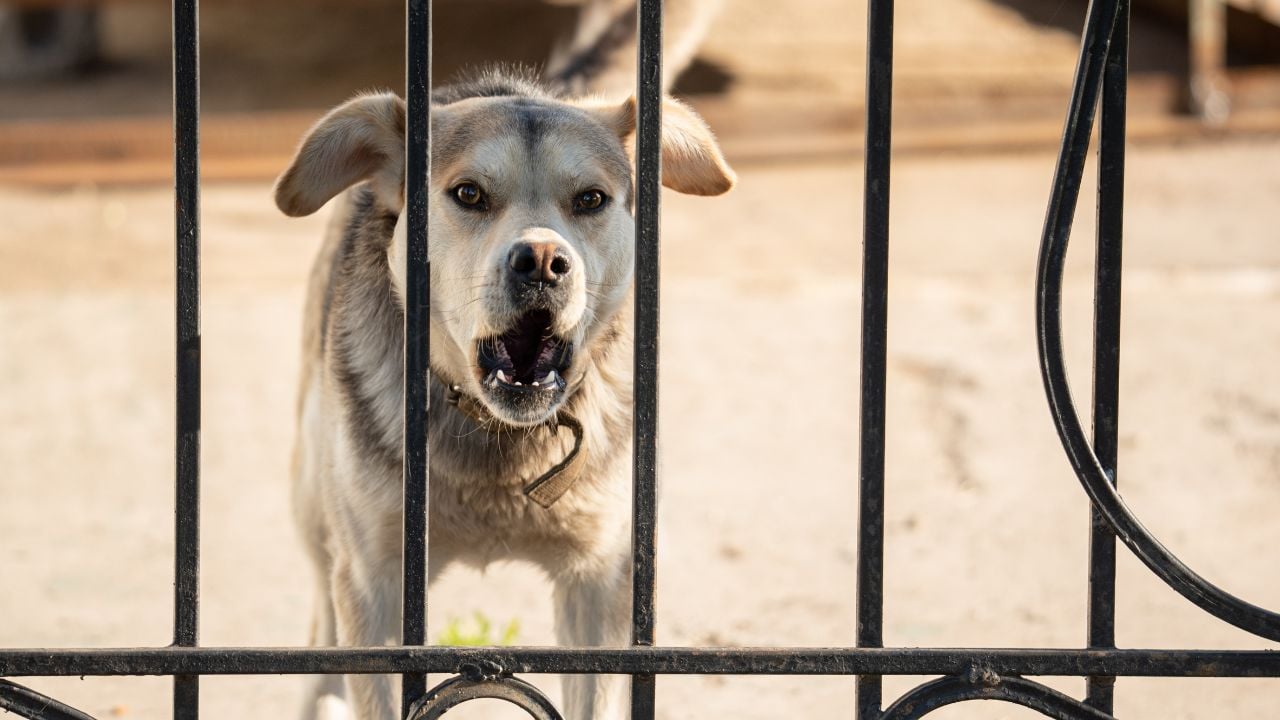
A barking dog is the pet complaint neighbors call in first, and animal control treats it as a violation, not just an annoyance.
ACCT Philly is the Animal Care and Control Team of Philadelphia, the city’s contracted animal-control agency.
It lists nonstop barking among the nuisance complaints it sends an officer out to check in person.
A site visit confirms the noise.
Many other Pennsylvania boroughs and townships run a version of the same ordinance, even when the office answering the phone has a different name.
2. No Curfew for the Cat
Does Pennsylvania regulate a free-roaming cat the way it regulates a dog? Barely, and that gap is where many cat-related neighbor disputes start.
The state has no statewide law requiring a cat be leashed or confined the way a dog must be.
A neighbor whose flower bed doubles as a litter box has few options beyond a call to the local animal-control office.
Pittsburgh’s code fills part of that gap: A cat allowed to roam still has to wear an ID tag with the owner’s name, address, and phone number.
Many Pennsylvania municipalities don’t bother writing a version of that rule at all.
3. When a Dog Crosses the Line
Pennsylvania’s Dog Law spells out exactly how a dog has to be kept on the owner’s property, and many neighbor standoffs start when it isn’t.
The law requires a dog be confined, on a leash, or under control at all times, with no exception for a quick trip outside.
A dog that slips the fence and wanders into the yard next door is already breaking that rule, whether it does any damage or not.
It doesn’t have to bite anyone.
Being loose is enough.
That’s often the first fact a frustrated Pennsylvanian pulls up before calling animal control on a repeat offender.
4. Whose Fence Is It, Anyway?
Not every Pennsylvania dog owner splits the cost of a new fence with the neighbor next door.
The state’s fence law only requires neighbors to share the cost when both of them keep livestock, and a dog doesn’t count.
A dog owner ends up paying for that fence on their own in many cases, even when the neighbor benefits from keeping the dog contained too.
One side wants the fence taller.
The other side doesn’t see why they should help pay for a problem that isn’t theirs, and Pennsylvania’s fence law doesn’t settle who’s right.
5. Yard Nobody Scoops
Philadelphia gives pet owners a narrower window than many people assume before yard waste turns into a code violation.
The city’s animal-control agency treats fecal matter left for more than 12 hours as a nuisance violation it will act on.
That’s roughly a workday and the overnight hours combined, and it catches people who assumed the weekend gave them more time.
Other Pennsylvania municipalities set a different clock, some stricter than Philadelphia’s and some looser.
The complaint usually comes from next door, not from a stranger walking by.
6. When the Vet Bill Lands on the Neighbor
A dog that kills or badly injures a neighbor’s pet in Pennsylvania moves the dispute into serious legal territory, not just an apology and a vet bill.
Under Pennsylvania’s dangerous dog law, a judge can formally label that dog dangerous once it kills or severely injures another pet while off the owner’s property.
From there, the owner has to carry at least $50,000 in liability insurance, or post a bond for that amount.
Not a small ask.
That’s on top of everything else that comes with the label.
The neighbor whose pet didn’t survive rarely feels like the paperwork evens anything out.
The Rest of the Dangerous Dog Checklist
A dog carrying Pennsylvania’s dangerous dog label needs a locked, secure structure.
Unless that structure has a secured bottom, the sides have to be buried at least two feet into the ground.
Otherwise, it has to stay muzzled and leashed any time it’s outside, with a responsible adult holding the leash.
The owner also pays a $1,000 registration fee every year.
The owner has the dog spayed or neutered and microchipped, too.
A visible warning sign has to go up at the property.
The owner also reports any escape, attack, or change of ownership to authorities within 24 hours.
7. Feral Cat Colony Next Door
A colony of stray cats living behind one Pennsylvania yard can become a code violation for the person feeding them, not for the cats.
Conshohocken’s borough code makes it unlawful to feed stray or feral cats when that feeding creates a nuisance to neighbors or a risk to public health and safety.
The ordinance goes further than that: A sustained cat colony counts as a nuisance under the code, full stop.
The borough doesn’t have to prove anything else first.
That presumption puts the burden on whoever is feeding the cats, not on the neighbor who complains.
8. Banned by Breed, Not by Law
A neighbor who wants one dog breed banned from the block runs into a wall many people don’t expect: Pennsylvania law won’t let the municipality do it.
Pennsylvania’s Dog Law bars a local ordinance from banning or limiting any one dog breed.
A borough can still label an individual dog dangerous after it hurts someone or another pet, the same rule covered above, but it can’t get there by breed alone.
The neighbor’s petition can still reach borough council.
Pennsylvania’s Dog Law is what keeps it from ever becoming an enforceable ordinance.
Psst! Pennsylvania named an official state dog back in 1965, decades before many states got around to it. Take this quiz and see how much else about the state’s pets, zoos, and animal laws you know.
Quiz
Pennsylvania Pet History IQ
Answer these questions on Pennsylvania’s pets, zoos, and animal laws. We bet you can’t get them all right. Prove us wrong?
Philadelphia Zoo calls itself America’s First Zoo, but the Civil War held up its debut. About how many years passed between its charter and its actual opening day?
9. House With Too Many Cats
A Pennsylvania court has already settled how far a neighbor's headcount complaint about someone else's pets can go, and it's not as far as many people assume.
In 1994, the Commonwealth Court struck down a Carnegie Borough ordinance that capped households at five dogs or cats combined.
A building inspector had cited resident Mary Creighton for keeping roughly 25 to 30 cats.
Carnegie's only evidence at trial was neighbor complaints about odor.
The court ruled that wasn't enough: A borough has to prove the animals created an actual nuisance, not just declare a number and enforce it.
Mary Creighton kept her cats. Carnegie's ordinance is the thing that didn't survive.
A resident with a lot of cats still needs the borough to show actual harm before any ordinance can take them away.
"A lot" by itself has never been enough in a Pennsylvania court.
9 Small-Town Pennsylvania Traditions That Out-of-Staters Rarely Understand

A Lehigh Valley club has followed the same unusual dinner table rule since 1934, and nobody who grew up nearby thinks twice about it.
Small-town Pennsylvania runs on unwritten rules like that Lehigh Valley dinner-table one, the kind newcomers usually don't hear explained until they ask the wrong question at the wrong table.
9 Small-Town Pennsylvania Traditions That Out-of-Staters Rarely Understand
9 Pennsylvania Fall Festivals Locals Go To and Tourists Never Hear About

McClure, Pennsylvania has served the same bean soup recipe out of cast-iron kettles for 133 years, stirred by volunteers over open fires every September.
A crowd shows up every year for it, and a tour bus almost never does.
9 Pennsylvania Fall Festivals Locals Go To and Tourists Never Hear About
