
7 Humble South Carolina Ingredients That Somehow Became Gourmet

High Wire Distilling put 570 bottles of Jimmy Red bourbon on sale in Charleston on December 2, 2016.
They were gone within an hour.
That corn had nearly died out with the last bootlegger growing it, and it isn’t the only South Carolina ingredient that took that route.
These are the humble South Carolina ingredients that somehow became gourmet.
1. Benne Seeds
Benne seeds reached the South Carolina Lowcountry with enslaved West Africans sometime in the early colonial period, likely close to 1700.
They were carried from West Africa or by way of Caribbean colonies like Jamaica, and no record survives that pins the date down further.
The people who grew it already knew it as food, medicine, and a sign of good fortune.
British colonial officials pushed benne as a South Carolina cash crop through the 1730s and 1740s.
Francis Gracia, a Charleston cabinetmaker who ran a shop on Church Street, proved the seed’s oil was worth selling.
In 1746, Gracia ran the earliest known American newspaper ad for sesame oil, pressed from benne and pitched as a match for imported olive oil.
Indigo won.
By 1748, South Carolina growers had dropped sesame as an export.
Enslaved people kept growing benne anyway, in small patches meant only for their kitchens.
Charleston built a whole treat around that seed: Benne wafers.
The wafers sold commercially first from a King Street candy store, and by 1950 they were popular enough to reach shelves at Macy’s in New York.
Husk folds toasted benne into a rack of fried pork ribs on its regular menu today.
Indigo and rice made South Carolina planters rich, and both crops disappeared.
Benne, the seed a British trade plan wrote off, is the one still on the menu.
2. Jimmy Red Corn
Jimmy Red corn reached the islands near Charleston, South Carolina, sometime around the turn of the last century.
Local farmers and bootleggers noticed something fast: It made exceptional moonshine.
By the 1980s, the blood-red corn still belonged to James Island’s illicit stills more than to any kitchen.
Jimmy Red nearly vanished in the early 2000s, when the last known bootlegger still growing it died.
Two ears survived.
Farmer Ted Chewning hand-pollinated those two ears year after year until he had enough seed to share.
Once he did, Charleston chef Sean Brock became such a believer that he had the corn tattooed on his arm.
Restaurants across Charleston started putting Jimmy Red grits on the menu.
The corn reached kitchens well outside South Carolina, too, from Ryan Pera’s kitchen at Coltivare in Houston to Gavin Kaysen’s restaurants in Minneapolis.
Then a distillery took it further.
High Wire Distilling in Charleston turned Jimmy Red into bourbon and put the first run, 570 bottles, up for sale on December 2, 2016.
Every one of those bottles was gone in eleven minutes.
3. Sea Island Red Peas
Sea Island red peas descend from West African cowpea varieties that enslaved people carried across the Atlantic and planted in South Carolina gardens.
Charleston brokers were trading the peas by the 1780s, but planters mostly valued them as livestock fodder rather than a dish for their tables.
People didn’t waste them.
Enslaved and later free Black families in the Lowcountry grew the peas in home gardens for generations, prizing them for a rich, meaty flavor other field peas couldn’t match.
As faster-maturing, disease-resistant varieties took over commercial farms in the late 1800s, red peas nearly disappeared from the wider food supply.
They survived mainly in Gullah Geechee communities across South Carolina’s Sea Islands, including Edisto Island, where families kept planting them without ever stopping.
Husk has served Sea Island red peas in a rabbit cassoulet, paired with andouille sausage and sofrito.
Slow Food’s international Ark of Taste added the pea to its list of foods worth saving, the same catalog that tracks rare Italian cheeses and heirloom French grapes.
4. Carolina Gold Rice
Planters grew rich on Carolina Gold rice in South Carolina’s Lowcountry, and enslaved West Africans from the continent’s “Rice Coast” are the reason it worked at all.
Planters bought people for that expertise: Irrigation methods, seed selection, and centuries of rice know-how no Carolina planter had on his own.
By 1720, rice was already the Lowcountry’s most valuable export, and it stayed that way until the Civil War.
Then the industry collapsed fast.
A 1911 hurricane destroyed South Carolina’s last major commercial rice crop, and the flooded fields mostly turned into duck-hunting land.
Carolina Gold survived only because the U.S. Department of Agriculture (USDA) had banked seed samples since 1902.
A Savannah eye surgeon named Richard Schulze pulled from that bank in the 1980s and planted a dozen acres to bring the variety back.
The Gullah Geechee community never stopped treating rice as central to its food culture, either.
Emory Campbell, longtime executive director of Beaufort County’s Penn Center, is a leading voice on Gullah history.
He has spent decades explaining that connection and keeping it in front of new generations.
Husk has served Carolina Gold rice as a fried rice dish paired with soft shell crab.
It’s a rice built on enslaved cooks’ expertise, and it still shows up in Gullah Geechee kitchens as often as it does on a downtown dinner check.
Why These South Carolina Foods Cost So Much More Now
Carolina Gold rice tends to lodge, or fall over, in wind, which makes it hard to harvest with modern machines built for shorter, sturdier commercial rice.
That’s the pattern behind every ingredient on this list.
Plant breeders bred modern commodity crops for high yield, sturdy stalks, and machine harvesting.
These heirloom South Carolina varieties never got that treatment, so growing them still takes small fields, hand labor, and specialty mills instead of a combine.
Small batches and hand work cost more, and that cost shows up on the plate.
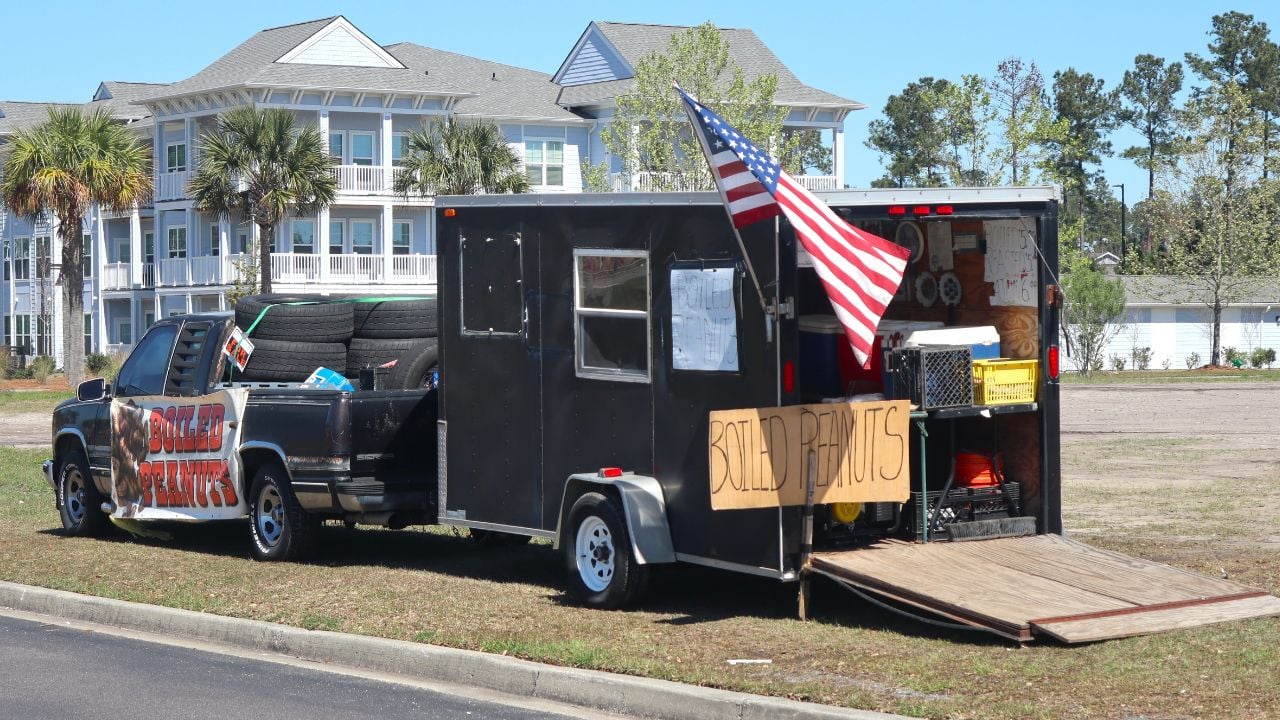
5. Boiled Peanuts
Boiled peanuts came to South Carolina through enslaved Africans, who carried both the crop and the tradition of boiling it in salted water.
An 1809 account by historian David Ramsay described peanuts as planted in small patches by Black growers and sold at local markets.
For a long stretch, boiled peanuts stayed a home food and a roadside food, nothing fancier.
By 1925, boys in Orangeburg were selling them from roadside stands for five cents a bag.
That price barely moved for decades.
Not anymore.
South Carolina’s legislature named boiled peanuts the state’s official snack food in 2006, cementing a food that had spent generations at gas stations and card tables.
6. Shad Roe
Shad roe, the egg sac pulled from a spawning female shad, showed up on South Carolina spring tables in such volume each year.
Residents considered it too common to serve polite company.
Colonial farmers set their plows aside during shad season just to fish for the roe and the fish carrying it.
Feeding a household depended on the run.
It mattered to South Carolina politics, too.
In 1787, residents along the Edisto River petitioned against a dam that blocked the shad run, treating access to the fish as close to a basic right.
Shad stocks, and the roe harvest that depended on them, crashed hard over the 20th century, and by 2007 coastal numbers hit an all-time low.
Then everything flipped.
Lowcountry restaurants now treat shad roe as a brief, prized spring delicacy.
Some menus compare its rich texture to foie gras, not to the kind of fish a family used to eat simply because the river was full of it.
Psst! How much do you know about South Carolina’s food history? Take our quiz and see if you can ace it.
Quiz
South Carolina Food History IQ
Answer these questions on South Carolina food history and Lowcountry traditions. We bet you can’t get them all right. Prove us wrong?
A South Carolina mayor served she-crab soup to a sitting U.S. president visiting Charleston in 1909. Which president was it?
7. Lowcountry Oysters
Workers built South Carolina's oyster industry on some of the harshest, worst-paid jobs the coast had to offer, shucking and picking Lowcountry oysters for pennies a day.
Before World War II, South Carolina's oyster canneries employed roughly 3,500 workers, mainly Polish immigrants and African Americans, for far less than a fair wage.
Pickers worked through the coldest months, sometimes sleeping on boats and slogging through pluff mud by moonlight to haul in the catch.
Shuckers, mostly women, stood on sloped concrete floors in rooms kept refrigerator-cold.
A skilled shucker could still only manage five to nine gallons of raw oysters in a full day.
The industry didn't survive.
A typhoid scare, new wage laws, pollution, and habitat loss combined to collapse South Carolina's oyster canneries by the mid-20th century.
Charleston County has since lost the majority of its natural oyster beds.
Local supply can't keep up with what Charleston's raw bars want today.
Charleston's raw bars are more likely to truck in oysters from Maine, Massachusetts, and Canada to meet demand than from anywhere closer.
Factory hands once shucked oysters by the gallon for pennies.
Raw bars now sell that same oyster one shell at a time, and diners order seconds.
Restoration groups are rebuilding oyster beds through shell recycling and artificial reefs, but Charleston's restaurants still need more oysters than the coast currently supplies.
Only about 10% of the oyster shell Charleston restaurants sell gets recycled back into local waterways to grow the next generation of reefs.
Is It Rude to Take Over the Community Pool for a Private Party? 6 Debates Dividing South Carolina Neighborhoods
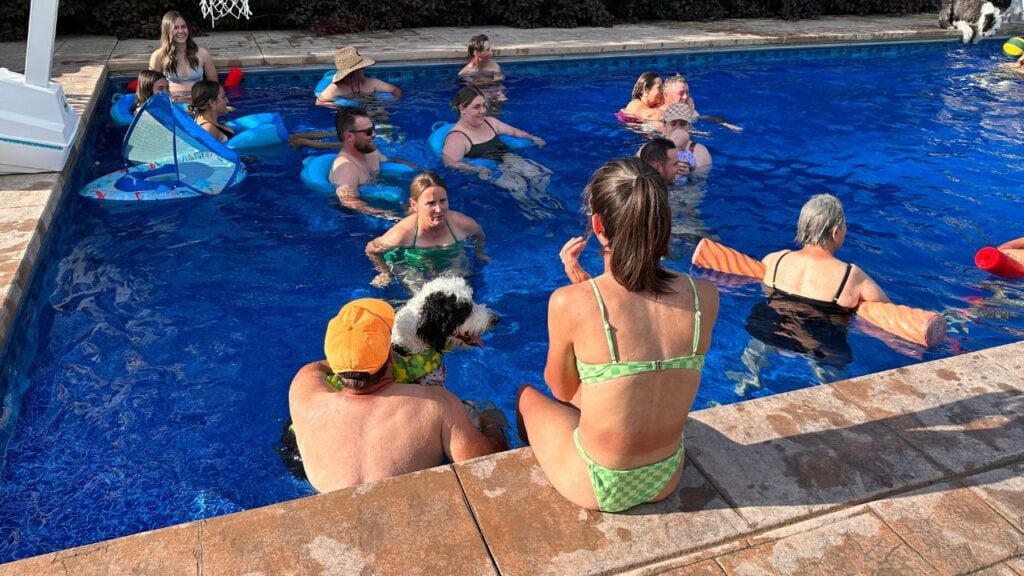
South Carolina's subdivisions keep growing, and so does the list of unwritten rules neighbors argue about at the mailbox.
A pool reserved for one family's birthday party can leave everyone else on the block locked out for an afternoon.
9 Things South Carolina's Beach Towns Do Differently Once the Summer Crowds Leave
Myrtle Beach and the rest of the Grand Strand run on a completely different clock once Labor Day passes.
Rental rules loosen, the crowds thin out, and South Carolina's beach towns start acting like the small towns they're the rest of the year.
9 Things South Carolina's Beach Towns Do Differently Once the Summer Crowds Leave
