
8 Problems Texans Should Expect in a House Built Before 1970

The U.S. Consumer Product Safety Commission found that aluminum wiring installed before 1972 is 55 times more likely to develop a fire hazard at an outlet than copper wiring.
A Fort Worth house wired in 1968 and never touched since is still wired that way today.
These are the problems Texans should expect in a house built before 1970.
1. Cast-Iron Drain Lines
Drain lines in a house built before 1970 almost always run through cast iron, not plastic.
Cast-iron pipe with lead-and-oakum joints was still the plumbing industry’s regular standard for drain, waste, and vent lines as late as 1973.
Polyvinyl chloride (PVC) pipe was still fighting for approval in the plumbing codes around that same year, which is exactly why so many houses from this era never got it.
Rust builds up on the inside wall of a cast iron pipe as the decades pass.
That buildup can narrow the pipe, crack its bottom, or block a drain outright.
A Houston Heights bungalow and a King William cottage in San Antonio can carry the exact same drain problem.
The two neighborhoods sit on opposite sides of the state.
Replacing a line like that usually means opening a wall or a slab, so a plumber’s camera down the pipe is worth the trouble before closing on an older house.
2. Aluminum Wiring
Texas houses from the back half of the 1960s may run on aluminum wiring instead of copper.
Builders across the country switched some new construction and rewiring jobs to aluminum wiring when copper prices spiked between 1965 and the mid-1970s.
That 55 times figure covers the outlets themselves, not the wire running through the walls.
The danger sits at the connections, where aluminum expands and contracts more than the screws and outlets holding it.
That movement loosens the connection a little more each year.
Loose connections build resistance, which turns into heat.
Heat causes fires.
The Commission also found that these connections rarely warn anyone before they fail.
A Fort Worth foursquare wired in 1968 and never touched since could be sitting on exactly that setup today.
3. Vinyl Asbestos Floor Tile
Peel back the carpet in a house built before 1970, and the tile underneath is probably original vinyl asbestos tile.
Until the 1970s, many building products used in American homes, including resilient floor tile, contained asbestos, according to the U.S. Consumer Product Safety Commission.
The material itself isn’t the danger sitting under a rug.
Cutting, sanding, or prying up that tile is what releases the fibers, the CPSC says.
Square vinyl tiles from that era turn up on home inspection reports across the state for exactly that reason.
None of that means panic.
It means testing before any renovation that involves cutting, sanding, or tearing up the floor.
A slab foundation under a 1960s ranch in Oak Cliff can hide three or four layers of flooring glued down over the decades.
The asbestos usually sits in the oldest layer, poured first and buried under everything laid down since.
4. Two-Prong Outlets
Two-prong, ungrounded outlets are common throughout Texas houses built before 1970, especially houses built in the 1940s and 1950s.
The National Electrical Code started requiring grounding-type receptacles room by room beginning in 1947.
The requirement didn’t reach every room in a house until the early 1960s, as the code’s rules evolved through a series of updates in the years between.
Anything wired to code before that year came with a hot wire and a neutral wire, and nothing else.
No ground path means no safe route for a stray current, so a faulty lamp or an old window air conditioner can turn its metal case into the path instead.
That path runs straight through whoever touches it.
A 1920s home in El Paso’s Sunset Heights Historic District could still be running on that same two-wire setup today if nobody ever rewired it.
A three-prong adapter plugged into one of these outlets doesn’t fix that.
It only tricks the plug into fitting the slot.
Rewiring the circuit, or at minimum running a ground wire back to the panel, closes the gap.
5. Galvanized Water Pipes
Turn on a faucet in a house built before 1970, and the water may be traveling through galvanized steel the whole way from the street.
That same plumbing-trade record covering cast iron and PVC lists galvanized steel water pipe as just as standard in new homes into the early 1970s.
Steel corrodes from the inside, not the outside, so nothing looks wrong from the crawl space.
Mineral scale and rust build up along the interior wall of the pipe, and that buildup narrows the opening water has to pass through.
A shower that loses pressure by the time it reaches the second floor is a classic sign of exactly this.
A 1940s home in Waco’s Cameron Park neighborhood can still be plumbed with the same galvanized line it left the factory with.
Discolored water after the house sits unused for a few days is another warning sign of the same corrosion.
Neither problem shows up on a home’s exterior or its curb appeal, which is exactly why so many buyers miss it during a walkthrough.
Once a section of galvanized pipe starts failing, plumbers usually recommend replacing the whole run instead of patching one spot.
The rest of the line is aging on the same clock.
Polybutylene Isn’t the Pre-1970 Pipe Problem
Polybutylene pipe never touched a house built before 1970 in Texas because that gray plastic tubing didn’t reach American homes until 1978.
Homeowners sometimes lump it in with galvanized steel, but the two are different failures from two different decades.
A national class-action settlement over polybutylene’s tendency to split later covered more than 320,000 homes built between 1978 and 1995.
The material stayed in use in American homes until about 1997, though, and none of it predates 1970.
6. Lead-Based Paint
Lead-based paint went on almost every house built before 1970 in Texas, inside or out, at some point in its life.
The federal government didn’t ban lead-based paint in housing until 1978, eight years after the newest house this article covers went up.
Layers of paint from the 1940s, ’50s, and ’60s can sit underneath every coat that’s gone on since.
Intact, painted-over lead paint isn’t an emergency.
Chipping, peeling, or sanded paint is a different story because that’s how the dust gets into the air.
Windows and doors take the worst of it, since opening and closing them grinds old paint into fine dust at the frame.
Testing settles the question.
A toddler crawling along a windowsill in a 1960s Alamo Heights cottage is exactly the exposure this rule exists to prevent.
7. No GFCI Protection
Flip open the panel in a house built before 1970, and there’s a good chance not one breaker on it is a GFCI.
Ground-fault circuit interrupter (GFCI) protection didn’t enter the National Electrical Code until 1968.
Even then, it only covered pool lighting.
Outdoor and construction-site outlets got the requirement in 1971.
Bathrooms didn’t get it until 1975.
A house finished any year before that ran its bathroom outlets, kitchen counters, and garage plugs with no fault protection anywhere.
A 1960s home in Galveston’s East End Historic District likely never had a GFCI outlet added to its bathroom or kitchen after the fact.
A GFCI trips in a fraction of a second when it senses current leaking somewhere it shouldn’t, like through a person standing in a wet tub.
A standard breaker doesn’t watch for that.
GFCIs do.
A standard breaker only trips for overloads and short circuits, a different kind of danger.
Swapping in GFCI outlets at the bathroom, kitchen, and garage costs far less than rewiring a room or repairing a foundation.
Psst! How much do you know about the homes these problems came from? Take our quiz and see how many you can get right.
Quiz
Mid-Century Home IQ
Answer these questions on mid-century American home design and homebuilding history. We bet you can’t get them all right. Prove us wrong?
Despite a nationwide fallout shelter craze in the late 1950s, what share of Americans built one at home?
8. Foundations Not Built for Texas Clay
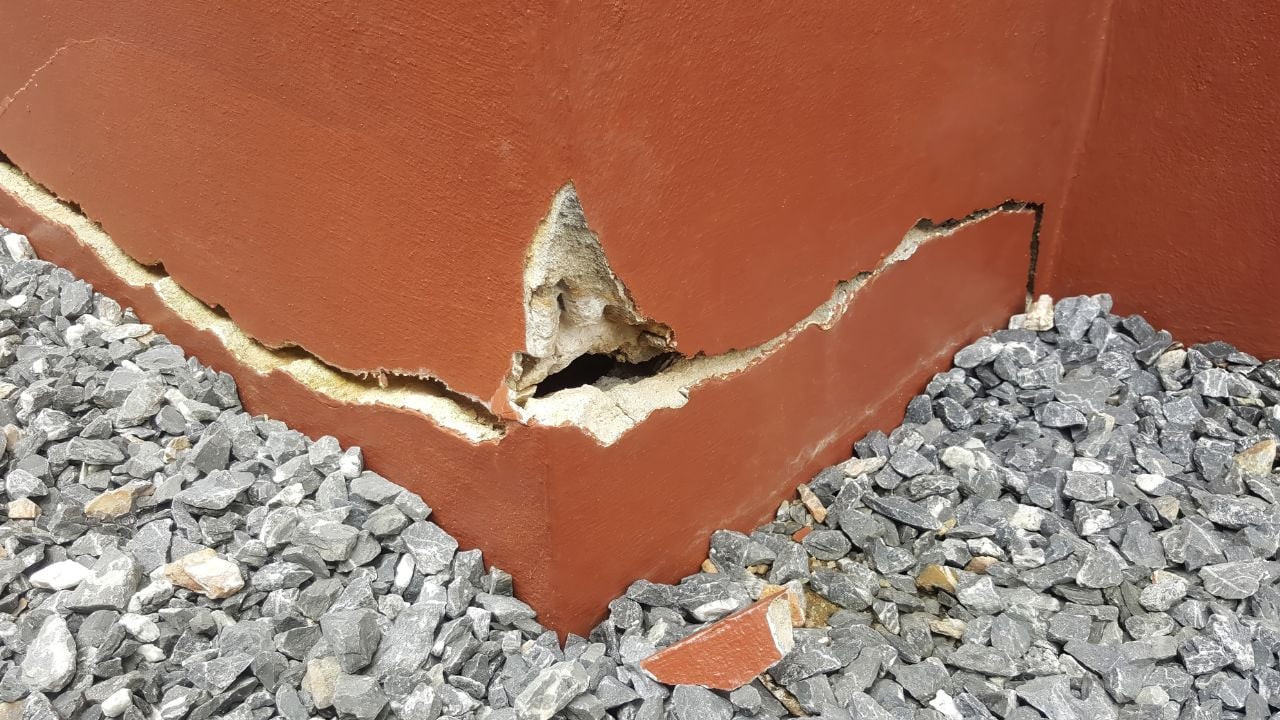
Expansive clay soil, the kind that swells when it's wet and shrinks hard when it dries out, is what many Texas houses built before 1970 have to fight from below.
That swelling and shrinking does more dollar damage nationwide than earthquakes, floods, hurricanes, and tornadoes combined, according to geological survey estimates.
Almost none of those houses have any post-tensioning in the foundation to fight back.
Post-tensioned slabs, built with steel cables tightened after the concrete cures to resist cracking, only started showing up in construction in the 1960s and took decades to become standard.
A foundation poured without that steel reinforcement has fewer defenses against the ground moving underneath it.
Something has to give.
Cracked slabs, doors that stick in one season and swing free the next, and hairline gaps along a brick veneer are the classic signs.
That's not a reason to abandon an otherwise solid house.
It means the foundation deserves a serious look, especially on a house that's never had one.
Distance doesn't change the pattern: Round Rock's 1960s ranches crack the same way Beaumont's postwar cottages do.
6 Things Texas Homeowners Can't Legally Park in Their Own Driveway
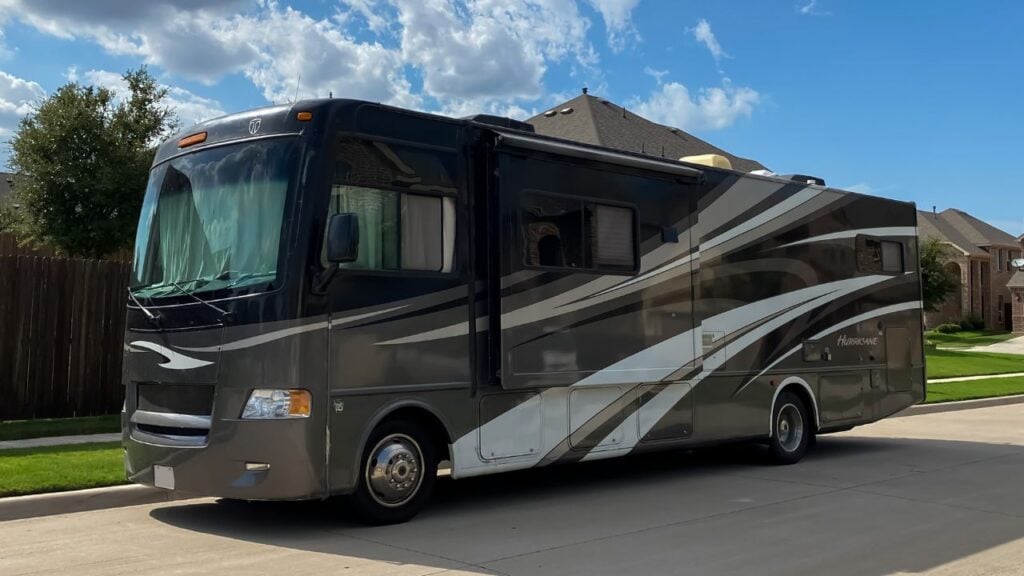
San Antonio can fine a homeowner up to $2,000 for parking a 26-foot recreational vehicle (RV) in the driveway, and that's a city ordinance, not a homeowners association (HOA) rule.
Cities across Texas have written similar rules that many homeowners never discover until a citation shows up on the windshield.
6 Things Texas Homeowners Can't Legally Park in Their Own Driveway
8 Texas Dance Hall Rules Newcomers Break Their First Night
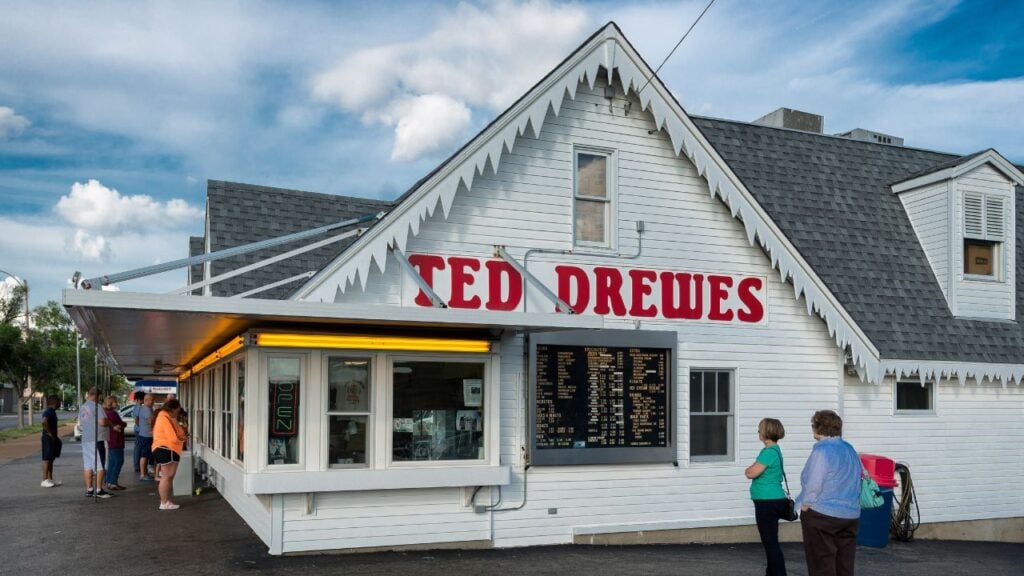
Gruene Hall didn't get any air-cooling system until this year, and even then, it only brings the room down to about 85 degrees.
A Texas dance hall runs on manners regulars pick up without ever being taught, from what to wear to who owns the floor.
