
7 Land Use Rules That Surprise New Oregon Property Owners

Oregon has required a state-approved land use plan in every city and county since 1973, under Senate Bill 100.
Buying land there means buying into that system.
These are the land use rules that surprise new Oregon property owners.
Note: This is general information, not legal or tax advice. Land use, zoning, and permitting rules vary by county and are subject to change.
1. Growth Boundary Cutoff
Every incorporated city in Oregon has to draw an urban growth boundary.
That line separates land a city can eventually serve with sewer and water from land that stays under rural rules.
The requirement traces back to Senate Bill 100, the 1973 law that made every city plan its growth under a set of statewide goals.
Goal 14 is the one that keeps urban growth boundaries in place.
So when might that line move to let in a parcel just outside it?
Not soon, and sometimes never.
A parcel a quarter mile from a Bend subdivision can sit permanently zoned rural, with no path to city sewer or city water.
The smaller lot sizes a buyer might expect from being that close to town never arrive either.
Oregon cities can only expand a boundary through a formal review process, so a property just outside the line waits on the city’s growth math, not the owner’s plans.
2. Farm Zoning That Blocks a House
Vast stretches of Oregon’s rural land carry an Exclusive Farm Use (EFU) zoning designation, one of the most common zoning types outside city limits.
Buyers who picture a homestead on cheap acreage near the Willamette Valley or Yamhill County often assume that zoning is a formality.
It isn’t.
A new dwelling on EFU land generally has to clear a farm income test before a county will approve a building permit.
That test is one of a handful of qualifying paths set in state law, not a single hard number.
The same rule that keeps EFU land affordable is the rule that can keep a house off it.
The income test doesn’t bend just because someone wants to live there.
3. Neighbor’s Farm, Favored by Law
Living next to a farm or forest operation in Oregon comes with a legal tilt built into the law, and it favors the farm.
The state’s Right-to-Farm law shields an established operation from being sued by a newer neighbor over the noise, dust, or smell that comes with ordinary agricultural work.
Bought next to a farm?
That farm was probably there first.
A new owner who buys a rural property next to hay fields or a nursery operation in Marion County can’t win a nuisance claim over tractor traffic or fertilizer smell.
The farm just has to follow accepted practices and stay roughly the size it was in 1993.
The same protection runs the other way for forestland, covering the noise and truck traffic that come with a harvest near timber counties like Coos or Douglas.
Loud, dusty, and legal.
Psst! How much do you know about navigating Oregon’s land use process? Run through this checklist and see where you stand.
4. Legal ADU, No Permission Needed
A 2019 Oregon law overrode local bans on accessory dwelling units (ADUs), catching new property owners off guard.
Cities with more than 2,500 residents can’t require a homeowner to live on-site or add off-street parking before approving a second small home on a single-family lot.
House Bill 2001 made that call for every qualifying city at once.
No landlord clause required.
A buyer who assumes a guest cottage or rental unit needs a hard-to-get variance in Portland, Eugene, or Medford usually finds the opposite.
The state already forced many cities to say yes.
Local design and size limits still apply.
A handful of rural counties outside city growth boundaries write separate rules, so the details still run through the county planning desk.
5. A State Permit for Your Creek
Moving dirt, gravel, or fill material in an Oregon wetland or waterway requires a state permit, even on land an owner holds outright.
Ownership doesn’t waive it.
The Department of State Lands requires that permit once a project touches more than 50 cubic yards of material in most wetlands or waterways.
Some salmon streams need one for any amount at all.
A property owner near a Willamette Valley drainage ditch or a coastal wetland near Tillamook can trigger the requirement without ever touching a river.
Grading a driveway, building a pond, or stabilizing a creek bank is enough.
A backhoe and good intentions aren’t enough.
6. Strings Attached to Special Tax
A lower property tax bill isn’t the only thing that comes with Oregon’s farm and forestland special assessment program.
Enrolling ties the land to its current use, and the county can pull that status the moment the use changes.
Letting the farm work lapse isn’t the only trigger.
So is new approval.
A land use approval for something the zoning never intended, like a house that isn’t part of the farm operation, disqualifies the property just as fast.
The approval itself is the disqualifying event, not years of neglect.
A disqualified Exclusive Farm Use property outside a city’s growth boundary can then owe up to ten years of back taxes.
That’s the gap between what the owner paid under special assessment and what the land would have owed at full market value.
New owners who buy land already enrolled in the program can trigger that bill without meaning to, the moment a county approves a use the special assessment status never allowed.
The same decision that unlocks the new use is the one that ends the tax break.
The Math Behind Oregon’s Farm Tax Payback
Oregon’s farm and forestland special assessment doesn’t erase the tax gap. It delays it.
A disqualified Exclusive Farm Use parcel outside a city’s growth boundary owes back taxes for up to ten years.
The county calculates that bill as the difference between the special-assessment amount and the regular tax amount for each of those years.
Land inside a growth boundary, or land enrolled under a different program like designated forestland, typically owes five years of back taxes instead of ten.
7. The No-Sewer Site Test
Septic permits on Oregon land that isn’t tied to a city sewer system require a site evaluation from the Department of Environmental Quality (DEQ) before a county will approve one.
No sewer, no shortcut.
The evaluation means digging test pits and proving the soil can filter wastewater on its own.
That step can complicate things fast.
Poor soil or a high water table, DEQ says, are exactly the conditions that push a project toward a bigger, pricier septic system.
A parcel that looks buildable on a map, with power already run to the road, can still sit unbuildable until the soil passes that test.
Oregon county planning offices see this story often: A buyer skips the site evaluation before closing, and the septic answer only arrives after the land is already theirs.
10 Things Oregon Residents Should Never Put in a Recycling Bin
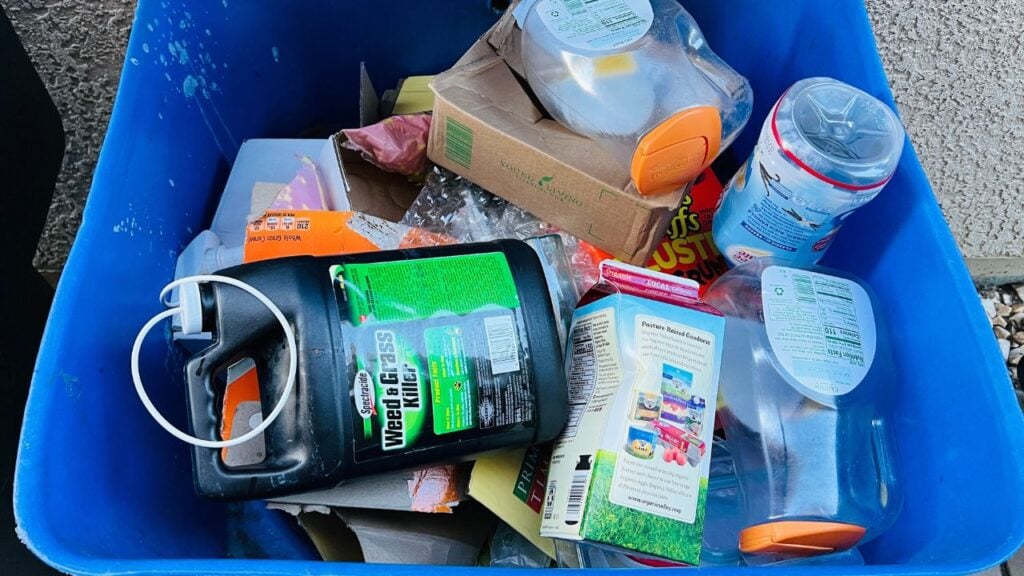
Sixty-one fires broke out at two Portland-area waste and recycling stations in a single recent year.
Oregon traced most of them back to one avoidable habit, and it’s probably sitting in a kitchen drawer right now.
10 Things Oregon Residents Should Never Put in a Recycling Bin
15 Final Jeopardy Answers That Completely Confused Contestants and Amused Oregonians

Final Jeopardy has stumped every contestant on stage more than once, and a few of those clues left even lifelong Oregonians shaking their heads at the screen.
From geography curveballs to trivia nobody outside the state would guess, these are the moments that turned into inside jokes for anyone watching from Oregon.
15 Final Jeopardy Answers That Completely Confused Contestants and Amused Oregonians
