
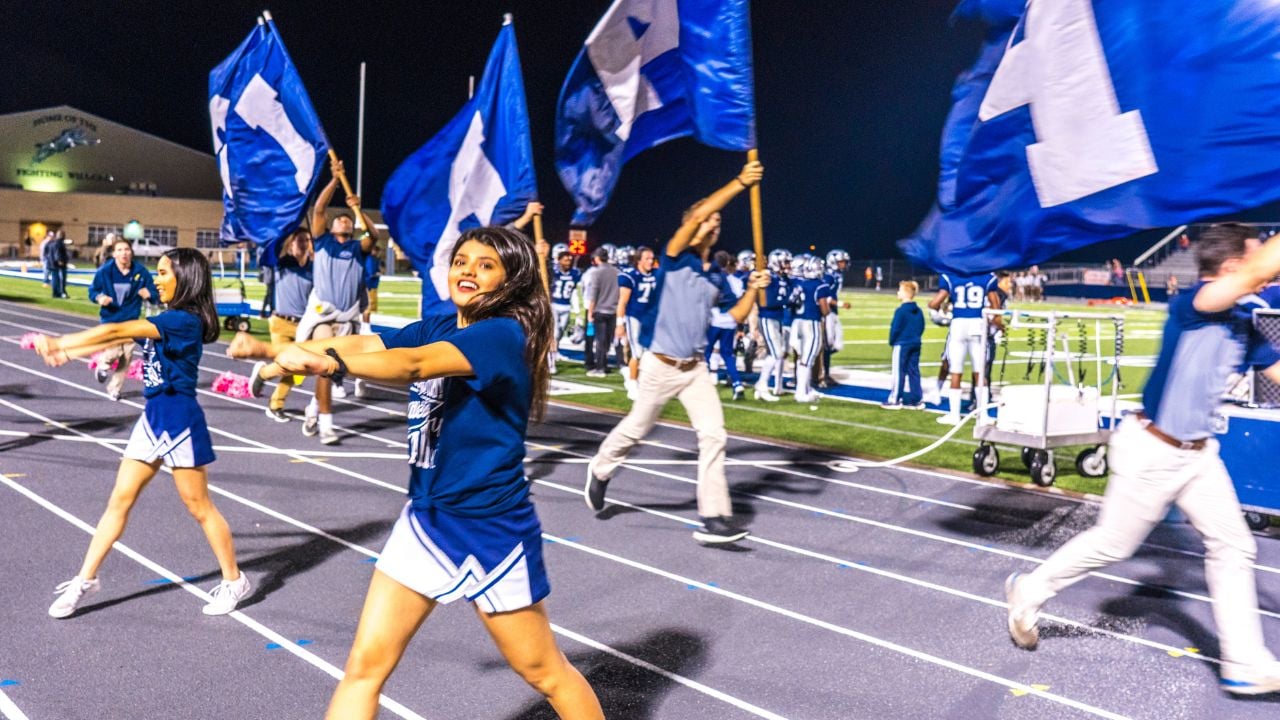
5 Friday Night Traditions That Shut Down Small Texas Towns

Aledo’s Tim Buchanan Stadium seats about 9,155 fans, according to Dave Campbell’s Texas Football. That’s nearly double the 4,858 residents that the U.S. Census Bureau counted there in 2020.
Small Texas towns fill stadiums like that every week.
These are the Friday night traditions that shut down small Texas towns.
1. Aledo’s Pre-Kickoff Street Closure
Aledo closes a stretch of road to cars every Friday night, starting an hour before home kickoff, and that isn’t just a playoff rule.
Every single week.
Aledo Independent School District (ISD) blocks that road to vehicles for pedestrians only, starting an hour before kickoff, according to district gameday policy.
The stadium’s parking lots open at 4:30 p.m., according to the district’s athletics site.
Aledo ISD police officers direct the traffic themselves, and the district warns fans to expect delays on the roads leading into town well before the gates even open.
That same stretch of road doesn’t reopen to cars until the stands have emptied out.
2. Homecoming Parades on Main Street
Homecoming parades close small-town streets to regular traffic, not just to foot traffic.
Tomball, a small town northwest of Houston, closes Main Street outright for its high school’s homecoming parade.
The street reopens only once the parade has passed, according to a local traffic notice.
The whole road, gone.
Spur, a small town out on the South Plains, runs its homecoming parade with a couple dozen floats winding through the center of town.
Anybody who needs to drive through town that afternoon has to wait it out or find another route.
3. Six-Man Towns at the Game
Six-man football keeps some of the smallest towns in Texas glued to one field every Friday.
Richland Springs, an unincorporated community in San Saba County, has a population near 250 and a high school enrollment of just 48 students.
That’s not a typo.
With numbers that small, a big share of the town is either suited up on the field or standing in the bleachers on any given Friday.
The businesses that would normally see them stay dark until the game lets out.
Towns like Loraine, Welch, and Penelope run the same math on a smaller field, with a smaller crowd, and the same emptied-out Main Street.
How Six-Man Football Works
The University Interscholastic League (UIL) lets Texas high schools with roughly 105 students or fewer play six-man football instead of the standard 11-man game.
The field runs 80 yards by 40 yards, about half the width of a regular field, with six players a side instead of 11.
A mercy-rule clock ends the game once one team pulls ahead by 45 points at any point after halftime.
That keeps some six-man games short, and some blowouts mercifully shorter.
4. A Stadium Bigger Than the Town
Aledo’s Tim Buchanan Stadium is the sharpest example of a small Texas town building a football venue bigger than the town.
Aledo counted 4,858 residents in the 2020 census, and Tim Buchanan Stadium seats about 9,155 fans, according to Dave Campbell’s Texas Football.
The seats outnumber the residents by nearly two to one.
Not one empty row.
Fans drive in from Parker County and beyond to fill it.
On a big Friday, the traffic backs up on the roads into town long before the gates open.
Once the crowd clears out of the stands, it clears out of town just as fast.
5. The Rivalry Bell’s Ride After the Win
Cameron and Rockdale, two small Milam County towns, have turned a single piece of railroad hardware into their whole rivalry.
In 1954, a local railroad company donated a brass locomotive bell to serve as the trophy for the annual game, a rivalry known as the Battle of the Bell.
Milam County football supremacy comes down to that bell.
Bragging rights on wheels.
After a win, the winning town drives the bell through its streets, ringing it loud enough for anyone still home to hear the score without checking a phone.
The Booster Club Money Side
Booster clubs run the money side of Texas high school football, and the UIL’s guidelines spell out how far that reach goes, from weight-room equipment to bus trips.
A modest cash parking fee at the stadium gate is often a booster club fundraiser, not a city charge.
Cash only, mostly.
In small towns, that fee and the concession stand often make up the whole booster budget for the season.
An analysis by The Dallas Morning News found 135 area booster clubs, 70 of them dedicated to football.
The biggest booster clubs, in suburbs like Allen and Southlake, reported six- and seven-figure annual revenue.
Allen’s football booster group, the Touchdown Club, alone reported $371,359 of a $1.7 million total in 2024.
A small 1A school never sees numbers like that.
The same booster model, a table of parents selling tickets and brisket, keeps its season running too.
Psst! Every Texas town claims it lives and breathes Friday night football. This checklist tells you exactly how deep that goes for you.
Rivalries: Trophies or Food Drives
Not every Texas football rivalry settles on a bell.
Denison and Sherman have played their Battle of the Ax rivalry since 1901, one of the longest-running high school football rivalries in Texas.
The physical ax trophy came later, when Denison businessman Jack Barker donated it in 1949, and both towns have carved that year’s score into the handle ever since.
Tyler High and Tyler Legacy skip the hardware and compete for something else instead.
For hunger, not hardware.
Their rivalry week doubles as the Pantry Raid, a food drive for the East Texas Food Bank that has run since 1991 and has collected more than 1.9 million meals.
One recent year alone brought in 137,619 meals, feeding a BackPack Program that serves about 7,500 East Texas children during the current school year, per the food bank.
The East Texas Food Bank serves 26 counties out of resource centers in Tyler, Longview, Lufkin, and Texarkana.
Every can and dollar Pantry Raid collects goes into that same supply, the one that stocks the BackPack Program’s Friday deliveries.
8 Things Libraries Lend Out for Free That Texans Never Think to Ask For

Seven library systems across Texas send cardholders home with fishing rods and tackle, not just books about the sport.
Branches statewide have built up collections of equipment, passes, and tools that never sit anywhere near a shelf, and many cardholders never think to ask.
8 Things Libraries Lend Out for Free That Texans Never Think to Ask For
6 Things Texas Homeowners Can’t Legally Park in Their Own Driveway
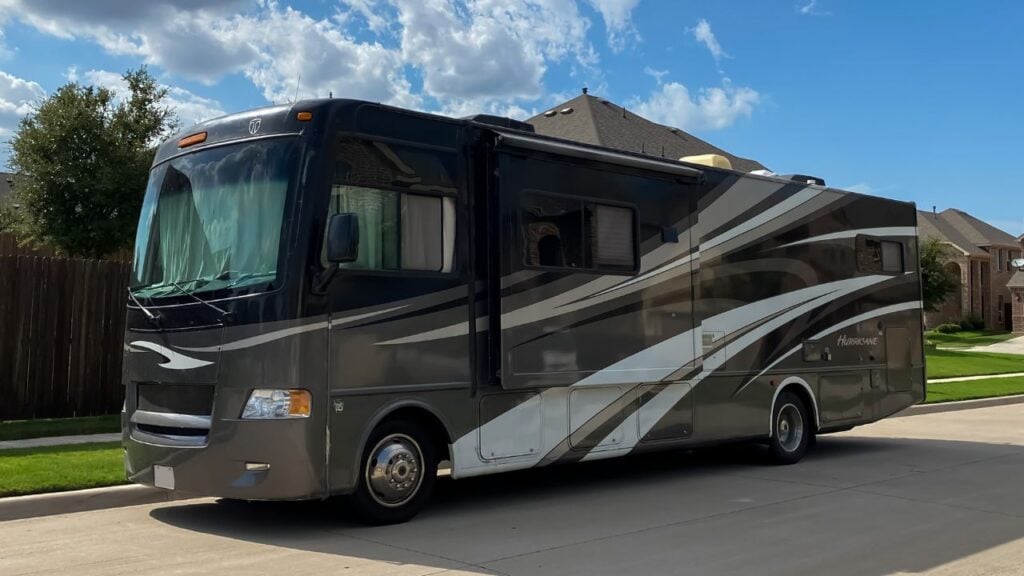
San Antonio can fine a homeowner up to $2,000 for parking a 26-foot recreational vehicle (RV) in the driveway, and that’s city code, not a homeowners’ association (HOA) rule.
Cities across Texas have written versions of that same rule.
Many homeowners never learn about them until a citation shows up.
6 Things Texas Homeowners Can’t Legally Park in Their Own Driveway
