
8 Food Label Terms Virginians Pay Extra for but Probably Shouldn’t

A shopper filling a cart from Harris Teeter to Walmart can pay more in nearly every aisle by picking the package with fancy words on it.
Those words don’t always mean what they promise.
The FDA and USDA let many of these claims reach a shelf on paperwork alone, not a lab test.
These are the food label terms Virginians and Americans across the country pay extra for but probably shouldn’t.
1. Natural
“Natural” costs more at the checkout, and Virginians reach for it expecting the word to cover how an animal was raised or how a fruit was grown.
It doesn’t.
Economists found shoppers were willing to pay 20 percent more, on average, for a product containing the label, in a study the U.S. Department of Agriculture’s (USDA) Economic Research Service cited in its 2023 review of the claim.
The Food and Drug Administration (FDA) sets a policy on the word that says only that nothing artificial or synthetic was added.
That policy says plainly it never covered farming methods like pesticide use.
It never touched processing methods like pasteurization, either.
A “natural” chicken can still be raised in a crowded barn.
A “natural” apple can still carry pesticide residue.
That word covers an ingredient list, that’s it.
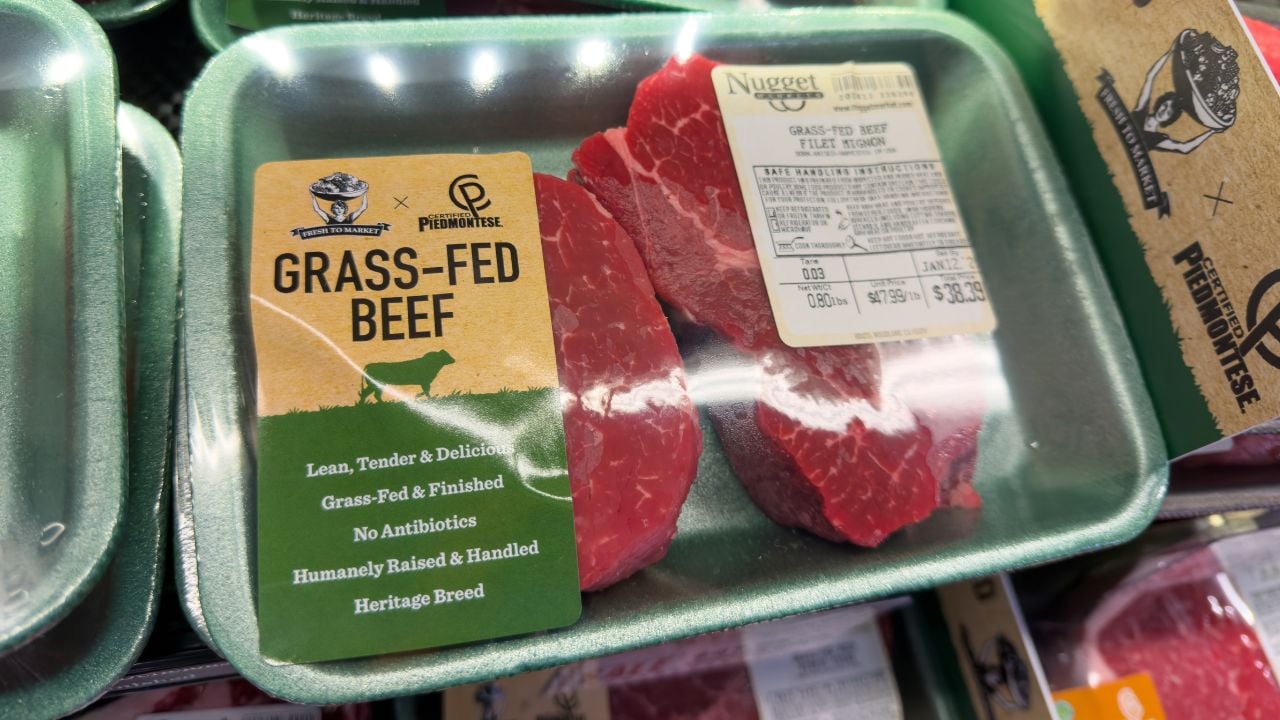
2. Grass-Fed
Grass-fed beef carries a steep markup in the meat case, and shoppers pay it expecting a government standard behind the term.
That standard is gone.
USDA’s Agricultural Marketing Service (AMS) withdrew its uniform definition of “grass fed” in January 2016, along with its “naturally raised” standard.
AMS said it lacked the authority Congress gave it for organic labeling, so it stepped back from defining the term at all.
Producers can now define grass-fed however they like, adopt a private certifier’s version, or use no outside standard at all.
A shopper reading “grass-fed” on two different packages could be reading two different sets of rules.
3. Cage-Free
Cage-free eggs run well above the price of a plain carton, and the label does deliver one exact thing: There’s no cage.
But there’s not much else.
USDA’s description of the claim confirms cage-free hens get freedom to roam inside a barn, with no requirement that they ever see daylight or step outside.
USDA graders only make twice-a-year farm visits when the carton also carries the USDA Grade Shield.
By USDA’s account, not every cage-free egg sold carries that shield.
Without it, nothing but the producer’s word backs the claim.
Psst! Here are five more food-label lines that trip up shoppers. Guess myth or fact, then tap each card to see how you did.
4. Free-Range
Free-range chicken sits a step above cage-free on the price tag, marketed as proof the bird got outside.
Technically, it did.
The federal standard behind the claim requires poultry producers to show the birds had continuous access to the outside throughout their growing cycle, according to the U.S. Department of Agriculture’s Food Safety and Inspection Service (FSIS).
It still sets no minimum on how big that outdoor space has to be.
A small, bare patch of gravel can satisfy that space requirement.
The door still has to stay open across the whole growing cycle, not just for a few minutes at a time.
Compare that to a program like Certified Humane, which spells out square footage and hours outdoors, and the gap between the label and an actual pasture gets a lot wider.
5. No Hormones Added
No Hormones Added chicken and pork routinely cost more than the plain packages beside them at a Kroger or Food Lion meat case.
Here’s the part the fine print gives away.
The FDA has never approved a hormone for use in raising pigs or poultry, so no chicken or hog in the country ever receives one.
That’s why FSIS requires the disclaimer “Federal regulations prohibit the use of hormones” on any pork or poultry package that makes the claim.
That disclaimer settles it.
The premium package and the plain package started out identical.
Where Hormones in Meat Are Still Legal
Beef and lamb are the one exception to every food label claim above.
The FDA has approved certain hormones for use in cattle and sheep production, unlike pigs or poultry, to increase growth rate and feed efficiency.
That’s the one meat aisle where a no-hormones-administered claim tells shoppers something the label on chicken or pork can’t.
USDA only approves it on beef or lamb after the rancher files documentation proving none were used.
6. No Antibiotics
No Antibiotics and Raised Without Antibiotics claims tack a premium onto beef, pork, and poultry in the meat case.
Nobody tests it.
USDA approves the claim once a producer provides documentation showing nobody gave the animal antibiotics.
That’s a paperwork review, not a lab test on the meat.
If a producer’s records say it happened, the label ships.
That’s a different thing from the safety inspection every package already goes through.
7. Non-GMO
Non-GMO packaging, short for no genetically modified organisms (GMOs), shows up on everything from cereal to canola oil, usually priced above the version sitting next to it.
USDA doesn’t verify it.
Federal rules require a “Non-GMO” claim on meat or poultry to lean on a private third-party certifier or an organic label, not a USDA lab.
The government’s program works differently and covers less than shoppers assume.
USDA’s Bioengineered Food disclosure only applies when a lab can still detect modified genetic material in the product.
A highly refined ingredient usually has none left to find, so it carries no disclosure at all.
A bottle of canola oil pressed from bioengineered seed can sit on the shelf with nothing on the label to say so.
8. Multigrain
Bread labeled multigrain sells for more than plain white on many bakery shelves.
That’s the whole pitch.
Bakeries market it as the healthier pick.
“Multigrain” just means more than one type of grain went into the recipe.
Every one of those grains can still be refined, stripped of the bran and germ that make a grain whole.
“Made with whole grain” isn’t much sturdier.
Neither the FDA nor USDA has ever finalized a rule setting a minimum amount of whole grain a product needs to earn that phrase.
The FDA’s guidance on the question has sat as a non-binding draft since 2006.
A loaf could carry a few flecks of whole wheat flour and still print the phrase across the front.
Unproven Selling Claims
FSIS has a name for the process behind many of the terms above.
It’s called generic label approval.
USDA finalized new rules for the “Product of USA” claim in March 2024.
The agency confirmed the label would remain eligible for generic approval, meaning FSIS never has to pre-approve it or run a test before the package reaches a shelf.
The establishment just has to keep documentation on file in case anyone ever asks.
Multiply that across hormones, antibiotics, and many other claims, and the same pattern repeats every time.
A shopper pays the premium up front.
The paperwork, if anyone ever checks it, comes later.
The Two Claims USDA Verifies Firsthand
USDA Organic is the rare label built the other way around.
Inspectors check it firsthand.
A product can’t carry the organic seal until an accredited outside agent reviews the farm or plant and signs off.
That’s the kind of independent check many of the terms above never get.
The USDA Grade Shield works the same way for eggs.
A carton stamped with both the Grade Shield and a cage-free or free-range claim has already passed the farm visits that back it up.
That’s not just the word on the front.
That extra layer of checking is also why a Grade Shield egg often costs a little more than a carton making the same claim without one.
In that one case, a shopper’s extra dollar buys something the register can back up.
The Grade Shield is the only mark in the egg case tied to a USDA grader’s farm visit.
9 Reasons Virginians Say Tourists See the Blue Ridge Parkway All Wrong

A driver eases onto the Blue Ridge Parkway at Rockfish Gap and expects the same rules as every other Virginia highway.
Virginians who grew up nearby say that assumption falls apart within the first few miles.
9 Reasons Virginians Say Tourists See the Blue Ridge Parkway All Wrong
5 Food Lion MVP Perks Virginians Over 60 Leave Unclaimed Every Week
Food Lion’s MVP loyalty program hands back savings every week, but only to shoppers who turn the perks on.
Many Virginia cardholders never do, so the discounts go unused month after month.
5 Food Lion MVP Perks Virginians Over 60 Leave Unclaimed Every Week
