
7 Florida Roadside Attractions Floridians Assume Closed Years Ago

Think Marineland disappeared along with the drive-in theater and the orange grove billboard?
It nearly did.
A federal bankruptcy judge spent months in 2025 deciding whether a Texas developer would take over the property, and Floridians who hadn’t visited in years assumed the worst.
These are the Florida roadside attractions Floridians assume closed years ago.
1. Mai-Kai
The Mai-Kai in Fort Lauderdale closed its doors in 2020 after a burst pipe flooded the historic Polynesian restaurant during a year already hard on tourism.
Word spread that the 1956 landmark was gone for good.
More than 10,000 people signed a petition begging the owners to save it, and thousands more posted about it across social media.
Four years passed.
A $20 million restoration reopened The Mai-Kai in November 2024, complete with its tiki bars and flaming cocktail volleys.
The Polynesian floor show inside is the same one that debuted the year Eisenhower was president.
2. Everglades Wonder Gardens
Everglades Wonder Gardens in Bonita Springs opened in 1936 as a roadside stop where drivers pulled off the Tamiami Trail to see alligators and Florida panthers up close.
The Piper family that built it ran the gardens for more than 75 years.
They locked the gates for good in April 2013, and it looked like Lee County had lost one of its oldest tourist attractions.
Not everyone agreed.
Conservationist John Brady leased the property later that year and began reopening it as a nonprofit garden.
The City of Bonita Springs bought the property in 2015.
The nonprofit Wonder Gardens still walks visitors past panthers, alligators, and native birds on the paths the Pipers built.
It named a new president and chief executive officer (CEO) this past August, a sign the nonprofit keeps growing more than a decade after reopening.
3. Silver Springs State Park
Silver Springs State Park in Ocala isn’t the paid theme park many people remember visiting.
For more than a century, glass bottom boats floated tourists over the spring, first in 1878.
Rides, a reptile farm, and a ticket gate that charged admission ran alongside the boats the whole time.
Hollywood used those same waters for more than 20 movies and TV shows, including three Tarzan pictures in the 1930s and two James Bond films decades later.
The Florida Cabinet agreed to a state buyout of the park in January 2013.
The state took full control of Silver Springs that October 1, ending Palace Entertainment’s rides, reptile farm, and paid gates for good.
The Silver Springs many families paid to enter is gone.
Its glass bottom boats aren’t.
They still glide over the spring today, free to enter inside Silver Springs State Park, the same route they’ve run since the 1870s.
Behind the Wave of Lost Attractions
Florida has lost dozens of roadside attractions since the tourism boom that first drew crowds to spots like Silver Springs.
Walt Disney World’s 1971 opening in Orlando pulled traffic away from smaller, older stops across the state, and many of them never recovered.
Many of the names lost to that boom never came back.
These did.
4. Weeki Wachee Springs State Park
Weeki Wachee Springs State Park has run its live mermaid show since October 13, 1947, when swimmers first performed underwater ballet for drivers along U.S. 19.
By 2003, the mermaid show was so underfunded that national wire stories described it as fighting for its life.
That coverage ran in newspapers far outside Florida.
No follow-up story ran.
Readers who saw it and never visited again had no way of knowing the mermaids kept swimming.
The state of Florida took over the springs in 2008.
Performers still breathe through hidden air hoses piped in from the surface instead of scuba tanks, the same trick that made the show possible in the 1940s.
They still swim several times a day, 18 years into state ownership and more than three-quarters of a century after that first show.
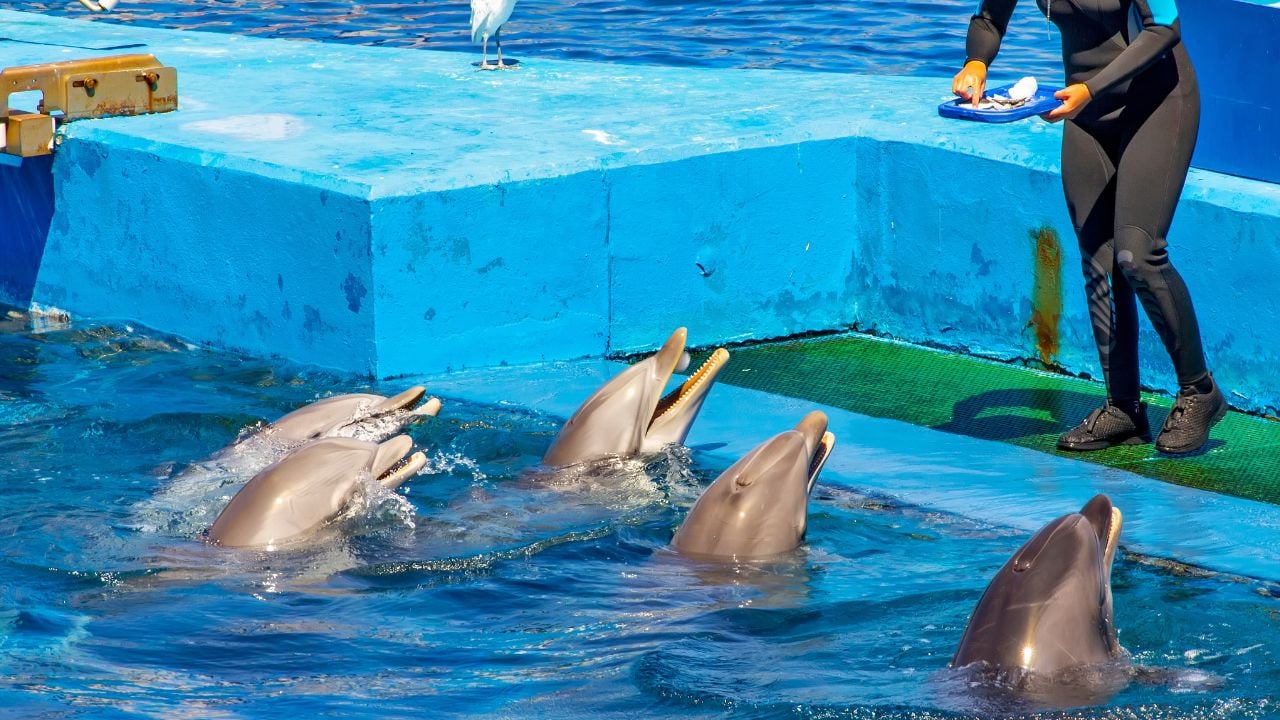
5. Marineland Dolphin Adventure
Marineland Dolphin Adventure in St. Augustine opened on June 23, 1938, as Marine Studios, among the first oceanariums built for Hollywood crews to film underwater scenes.
The Dolphin Company, Marineland’s parent business, filed for bankruptcy in 2025.
The case dragged for months.
A nonprofit led by former staff and dolphin researchers outbid a Texas developer for the property.
The nonprofit closed the purchase for $7.135 million in December 2025, keeping roughly 30 employees on staff.
Marineland still runs five days a week, home to 13 bottlenose dolphins in the same waterfront tanks that drew Hollywood to Florida 88 years earlier.
6. McKee Botanical Garden
McKee Botanical Garden in Vero Beach opened to the public in 1932 on an 80-acre tract Arthur McKee and Waldo Sexton had bought a decade earlier along U.S. 1.
By the 1940s, the jungle garden drew more than 100,000 visitors a year.
The gardens closed in 1976.
Developers built condominiums on all but 18 of the original 80 acres.
The remaining 18 acres sat behind a fence, undeveloped, for the next two decades.
A 1994 fundraising campaign led by the Indian River Land Trust stopped a shopping center from taking that last parcel.
Volunteers cleared two decades of overgrowth from the trails, and the restored garden was formally dedicated as McKee Botanical Garden on November 18, 2001.
It still opens six days a week on that same 18-acre tract, added to the National Register of Historic Places in 1998.
7. Villa Zorayda Museum
Villa Zorayda Museum in St. Augustine occupies a Moorish Revival mansion that Boston millionaire Franklin W. Smith modeled after Spain’s Alhambra palace and built as his winter home in 1883.
The building operated as a museum from 1933 until it closed its doors to the public in 2000.
For eight years, the villa sat closed while an extensive restoration took place inside.
That’s a long closure.
Villa Zorayda reopened for tours in 2008.
The same carved plaster, tiled floors, and imported Moorish details that drew visitors in the 1880s still greet guests on the tour today.
Five Sites on the National Register
Marineland, The Mai-Kai, Villa Zorayda Museum, McKee Botanical Garden, and Weeki Wachee Springs already carry National Register of Historic Places status.
That federal designation protects a site’s history even when its business struggles.
Marine Studios earned the designation in 1986, Villa Zorayda in 1993, McKee Botanical Garden in 1998, The Mai-Kai in 2014, and Weeki Wachee’s mermaid show followed in 2020.
That’s worth remembering.
A federal listing doesn’t force an owner to keep the lights on.
Under federal law, National Register status places no restrictions on what an owner does with a listed property, including tearing it down.
The one exception is a project that involves federal funding or permitting.
7 Publix Checkout Mysteries Florida Shoppers Have Argued About for Years
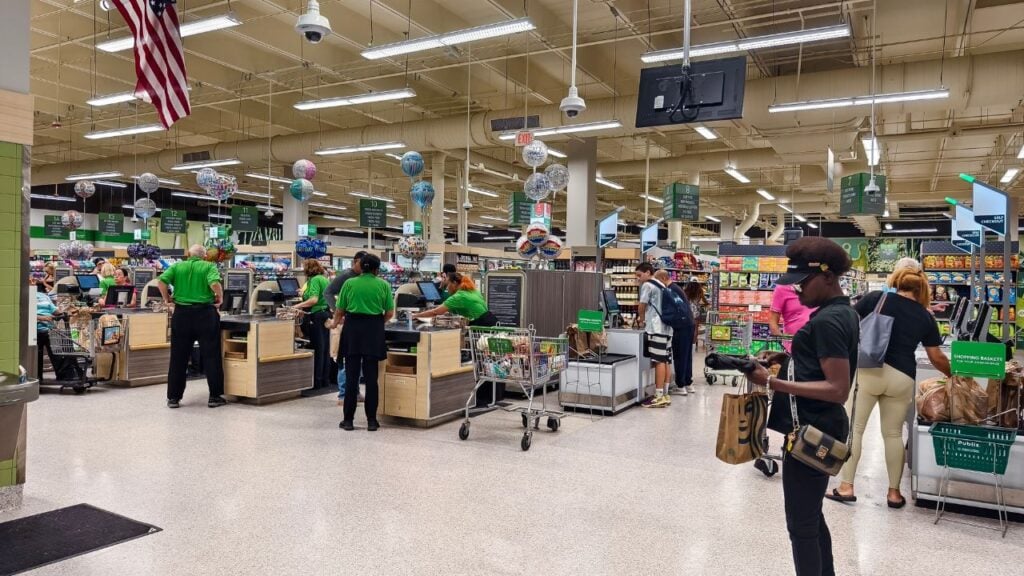
Florida Publix shoppers have argued for years over whether the “10 items or less” sign at the express lane means anything at all.
Something changed at those lanes this past August, and many regulars are still figuring out the new rules.
7 Publix Checkout Mysteries Florida Shoppers Have Argued About for Years
8 Florida Dumpster Diving Rules That Surprise Longtime Residents
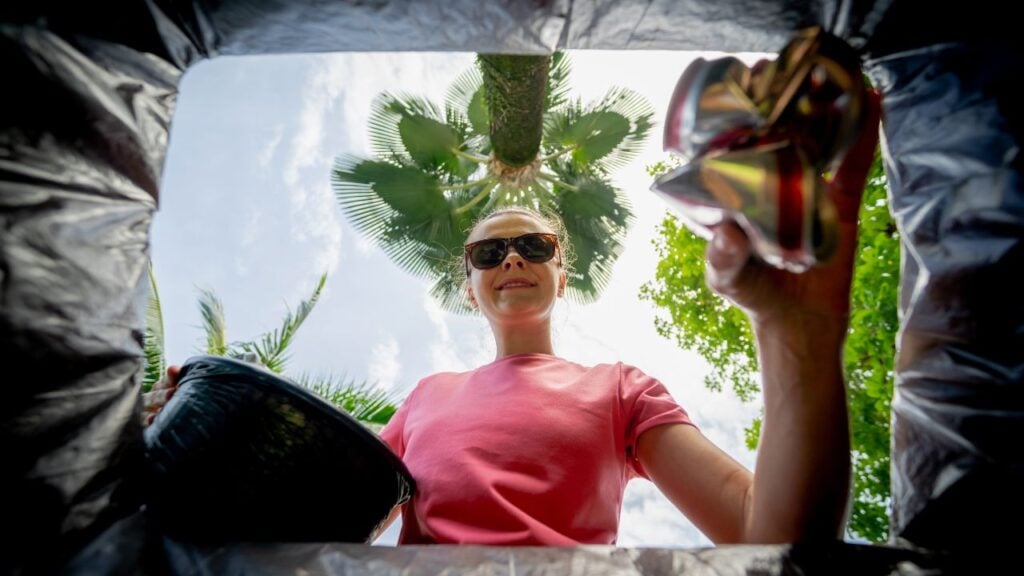
A Florida dumpster diver who never crosses a county line can still answer to a state trespass law, a homeowners association, and at least two separate city codes.
Florida’s dumpster-diving rules stack on top of each other, and longtime residents are often surprised by how many layers apply.
8 Florida Dumpster Diving Rules That Surprise Longtime Residents
