
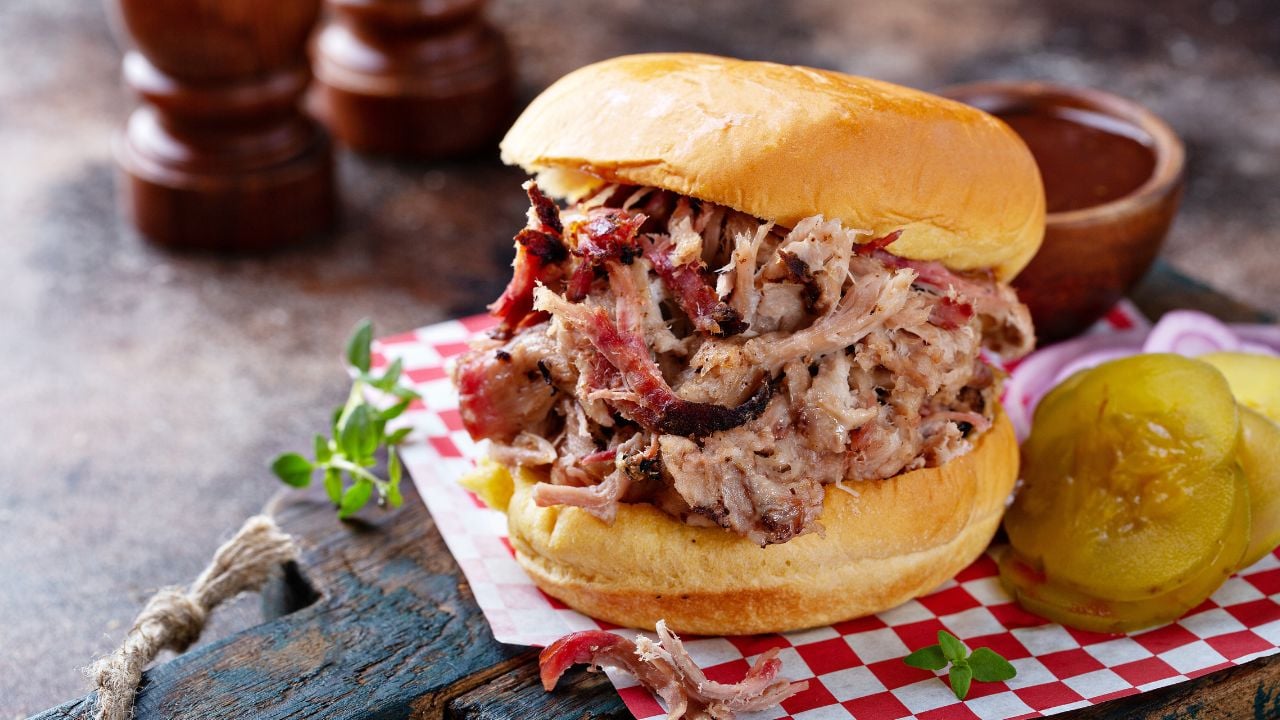
8 North Carolina Barbecue Rules Nobody Writes Down

Vinegar or ketchup isn’t the fight that separates a North Carolina barbecue regular from a first-timer at the counter.
Something else gives a first-timer away.
These are the North Carolina barbecue rules nobody writes down.
1. Outside Brown Order
North Carolina’s Piedmont barbecue counters carry a request that never shows up printed on any menu.
Regulars call it outside brown, the dark, crisp bits of pork that turn deep brown near the fire.
That’s the point.
Ask a pit for extra outside brown mixed into a tray, and the person behind the counter hears a customer who already knows the shoulder.
No menu board lists it as an option.
A first-timer has to already know the word before they can ask.
What Outside Brown Means
Outside brown at a North Carolina pit isn’t the same thing as cracklin’ or plain fatback.
It’s the meat itself, the outer layer of the shoulder that spends the longest time closest to the coals.
Heat and smoke turn that layer dark and slightly crisp, while the meat underneath stays pale and tender.
A chopper who mixes in more of it changes the texture of the whole tray, not just the color.
2. Dip, Not Sauce
In North Carolina’s Piedmont, barbecue sauce goes by another name.
Around Lexington, the condiment on the table is called dip, never sauce.
That shift toward a ketchup-touched sauce happens roughly west of Raleigh.
Our State‘s history of the divide traces it to research by barbecue historian John Shelton Reed.
Word choice matters.
Lexington-style dip is mostly vinegar with a touch of ketchup, brushed on after the chop instead of mopped onto the meat while it cooks.
Order it correctly and nobody blinks.
Ask a Lexington counter for barbecue sauce, and the server still brings dip, just with a small pause first.
That pause is the whole tell.
3. Sell-Out Close
A posted closing hour doesn’t mean much at some of the state’s oldest barbecue pits.
B’s Barbecue in Greenville has no fixed closing time beyond whenever the day’s food is gone, according to the Greenville-Pitt County tourism office’s listing for the restaurant.
Once the hog or shoulder runs out, the sign flips to closed no matter what the posted hours say.
That’s final.
The kitchen doesn’t reopen until the next morning’s fire is lit.
4. Sweet by Default
Barbecue counters treat a glass of tea as sweet tea unless a customer says otherwise.
It’s automatic.
That default holds statewide, not just at the counter.
NCpedia’s entry on the state’s iced tea tradition confirms unsweetened has always been the special request, not the standard pour.
Parker’s Barbecue in Wilson has paired sweet tea with its barbecue since the restaurant opened in 1946, according to Our State‘s history of the restaurant.
A glass of unsweet still has to be ordered as unsweet, every single time.
5. Cornbread, Not Hush Puppies
Eastern North Carolina’s whole-hog barbecue counters put cornbread on the tray, not the hush puppies a visitor might expect.
That’s the swap.
Our State‘s rundown of food pairings lists cornbread, creamy coleslaw, and collards as the traditional Eastern sides.
Cross into Lexington’s territory and the same tray comes with hush puppies and red slaw instead, the state’s other regional pairing.
The bread swaps at roughly the same line that splits the sauce, somewhere between the coast and the Piedmont.
6. No Bottle at the Table
Eastern-style barbecue counters have nothing to hand over when a customer asks for sauce on the side.
The vinegar-and-pepper sauce goes into the meat during chopping, not on top of a finished plate.
Every bite already carries it.
Some counters keep a bottle out anyway for visitors who don’t know better.
A longtime customer never reaches for it.
7. No Picking Your Cut
A barbecue customer who asks to choose a cut at a whole-hog counter is asking for something that was never on offer.
Skylight Inn in Ayden, historically known for a single, stripped-down whole-hog plate, still chops light meat, dark meat, and skin together into one mix, according to its current menu.
There’s no lean-only option and no shoulder-only order inside that mix.
It’s one tray for everyone.
Asking for a cut changes nothing except how long the wait feels.
Psst! How much do you know about North Carolina barbecue? Read each claim below and tap it to see if you called it right.
8. Noun, Never a Verb
North Carolina uses the word “barbecue” only one way, as a noun for the food or the event, never as a verb.
That’s the whole rule.
NCpedia’s entry on the state’s barbecue tradition says as much: Native Tar Heels never use the word to describe cooking something or the grill doing the cooking.
A visitor who offers to barbecue some chicken this weekend, or asks to borrow the barbecue for a cookout, is using the word the way many Americans do.
North Carolina just never adopted that second meaning.
Pig Pickin’s
Barbecue moves differently at a pig pickin’, the informal, home-cooked version of a whole-hog feast.
NCpedia’s entry on the state’s barbecue tradition describes guests pulling or picking meat straight off the cooked hog at these gatherings, not getting it chopped and plated for them.
That’s the opposite of counter-service whole hog, where the chop happens before any plate reaches the table.
Guests do the pulling themselves.
9 North Carolina Wildlife Encounters Newcomers Handle Horribly
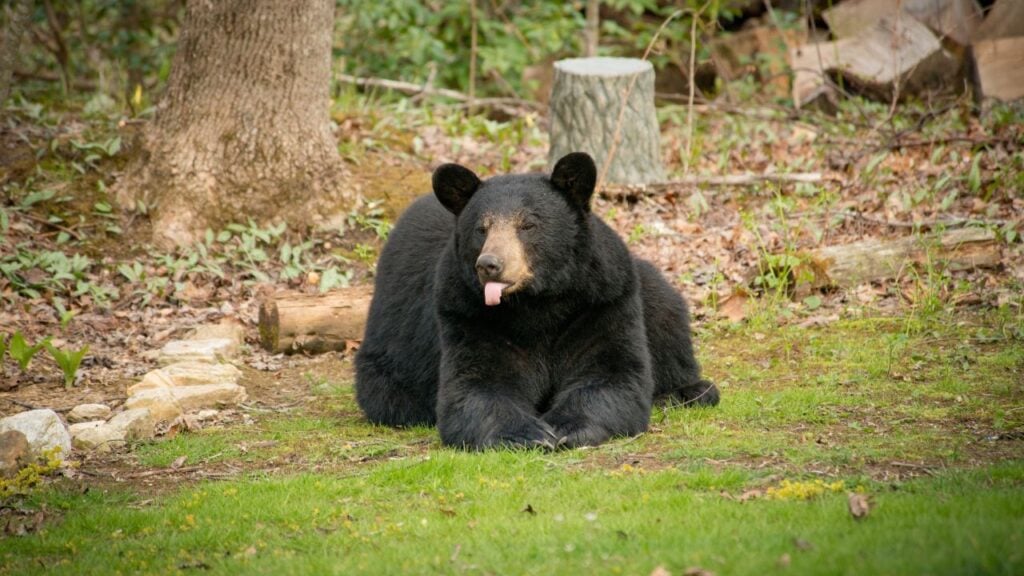
Newcomers to North Carolina brace for sharks and rattle off shark-week statistics before they’ve even unpacked.
The coast logged exactly one confirmed bite last year, and the animals that catch people off guard live nowhere near the water.
9 North Carolina Wildlife Encounters Newcomers Handle Horribly
8 Things North Carolina Small Towns Still Do That the Rest of the Country Gave Up On
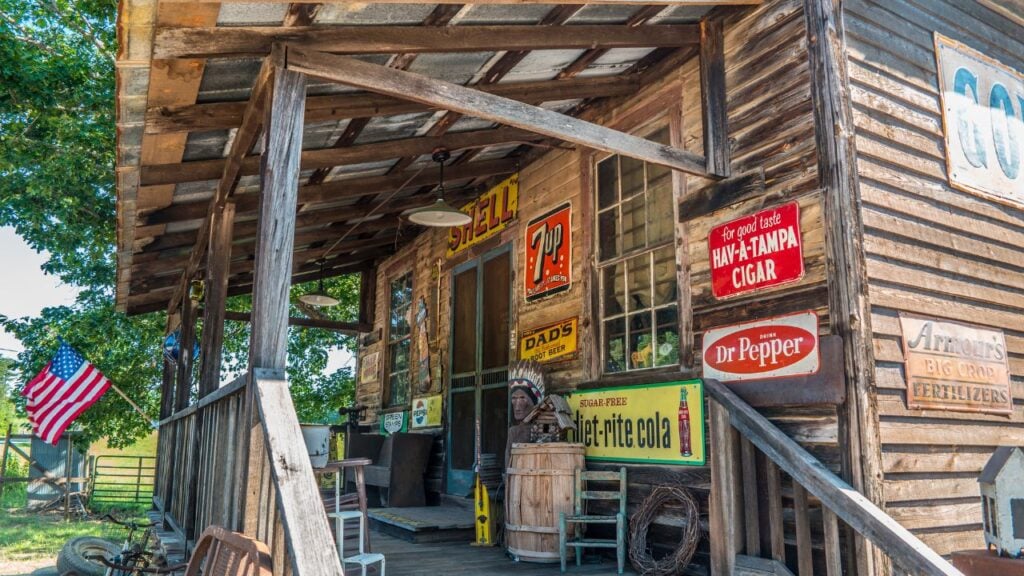
A bull named Old Buck still crashes a village dance on Hatteras Island every January 6th.
North Carolina’s small towns kept a handful of habits the rest of the country dropped decades ago.
8 Things North Carolina Small Towns Still Do That the Rest of the Country Gave Up On
