
9 Things Coloradans Should Keep in Their Car From October On

Colorado’s Traction Law switches on every September 1, weeks before many Coloradans think about winter tires.
Colorado Springs sees its average first snowfall on October 19.
A car still packed for summer road trips can turn into a problem fast on the first mountain grade that ices over.
These are the things Coloradans should keep in the car from October on.
1. Tires That Meet the Traction Law
Colorado’s Traction Law runs every year from September 1 through May 31 on the I-70 Mountain Corridor between Dotsero and Morrison.
The Colorado Department of Transportation (CDOT) requires tires with at least 3/16 inch of tread that are marked winter, all-weather, or mud-and-snow.
The rule applies no matter what drivetrain the vehicle has.
Tread depth, checked first.
A vehicle without tires that meet that standard needs chains or an approved traction device on two drive tires instead.
Colorado State Patrol issued 522 citations on this corridor alone in a recent nine-month stretch.
2. A Set of Tire Chains
Tire chains cover Coloradans on the days the Traction Law alone isn’t enough.
CDOT can activate the separate Passenger Vehicle Chain Law during severe storms.
Once it’s active, every vehicle needs chains or an approved traction device regardless of tire type, all-weather or not.
No tire is exempt then.
Commercial vehicles are required to carry chains on this corridor for the entire September-through-May window.
A set that’s never been unpacked at home does nothing on a closed mountain pass.
Colorado’s Traction Law and Chain Law Aren’t the Same Rule
Colorado runs two separate winter driving rules, and mixing them up is a common mistake on I-70.
The Traction Law is the baseline, active every day from September 1 through May 31 whether or not it’s snowing.
Meeting it just takes the right tires.
The Chain Law only switches on during an active storm, and it overrides the tire exemption.
A driver whose all-weather tires satisfied the Traction Law that morning can still need chains by that afternoon.
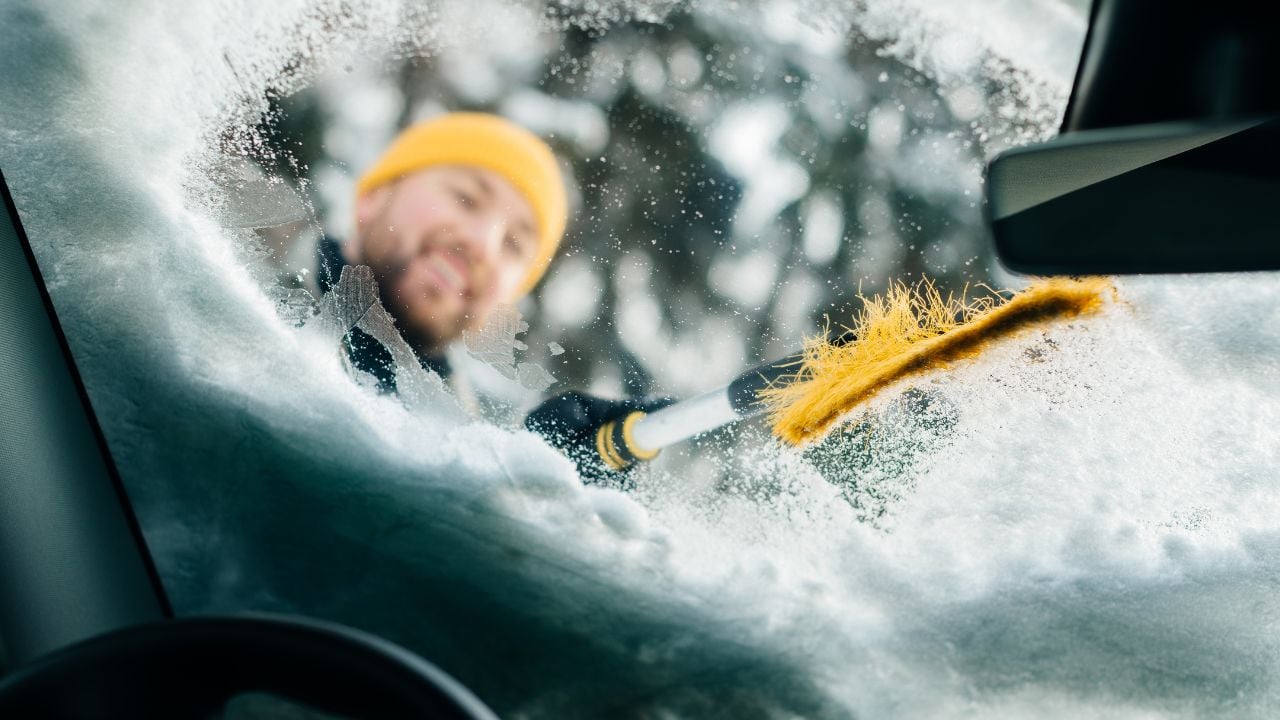
3. A Snow Shovel and Ice Scraper
A snow shovel earns its space from October on, long before the first storm hits.
Colorado State Patrol lists a sturdy scraper, a snow brush, and a small shovel among its core recommendations for any winter emergency kit.
Digging out is easy.
A car buried overnight in a parking lot after an early October storm needs clear windows and a clear exhaust pipe before it can safely run.
Neither happens without a scraper and a shovel already on board.
Psst! Think you know Colorado’s winter driving rules? Take our quiz and find out.
Quiz
Colorado Winter Driving Quiz
Answer these questions on Colorado’s own winter driving rules. We bet you can’t get them all right. Prove us wrong?
When does Colorado’s Traction Law take effect each year?
4. A Blanket or Sleeping Bag
A blanket in the trunk is the difference between waiting out a closure and getting cold.
Colorado State Patrol's winter guidance names a blanket or sleeping bag as a must-have.
The same guidance carries a direct warning to stay inside a stranded vehicle rather than walk for help.
Leaving is the bigger risk.
The National Weather Service is blunt about why: A person who leaves a stopped vehicle in wind-driven snow can become disoriented within minutes.
That can happen long before any nearby help is in sight.
5. Jumper Cables and a Tow Strap
Cold weather is hard on a car battery long before a driver notices anything wrong.
Colorado State Patrol includes jumper cables and a tow strap on its recommended winter list, alongside flares or reflectors to make a stopped car visible to other drivers.
One dead battery, avoided.
A tow strap matters just as much on a mountain shoulder as jumper cables do in a parking lot.
A car stuck in a snowbank on a closed pass needs pulling out, not just starting.
6. A Bag of Sand or Kitty Litter
A bag of sand does two jobs a spare tire can't.
Colorado State Patrol suggests non-clumping kitty litter or sand for extra traction under a spinning tire.
It belongs alongside the rest of a winter kit, not bought after the fact.
Grip when tire has none.
A handful poured in front of a rear tire stuck on packed ice can be the difference between rocking a car free and waiting on a tow truck.
That tow truck may be hours out.
7. A Flashlight and Reflective Flares
A flashlight matters on the stretch of highway with no streetlights at all.
Colorado State Patrol recommends a crank-powered or battery flashlight alongside flares or reflectors, plus a bright cloth tied to the antenna or a door to flag down help.
Seen first, helped faster.
A car pulled onto the shoulder of a mountain highway in a whiteout is nearly invisible to oncoming traffic without something reflective marking it.
A phone flashlight rarely lasts as long as the wait does.
8. Water, Food, and a First Aid Kit
A closed mountain pass can strand a driver for hours, not minutes.
Colorado State Patrol's winter list includes a gallon of water, non-perishable snacks like granola bars, and a first aid kit stocked with any medications a driver takes regularly.
Enough to outlast a closure.
A prescription left at home is easy to forget about on a routine errand.
It becomes a problem fast once I-70 shuts down for an avalanche mitigation closure that can run several hours.
9. A Charged Phone and Extra Warm Layers
A dead phone turns a stranded car into a much longer wait.
Colorado State Patrol's guidance stresses conserving phone battery during any winter stop, alongside packing a coat, hat, mittens, and boots separate from whatever a driver wore that morning.
Warm layers, kept separate.
Sneakers and a light jacket handle an October errand around town just fine.
That same car can still end up stuck on Vail Pass at nine at night waiting for a plow.
None of these nine items take up much room in a trunk, and nearly all of them cost less than a single tow bill.
Packing them in October beats digging through a garage looking for them during the first storm of the season.
9 Colorado Foods and Drinks That Confuse Every Out-of-Stater

A Colorado menu carries a handful of items that stop a first-time visitor cold.
Some of them look familiar right up until the first bite proves otherwise.
9 Colorado Foods and Drinks That Confuse Every Out-of-Stater
20 Home Details That Quietly Impress Your Colorado Guests

A Colorado host has small ways of making a house feel ready for the altitude and the weather both.
None of them require a full remodel, just the kind of detail a guest notices without being told to look for it.
