
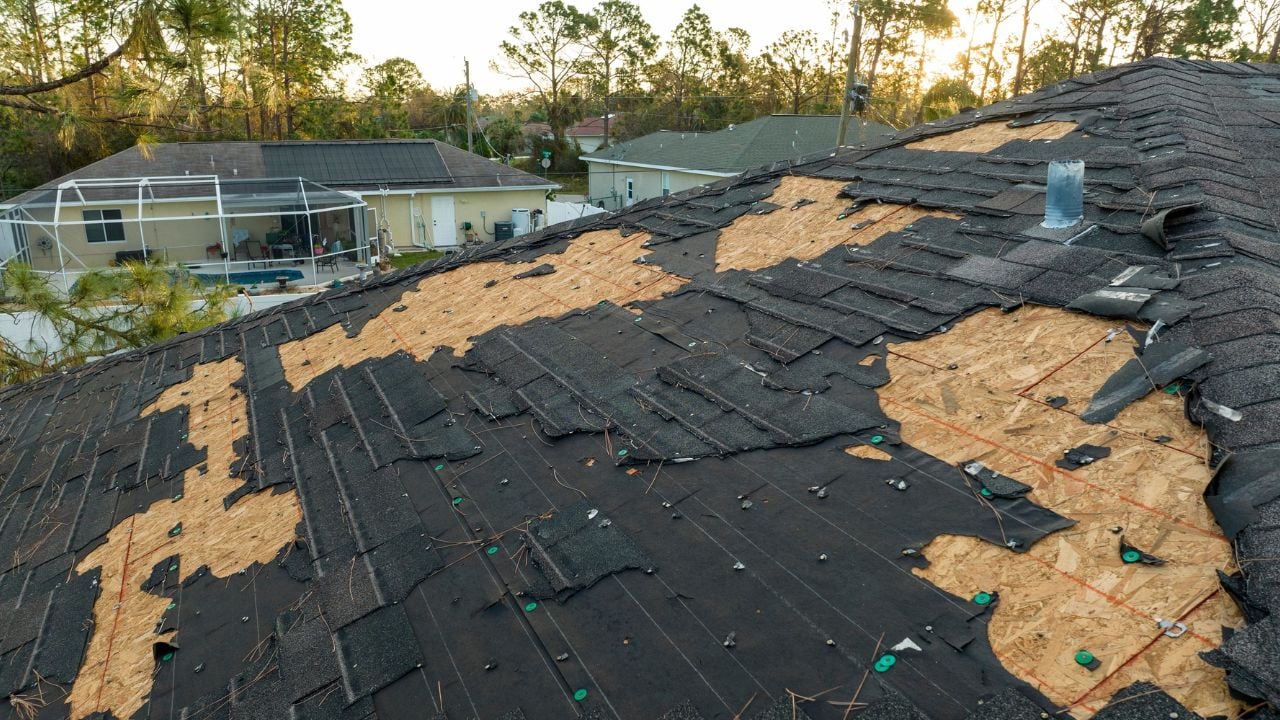
7 Insurance Steps Floridians Overlook in the First Week After a Storm

Have you already called your insurer about any storm damage to your Florida home?
Florida Statute 627.70132 gives a homeowner exactly one year to report that damage, and a payout can shrink long before that deadline ever shows up on a calendar.
The mistakes happen fast.
These are the insurance steps Floridians overlook in the first week after a storm.
Note: This is general information, not insurance advice. Coverage and terms are subject to change, so check the specifics with your insurer or agent.
1. Skipping the Separate Flood Claim
Homeowners who flood during a storm often call the wrong insurer first.
That call goes nowhere once it turns out flood coverage sits on a different policy.
A standard homeowners or wind policy typically excludes rising water.
Flood coverage instead comes from the National Flood Insurance Program or a private flood carrier such as Neptune or Wright National Flood.
The Florida Department of Financial Services tells storm victims that flood and wind coverage usually live in separate policies.
A homeowner carrying both winds up filing with two different companies, each one judging its slice of the damage.
Report only the wind damage, and the insurer never pays for the water damage sitting two feet up the drywall.
2. Letting a Contractor Go First
What happens to an insurance claim once a roofing contractor gets to the homeowner first?
Storm-chasing crews go door to door within hours of a system passing through, clipboard already out, ready to answer that question on their own terms.
Florida barred contractors from taking over a homeowner’s claim through an assignment of benefits on residential policies issued or renewed since 2023.
A homeowner can still sign a work order or repair authorization that hands a stranger control of the paperwork.
Not worth it.
The Department of Financial Services tells homeowners to make the first call to their insurer, not let a crew on the roof make it for them.
3. Skipping Photos Before Cleanup
Homeowners who start hauling out storm-soaked drywall before the adjuster shows up can lose the exact proof that pays for it.
An adjuster works from what’s left, not from a description over the phone.
That evidence disappears fast.
Florida’s Department of Financial Services tells homeowners to document damage with photos or video before repairs start and again once they’re finished.
Citizens Property Insurance goes further for its policyholders.
Its claims guidance says an adjuster has to inspect and sign off before any permanent tear-out or removal happens.
A homeowner who rips out the carpet on day two can void the very documentation a claim depends on.
Psst! How ready is your insurance paperwork for the rest of hurricane season? Run through this checklist and see where you stand.
4. Tossing the Repair Receipts
A tarp on a broken roof counts as an emergency repair under many insurance policies.
So does plywood over a blown-out window, or a crew pumping standing water out of a garage.
Insurance experts told a local news outlet that policyholders should keep receipts for exactly this kind of work.
Many policies require the homeowner to stop further damage and then reimburse them for doing it.
Lose the receipt, and that cash comes out of pocket for good.
Ouch.
A phone photo of every receipt, taken the same day, closes that gap before it opens.
5. Missing the Cancellation Window
A public adjuster works an insurance claim for a cut of whatever it pays out.
Florida caps that fee at 20% of the claim’s payout in ordinary years.
That cap drops to 10% for the year after a declared state of emergency, under Florida Statute 626.854.
A homeowner who signs during that lower-fee window still isn’t locked in for good.
The contract can be canceled within 30 days of the date of loss, or 10 days after signing, whichever runs longer.
Once that window closes, the contract holds, fee and all.
Florida’s Two Different Deadlines
A Florida homeowner’s one year to notify an insurer runs from the date the storm hit, not from the date the homeowner finally reports it.
A second, separate clock covers new damage found later.
A supplemental claim, filed after the original claim for damage that surfaces after the fact, has to reach the insurer within 18 months of that same date of loss.
6. Guessing at the Deductible
Every homeowners insurance policy in the state carries two different deductibles, and only one of them applies to a hurricane.
The standard deductible covers everyday damage, a burst pipe or a fallen tree limb on a calm day.
The hurricane deductible works as a percentage of the home’s insured value, running from 2% up to 10% depending on the policy.
That’s a big gap.
On a home insured for $400,000, a 5% hurricane deductible means the first $20,000 of storm damage comes out of the homeowner’s funds before the insurer pays a dollar.
Filing a claim for less than that only invites a rate hike with nothing to show for it.
Florida’s Department of Financial Services spells out that deductible math for policyholders.
7. Losing Track of Displacement Costs
A Florida homeowner displaced by storm damage can get the hotel bill reimbursed, but only with receipts in hand.
Many homeowners policies carry additional living expense coverage, sometimes called loss of use, for exactly this stretch.
It pays for the jump over a homeowner’s normal costs, a hotel room, restaurant meals, even a pet boarded somewhere dry, while the house sits unlivable.
Citizens Property Insurance’s guidance tells its policyholders to save receipts for every one of those extra costs and warns that this coverage is limited and varies by policy.
Every dollar adds up.
A grocery run during a week in a hotel counts too, as long as it’s the difference over what a homeowner would have spent at home anyway.
Stack every receipt in one folder starting the night the power goes out, and there’s a chance to recover every dollar of it later.
What Happens If Florida Retirees Miss Medicare Open Enrollment?

A missed Medicare deadline doesn’t announce itself the way a storm does.
A Florida retiree who lets the window close can carry a permanent penalty on the Part B premium for the rest of their life.
What Happens If Florida Retirees Miss Medicare Open Enrollment?
6 Florida Deed and Title Scams That Can Transfer a Home Out From Under the Owner

A storm isn’t the only way a homeowner loses control of a house.
These schemes move a deed or a title while the owner still lives there, often for months before anyone notices.
6 Florida Deed and Title Scams That Can Transfer a Home Out From Under the Owner
