
9 Things New Hampshirites Forget to Shut Off Before the First Freeze

New Hampshire’s National Weather Service office ends its fall frost and freeze advisories in three separate zones, each about 10 days after that zone’s typical first freeze happens.
These are the things New Hampshirites forget to shut off before the first freeze.
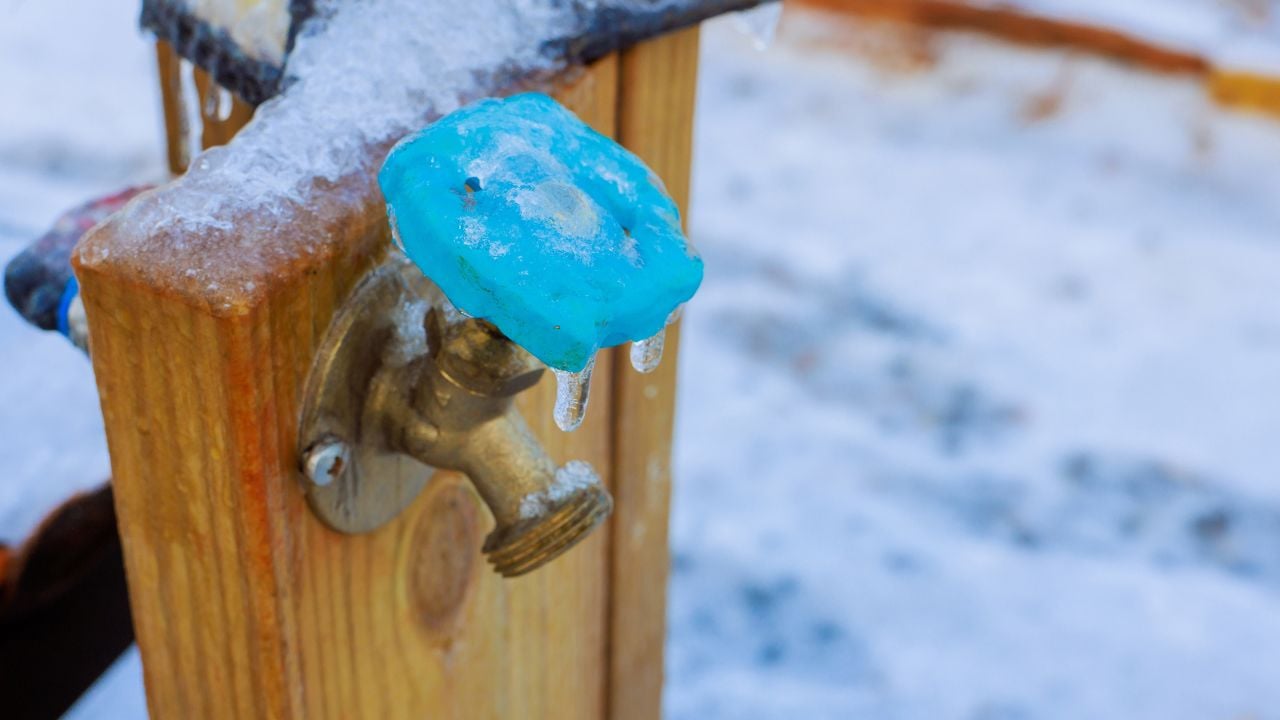
1. Outdoor Hose Bibs
Homeowners who forget a hose screwed onto an outside spigot into fall are undoing the one job that spigot was built to do.
It only works empty.
A frost-free hose bib is pitched slightly downhill, so its barrel drains by gravity every time it’s shut off, as long as nothing blocks that drain.
A hose left connected is exactly that blockage.
Water stays trapped inside, and it expands once the temperature drops below freezing.
A plumber who traces one of these leaks usually finds the crack inside the wall, not outside where anyone would notice it drip.
By the time a stain shows up on the drywall, the leak has been running for days.
2. Frost-Free Yard Hydrants
Properties without full outdoor plumbing often rely on a frost-free yard hydrant instead of a simple spigot, especially camps, farms, and big rural lots.
The hydrant’s shutoff valve sits below the frost line, and closing the handle all the way opens a small drain port at the bottom of the standing pipe.
That’s the whole trick.
Leave the handle even slightly open, or leave a hose or a splitter hooked to the spout, and that drain port can’t do its job.
Water sits in the upper pipe instead of draining away, then freezes solid.
A cracked hydrant means pulling the whole unit out of the ground and putting in a new one.
That’s not a weekend fix.
3. In-Ground Irrigation Lines
Homeowners with an in-ground sprinkler system have to get every drop of water out of it before the ground itself freezes, not just the air above it.
Standing water in a valve, a pipe, or a sprinkler head expands and splits the fitting.
The valves don’t survive it.
A burst system usually means digging up buried pipe to fix it.
Many irrigation companies start blowing systems out with compressed air in early October and keep going through November, before the ground locks up for good.
Concord’s water utility now requires annual testing on the backflow preventer attached to a residential irrigation hookup, the device that keeps sprinkler water from siphoning into drinking water.
Skip it, and the utility can shut the connection off.
Do-it-yourself drainage rarely clears every pocket of water.
A professional blowout costs far less than replacing the whole system in spring.
What This Costs New Hampshire Homeowners
New Hampshire homeowners rarely put a dollar figure on freeze prep until a pipe goes.
State Farm’s claims data puts the average payout for a freeze-related water damage claim at more than $30,000.
That figure is drawn from over 20,000 claims the company paid out between January 2024 and June 2025.
None of the fixes on this list cost anywhere close to that, and many take less than an afternoon.
4. Closing the Camp’s Main Water Line
New Hampshire’s Lakes Region empties out every fall, and many camps around Winnipesaukee, Sunapee, and Squam sit unheated and unwatched until Memorial Day.
The pipes freeze regardless.
Closing a camp for the season means shutting off the main line at its source and draining every supply pipe.
Whatever a simple gravity drain can’t reach gets blown out with air, the same closing ritual real estate guides walk New England vacation-home owners through every fall.
Skip it, and the camp’s water heater is usually the first thing to split.
Nobody’s there to notice a slow leak in January.
By the time someone opens the camp in May, a full tank of standing water may already have soaked through the floor.
Concord anchors that same Merrimack Valley zone, and its normal freeze date lands on October 2, days before many camp owners plan to close up.
The National Weather Service’s frost-and-freeze program keeps the Lakes Region under watch clear into the second week of October, longer than Coos County gets to the north.
5. Outdoor Shower Valves
New Hampshire’s Lakes Region and Seacoast camps almost always come with an outdoor shower bolted to the house or a nearby post.
Many use it constantly in July.
Almost everyone forgets it exists by October.
An outdoor shower’s line freezes and splits exactly the way an indoor pipe does if nobody drains it through its shutoff first.
New England real estate coverage of vacation-home closings lists it right alongside the water main and the irrigation system, not as an afterthought.
A shower valve is cheap and small.
It’s easy to skip.
Psst! How much do you know about New Hampshire’s coldest and snowiest records? Take our quiz and see how many you can get right.
Quiz
Granite State Weather IQ
Answer these questions on New Hampshire’s coldest, snowiest, and windiest records. We bet you can’t get them all right. Prove us wrong?
What is the fastest wind gust ever measured by a staffed weather station anywhere on Earth, recorded at Mount Washington in 1934?
6. Pool Pump and Filter Lines
Pool owners who skip a proper shutdown usually find out about it in April.
It's not October.
Water left inside a pump housing, a filter tank, or a heater core expands as it freezes and cracks the housing around it.
None of those parts are cheap to replace.
New England's freeze-thaw cycle makes it worse than a single hard freeze would.
The equipment thaws and refreezes over and over across a typical winter, and each cycle works a hairline crack a little wider.
Manufacturer instructions exist for a reason.
Guessing at the drainage steps is how a $200 part turns into a full pump replacement.
7. Hot Tub Supply Lines
Hot tub owners who plan to run their spa straight through winter can skip this section.
A tub going dark for the season is a different job.
Every line the jets and the heater run through has to be blown clear.
Even a small pocket of water sitting in a low spot can crack a fitting.
A hot tub has more twists and low spots for water to hide in than a straight garden hose.
Winterizing guides walk through the jets, the pump, and the heater separately instead of treating a spa like one big pipe.
More spots hide water.
A missed low spot is enough to crack a fitting.
8. Garage and Barn Spigots
Properties with a detached garage, barn, or shed often run a separate water line out to it.
That line typically ends in a spigot and a shutoff valve apart from the house's main line.
An unheated building gets none of the protection a house's basement provides.
The house's main shutoff does nothing for that line if it branches off before the water heater or the main valve.
A homeowner who drains the house and calls it done can still come back in spring to a flooded garage floor.
That's two structures.
Two separate shutoffs come with them.
9. Draining the Sump Pump's Discharge Hose
Homeowners with a sump pump usually think about it in spring, once snowmelt and heavy rain start pushing groundwater toward the basement.
The pump itself is safe.
It sits inside a heated house.
The flexible discharge hose running from that pump out across the yard is a different story.
That hose has no valve.
Disconnecting it at its one clamp takes that stretch of line out of service before the ground freezes, the same job a valve does everywhere else on this list.
It lies right on the ground, dipping and rising with every bump in the lawn.
Those low spots hold standing water, and standing water freezes solid the first hard night.
A blocked discharge line gives the pump nowhere to send the water it already pulled in.
The pump keeps cycling against the blockage until the motor burns out.
Disconnecting that hose each fall takes a screwdriver and five minutes.
Reconnecting it each spring takes the same five minutes.
7 Reasons New Hampshirites Drive Past Two Stores to Reach Market Basket

A Patch reporter once ran the exact same grocery list through a Shaw's and a Market Basket on the same day, then added up both receipts.
One store's total came in lower every time, and New Hampshirites built a whole driving habit around that gap.
7 Reasons New Hampshirites Drive Past Two Stores to Reach Market Basket
17 Nostalgic '90s Snacks New Hampshirites Wish Would Come Back

The 1990s produced some of the most flavorful snacks to ever hit a New Hampshire pantry shelf.
Many of those snacks disappeared years ago, and New Hampshirites still bring them up like it happened yesterday.
17 Nostalgic '90s Snacks New Hampshirites Wish Would Come Back
