
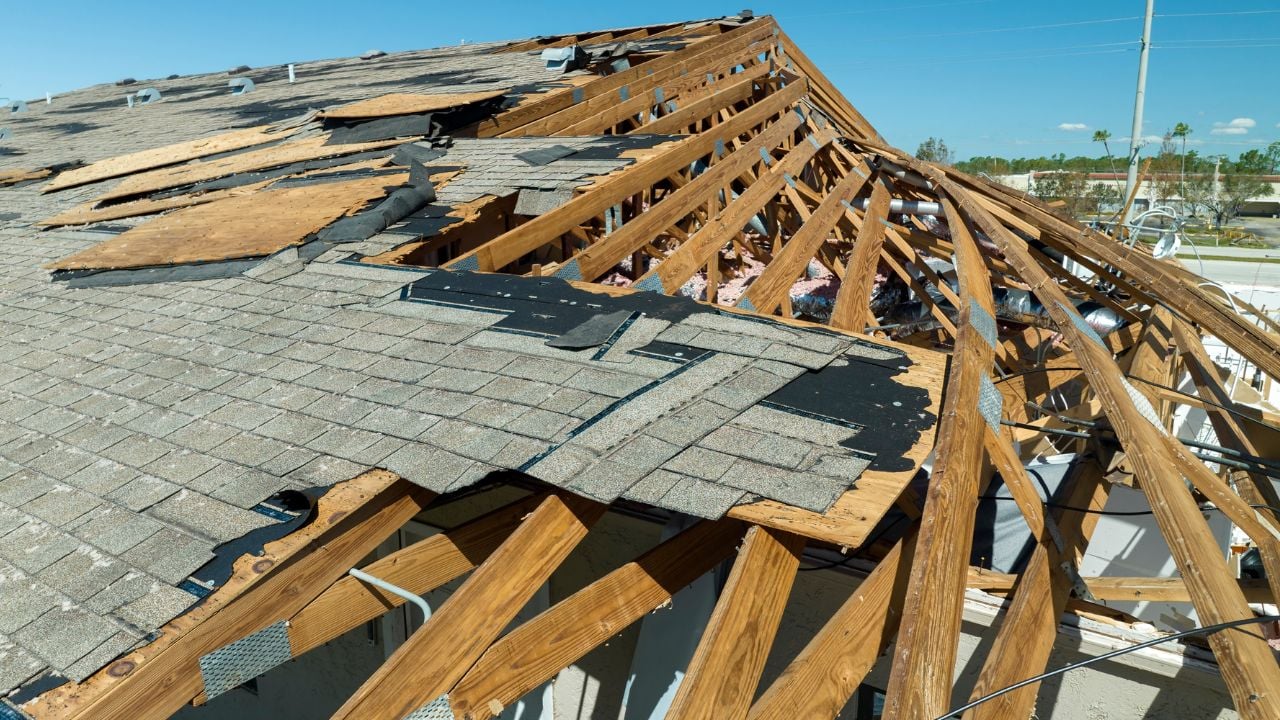
7 Roof Claim Steps Louisianans Innocently Overlook That Leave Them Underpaid

Louisiana homeowners insurance rates have increased every year since 2022, and they rose again in 2025, according to Louisiana Department of Insurance figures reported by Lake Charles’s KPLC-TV (KPLC).
Every claim dollar counts more now.
But a roof claim filed in hurricane season still runs on forms, deadlines, and insurer math built to favor whoever already knows the rules.
These are the roof claim steps Louisianans innocently overlook that leave them underpaid.
Note: This is general information, not legal or insurance advice. Claim rules, deadlines, and dollar figures are subject to change, so confirm the current requirements with the Louisiana Department of Insurance.
1. Filing a Written Proof of Loss
Louisiana law hands a homeowner a firm deadline once the homeowner files a roof claim, but that clock depends on paperwork many people never send.
State law gives an insurer 30 days to pay a claim once it receives a satisfactory proof of loss from the homeowner.
That proof of loss is a signed, itemized statement of the damage and its cost.
That statement needs photos of the damage, a written repair estimate, and the exact date of loss attached to it.
Many homeowners let an adjuster walk the roof and assume that visit alone starts the countdown.
It doesn’t.
Skip the written proof of loss, and the clock never starts.
Nothing forces a number by a set date until that paperwork goes in.
An insurer with no deadline pressing on it can let a lowball offer sit for months.
2. Citing the Bad-Faith Penalty
An insurer that misses that same 30-day claim window without a good reason then faces a bad-faith penalty under Louisiana law.
Under that same law, the penalty runs 50% of the amount found to be owed, or $1,000, whichever is bigger.
That’s leverage.
Half of a $6,000 payout is a $3,000 penalty on top of the original check, just for missing a deadline the insurer already knew about.
Insurers didn’t stop there in 2025. They filed another average 4.4% hike, layered on top of three straight years of statewide increases that came before it.
A delayed roof settlement now lands inside an already tighter household budget for anyone still waiting on that check.
Few homeowners ever ask for it, mostly because they don’t know it exists, so an insurer can pay late without ever facing a consequence.
Put the deadline in writing, and name the law itself if a check runs late.
3. Requesting the Adjuster’s Full Estimate
A roof claim carries a right many homeowners don’t know they have.
Louisiana law entitles a homeowner to a copy of the insurer’s field adjuster report within fifteen days of asking for it.
That paperwork must be requested.
That itemized report shows exactly what counted toward the number and what didn’t, down to line items like disposal fees, code-required underlayment, and labor minimums.
An insurer can keep its internal notes private, but the raw damage estimate and photos behind a roof number belong to the homeowner too.
Skip the request, and a lowballed line item just disappears into a lump-sum total nobody ever checks.
Psst! How much do you know about hurricane prep and insurance rules in Louisiana? Take our quiz and see how many you can get right.
Quiz
Louisiana Storm Prep IQ
Answer these questions on Louisiana hurricane prep and insurance. We bet you can’t get them all right. Prove us wrong?
Louisiana’s Fortify Homes Program grants qualifying homeowners up to how much toward a hurricane-resistant roof?
4. Collecting the Depreciation Holdback
Replacement-cost coverage on a Louisiana roof pays a homeowner in two pieces, and many people only ever collect the first check.
Under Louisiana law, an insurer only owes the depreciated actual cash value amount up front and can hold the rest back as a replacement-cost holdback under R.S. 22:1892(A)(7) until repairs are finished.
That's the holdback.
The insurer keeps that difference until the homeowner finishes the repairs and proves it with receipts.
Finish the roof, send the final invoice and receipts, and the insurer owes the recoverable depreciation on top of what it already paid.
Homeowners who never close that loop leave money sitting with the insurance company sometimes for years because nobody ever asked for it back.
Actual Cash Value vs. Replacement Cost
A Louisiana roof claim can pay out two different ways, and the difference decides how much money reaches a homeowner.
Actual cash value pays the repair cost minus depreciation for the roof's age and wear.
Replacement cost pays the full cost of a new roof, with no deduction for age, once the work is done.
On a $10,000 roof with $5,000 in depreciation and a $4,000 deductible, actual cash value nets a homeowner about $1,000 up front.
Replacement cost coverage eventually delivers the full $6,000 once the roof is fixed.
5. Filing a Supplemental Claim
A roof claim rarely stays static once a crew opens up the roof deck.
Louisiana law requires an insurer to spell out the supplemental claims process for a homeowner once a governor declares a state of emergency for a storm.
That process exists because damage estimates rarely catch everything the first time.
Rotted decking, cracked trusses, and hidden water damage under old shingles turn up more often than any estimate predicts.
No photo, no proof.
Photograph that damage before a crew closes it back up, since a supplemental claim without proof is just an argument.
A homeowner who assumes the first check is the final answer leaves that hidden damage unpaid.
6. Requesting Hurricane Mediation
Louisiana runs a standing mediation program built for exactly this kind of roof claim standoff.
Once the governor declares a state of emergency for a named windstorm, a homeowner can request a free session through the state's Hurricane Mediation Program.
The program covers disputed roof claims up to $150,000.
No lawsuit required.
The homeowner picks a mediator from the state's approved list, and the process runs alongside the normal claim instead of replacing it.
Request it, or the dispute stays wherever the insurer left it.
7. Invoking the Appraisal Clause
Many homeowners policies carry one more tool for a stalled roof claim: An appraisal clause.
Once a homeowner's contractor and the insurer's adjuster land on two very different dollar amounts, either side can invoke it under R.S. 22:1807.13, the appraisal process Louisiana wrote into law for policies issued or renewed on or after January 1, 2025.
Each side picks an appraiser, and the two appraisers pick a neutral umpire to settle the dollar amount.
It settles a number.
An outright denial still has to be fought a different way, but a lowballed roof estimate is exactly what the process was built for.
Whichever number the insurer's adjuster wrote down stands unless a homeowner pushes back, even when a contractor's estimate runs thousands higher.
Invoke the appraisal clause instead, and a neutral third party decides the dollar figure instead of just one side of the disagreement.
6 Rouses Markets Habits That Cost Louisianans Every Week

A shopper's cart at Rouses can ring up like a win and still leave money on the table.
Rouses earns loyalty for good reason, but that loyalty doesn't erase a habit that drains a grocery budget every week.
