
14 Things Only a North Carolina Childhood Teaches You

North Carolina runs 560 miles from Murphy in the mountains to Manteo on the coast.
That’s a lot of ground.
A kid growing up anywhere along it learns things the rest of the country doesn’t.
These are the things only a North Carolina childhood teaches you.
1. Barbecue Line
The state splits into two barbecue camps before a kid ever orders a plate.
East of Raleigh, the tradition is a whole hog cooked slow under a thin vinegar sauce with no ketchup anywhere near it.
Head toward Lexington, and the meat turns into chopped pork shoulder under a sauce cut with a splash of ketchup.
Barbecue historian John Shelton Reed says the two sauces still sit closer to each other than either one sits to anything from Kansas City or Memphis.
Pick a side young.
A family usually settles on one sauce over the other before a kid starts kindergarten.
2. Tobacco Road Loyalty
A basketball rivalry finds kids before they’re old enough to understand why it matters.
The Tobacco Road rivalry between Duke, the University of North Carolina, and North Carolina State University traces back to games played in the 1920s.
Grow up anywhere near the Triangle, and family dinners double as a scouting report.
Nobody stays neutral for long.
A porch flag, a car magnet, or a grandparent’s old game-day radio settles the question long before a kid picks a college.
3. Pepsi’s Drugstore Start
Kids learn early that Pepsi didn’t start in a factory.
Pharmacist Caleb Bradham mixed the first batch at his drugstore counter in New Bern in 1893, calling it Brad’s Drink.
He renamed it Pepsi-Cola in 1898 and incorporated the Pepsi-Cola Company under North Carolina law in 1902.
Bradham trademarked the name instead of patenting the drink, since he kept the formula a closely guarded secret.
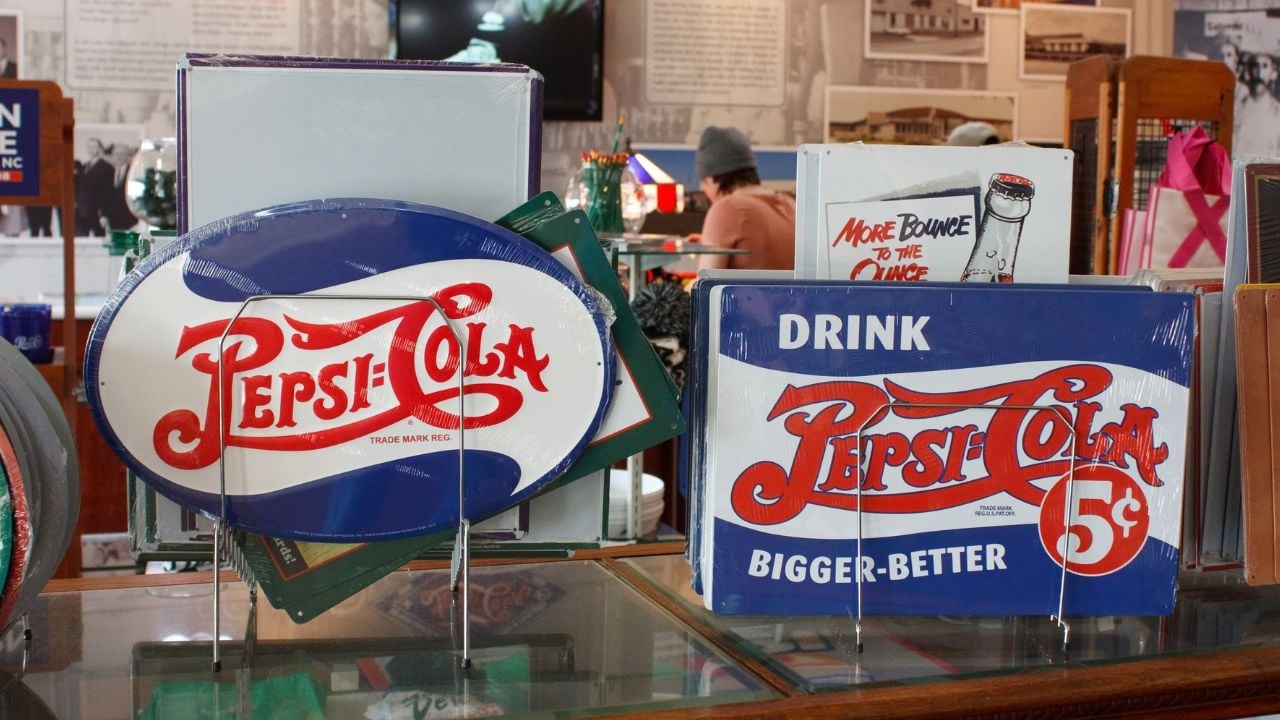
New Bern still runs a museum and store at the original address on Pollock Street, right where Bradham mixed that first batch.
A kid who grows up near the coast usually ends up there at some point, picking out a Pepsi-branded souvenir a few steps from where the story started.
New York came later.
4. Cheerwine Loyalty
Much of the country has never tasted the cherry soda North Carolina kids grow up on.
Lewis Peeler built Cheerwine in Salisbury in 1917, mixing a cherry flavor with less sugar than usual because wartime rationing demanded it.
The name mashed together “cheer,” for what it does, and “wine,” for its deep red color.
Nobody outside the state understands the fuss.
It’s a Carolina thing.
A kid grows up expecting it at every cookout, every gas station, and every family reunion cooler.
5. Krispy Kreme’s Birthplace
North Carolina kids grow up thinking every state has a doughnut chain this good, and it doesn’t.
Vernon Rudolph opened the first Krispy Kreme in a rented Winston-Salem building on July 13, 1937, using a secret recipe he bought from a New Orleans pastry chef.
He wasn’t trying to sell directly to customers.
Not at first.
The smell drew people to the wall, so he cut a hole in it and started selling doughnuts hot, right there.
Every Krispy Kreme box a kid ever opens traces back to that one wall.
6. Plate on the Car
Every family car carries a piece of the state’s history.
The Wright brothers made the first powered flight at Kitty Hawk on December 17, 1903.
North Carolina has stamped “First in Flight” on its standard license plate since 1982.
It’s the first thing a kid learns to read off the car in front of them at a stoplight.
Drivers can swap it for “First in Freedom,” which nods to an earlier claim on independence, or a plate reading “In God We Trust.”
Many never bother.
7. Required Year of State History
A classroom teaches state history as a graded subject, not an elective.
Public school students study North Carolina’s history and geography by name in fourth grade and again in eighth grade.
They compare the mountains, the Piedmont, and the coastal plain the way other states might cover an entire country.
Murphy to Manteo isn’t just a phrase in that classroom.
It’s on the test.
A kid who transfers in from another state usually notices the gap fastest because their old school never asked them to learn a single state this closely.
8. Plant Found Nowhere Else
North Carolina holds nearly all the wild range of a plant found almost nowhere else on Earth.
The carnivorous Venus flytrap occurs naturally within roughly 70 miles of Wilmington, according to North Carolina State University’s extension program.
The program calls it one of the only spots on the planet where the plant grows on its own.
A thin strip of coastal South Carolina is the only other place it grows wild, according to the U.S. Fish and Wildlife Service.
That’s the whole range.
Kids learn this fact in science class the way other states teach a state bird.
Try explaining that to a kid from Ohio.
North Carolina’s Flytrap Felony
North Carolina treats a wild Venus flytrap as protected property, not a free souvenir.
Digging one up from a protected site near Wilmington has been a felony since 2014, punishable by up to 25 months in prison.
Every plant taken counts as a separate charge.
The fine for stealing any state-protected plant jumped from $50 to $150 under that same law.
Note: This isn’t legal advice, and penalties are subject to change.
9. Fraser Fir Country
North Carolina’s mountains grow the Christmas tree other states put in their living rooms.
Ashe and Avery counties grow so many Fraser firs that the state supplied the official White House Christmas tree a record 15 times through 2023.
Avery County’s Cartner family farm sent the 2024 tree too, calling it a tribute to the tree farmers and communities Hurricane Helene hit hardest in western North Carolina.
No other state comes close.
A kid growing up near those farms spends a fall weekend every year walking rows of trees with a family looking for the right tree.
Other kids grow up thinking a Christmas tree is just a Christmas tree, and North Carolina kids know better.
10. NASCAR’s Moonshine Roots
The state turned bootlegging into stock car racing, and nobody pretends otherwise.
Wilkes County moonshine runners souped up their cars to outrun the law on mountain roads through the 1940s and ’50s.
Then the racing started.
They wanted to settle who was fastest.
Enoch Staley and his partners built North Wilkesboro Speedway in 1946, two years before the National Association for Stock Car Auto Racing (NASCAR) ran its first season.
Junior Johnson ran the county’s back roads first and NASCAR’s front stretch second.
A kid learns the sport’s origin story long before they learn a single driver’s stats.
11. Corolla Herd
The northern Outer Banks still runs wild with horses nobody owns.
According to the nonprofit that manages the herd, the Corolla horses descend from Spanish mustangs left behind by failed 1500s Spanish colonization attempts on the coast.
The exact shipwreck stories behind that history remain local legend more than documented fact, even by the nonprofit’s telling.
A managed herd still roams the dunes today, protected by that same nonprofit, which keeps their numbers in check.
A field trip to see them is practically a rite of passage.
No fence. No zoo.
12. Life Near Fort Bragg
One of the Army’s largest posts sits inside North Carolina, right outside Fayetteville.
A kid nearby grows up around deployments the way other kids grow up around a Little League schedule.
The post’s name changed to Fort Liberty in 2023, then reverted to Fort Bragg in February 2025.
This time the name honored a different Bragg, a Battle of the Bulge veteran instead of the Confederate general the base was first named for.
Many families didn’t stop calling it Fort Bragg during the two years it was Fort Liberty.
The old name stuck.
A moving truck in the driveway every few years is just what growing up near the post looks like.
13. Mount Airy’s Mayberry Myth
A kid grows up visiting Snappy Lunch and believing a hometown story the man behind it always denied.
Andy Griffith grew up in Mount Airy, and generations of fans have treated the town as Mayberry itself ever since.
The tradition includes an annual Mayberry Days festival and squad-car tours.
Griffith spent years pushing back on that idea, insisting the show’s producers wanted a generic Southern town and that Mayberry was never meant to be his actual hometown.
Nobody in Mount Airy listened.
Psst! How much do you know about North Carolina’s history beyond your backyard? Take our quiz and see if you can ace it.
Quiz
North Carolina Firsts Quiz
Answer these questions on North Carolina firsts, oddities, and shipwrecks. We bet you can’t get them all right. Prove us wrong?
Which pirate’s flagship was identified in a shipwreck found near North Carolina’s Beaufort Inlet in 1996?
14. Naming the Storms
A North Carolina family talks about hurricanes the way other families talk about relatives.
Hazel flattened the coast in 1954, and Fran tracked straight through Raleigh in 1996, according to the North Carolina State Climate Office.
Floyd flooded rivers in 1999, and Matthew and Florence repeated the flooding in 2016 and 2018.
Helene became North Carolina's deadliest and costliest storm on record in 2024.
A local family doesn't call it the hurricane.
It gets a name.
Everyone in the room knows exactly which year that name means.
A kid who grows up hearing those names strung together like family history ends up knowing state geography better than adults who moved there for a job.
They can point to the exact county Florence dumped 36 inches of rain on without looking at a map.
6 Hurricane Prep Habits Longtime North Carolinians Never Skip

North Carolina has taken a direct hurricane hit about once every two years since 1851, according to the state's climate office.
Longtime residents never wait for a forecast to turn scary before they check their supplies.
6 Hurricane Prep Habits Longtime North Carolinians Never Skip
5 Things That Change in North Carolina's Beach Towns Once School Starts Back
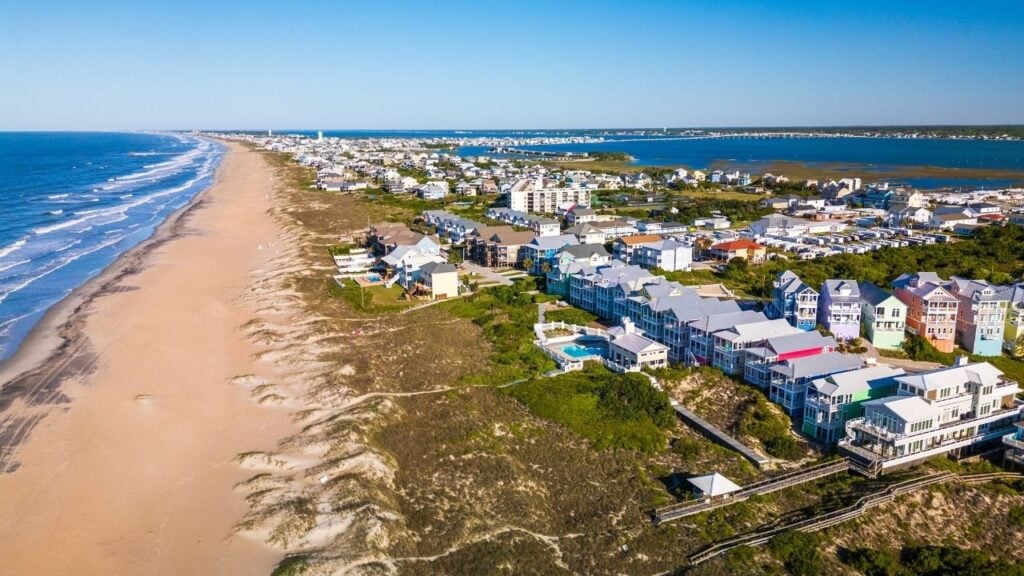
The sand looks the same in September as it did in July, but the roads in front of North Carolina's beach towns empty out fast.
Locals get their town back the same week the school bus routes start running again.
5 Things That Change in North Carolina's Beach Towns Once School Starts Back
