

9 Arizona Habits That Get Transplants a Strange Look in Every Other State

A steering wheel sitting in the Tempe sun averaged 127 degrees within an hour, according to a joint study by Arizona State University and the University of California, San Diego.
Arizonans built a whole routine around that number.
These are the habits that get Arizonans a strange look when they move out of state.
1. The Dry-Heat Line
One line sums up the state’s summers: “It’s a dry heat.”
Longtime residents reach for it the second anyone complains about the thermometer.
It’s true, more or less.
Arizona’s summer air does run drier than a sticky Southern afternoon, and the science backs it up.
Say it in Houston or Charleston in August, though, and it lands differently.
Nobody there wants a lecture on humidity.
They just want the air conditioning turned up.
Repeating the line in a humid state is the kind of habit that gives an Arizona transplant away.
The line doesn’t travel well.
2. The Empty-Car Sweep
Out of habit, drivers strip a parked car down to nothing before they even lock the doors.
Medication, aerosol cans, phone chargers, and a tube of sunscreen all come inside before the trunk closes.
Local TV stations run the same warning every summer, that a parked car works less like an oven and more like a pressure cooker.
A can of soda left behind can swell and burst.
Sun-baked medication stops working the way it’s supposed to.
Move that instinct to a state with mild afternoons, and it reads as plain paranoia.
The reflex never got the memo about the new state.
3. Calling It Monsoon Season
Arizonans call the summer storm stretch “monsoon season,” and they mean it as an official label, not a joke.
Many Americans hear “monsoon” and picture South Asia, not a Tuesday evening dust cloud over Scottsdale.
The word tends to draw a second look outside the Southwest.
The National Weather Service marks it as a defined season, running from June 15 through September 30.
Say “monsoon” out loud in Ohio or Vermont, and it tends to draw a familiar follow-up: A monsoon, here?
Many people just shrug and keep talking about rain totals.
4. Talking up the Swamp Cooler
Homes have relied on evaporative “swamp coolers” for generations, long before central air conditioning spread across the state.
A swamp cooler pushes air over water-soaked pads, and the evaporation itself does the cooling.
It works because the air holds so little moisture to begin with.
Move to Alabama or Florida, and the same box does almost nothing.
Humidity blocks the evaporation that makes the system work.
The box just hums.
An Arizona transplant who brings up a swamp cooler in a humid state usually gets a blank stare back.
It’s a term that rarely means anything outside a few dry states.
5. Calling It a Haboob
Arizona weather coverage started leaning on the word “haboob” for a dust storm after a massive wall of dust rolled through Phoenix in July 2011.
The term comes from Arabic, and it describes the same kind of dust storm long documented across the Sahara and the Arabian Peninsula.
Some people pushed back on the word right away, arguing “dust storm” said the same thing without reaching for a foreign term.
The pushback made national news anyway.
The word stuck anyway.
Outside Arizona, the reaction is usually confusion, not controversy.
Use “haboob” in casual conversation almost anywhere else, and many people assume you’re talking about a place, not weather.
A follow-up question always comes next.
Psst! How much do you know about Arizona living? Take our quiz and see how many you can get right.
6. The Golf Cart Reflex
Arizona has let golf carts share the road since 2014.
The rule only applies to age-restricted communities in a county with more than 3 million residents, which in practice means Maricopa County.
Communities like Sun City lean on that law hard, and a golf cart runs errands there the way a sedan does everywhere else.
Groceries, the pharmacy, a friend’s driveway two streets over, a golf cart covers all of it.
Mention driving a golf cart to the pharmacy back home, and people treat it like a joke.
They’re not.
Try to drive one on a public street somewhere without that same law, and the reflex turns into a problem fast.
The Golf Cart’s Fine Print
Arizona’s golf cart law only covers roads posted at 35 mph or slower.
The cart itself also has to be registered with the state Motor Vehicle Division first.
A driver also needs a valid license and at least $25,000 per person in liability insurance, plus working headlights, taillights, a horn, and a mirror.
The one thing the law doesn’t require is a windshield.
7. Cold at Sixty Degrees
A 60-degree evening reads as shorts weather in Minnesota or Maine, and as jacket weather in Arizona.
People spend months acclimating to triple-digit afternoons.
That kind of acclimation resets what “cold” even means.
Sweaters come out.
Families dig out space heaters.
Move to a cooler-summer state, and that internal thermostat doesn’t reset just because the address did.
Bundling up at 60 degrees is the kind of thing that draws a puzzled look in a mild-winter state.
They’re just still thinking in July.
8. Skipping the Clock Change
Arizona has kept standard time year-round since 1967, sitting out Daylight Saving Time while the rest of the country changes its clocks twice a year.
The state opted out for a simple reason: Nobody wanted an extra hour of daylight stacked onto an already brutal summer evening.
Arizona just sits still while clocks change everywhere else.
Move to a state that changes its clocks, and the habit of not tracking the time shift doesn’t disappear right away.
The switch is the kind of thing that can trip up a transplant during the first meeting after the clocks change, showing up an hour off in either direction.
It happens twice a year, like clockwork.
9. The Car Cool-Down Ritual
A car parked in the summer sun becomes a hazard within about an hour.
A joint study from Arizona State University and the University of California, San Diego found something stark.
Dashboards averaged 157 degrees and steering wheels averaged 127 degrees after an hour of direct summer sun on test days in Tempe.
Shade barely helped.
Steering wheels in shaded cars still averaged 107 degrees in the same study.
So people built a ritual around it.
A reflective sunshade goes behind the windshield, a fabric cover wraps the steering wheel, and sometimes a beach towel covers the seat before anyone sits down.
A driver who’s lived through a few Arizona summers does it without thinking, right down to the sunshade before the ignition even turns off.
The same ritual on a 70-degree afternoon in a mild state is the kind of habit that raises an eyebrow.
8 Arizona Towns That Feel Like They Belong in Another State
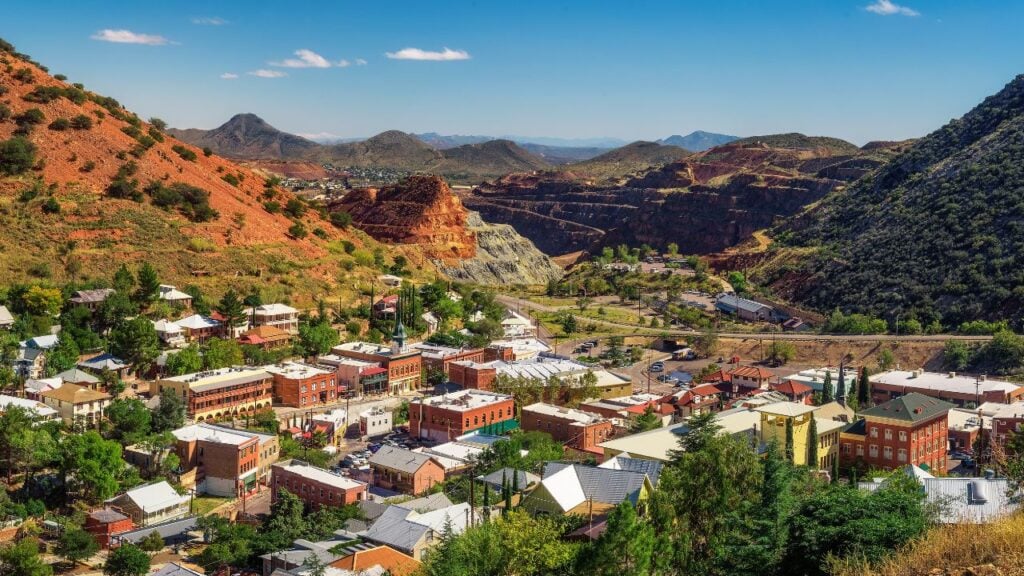
One Arizona hillside town swaps streets for staircases, with steps standing in for roads on the climb up from downtown to the houses above.
It’s not the only Arizona town that looks nothing like the rest of the state.
8 Arizona Towns That Feel Like They Belong in Another State
9 Arizona Foods and Drinks Visitors Order Wrong Every Time

A burrito dropped into a deep fryer at Tucson’s El Charro Café in 1922 is supposed to have given Arizona the chimichanga, curse word included.
Almost every visitor manages to order one by name, and almost none order it the way a local does.
