
7 Things Florida Kids Did in the 1960s That Would Panic Parents Today

A Florida childhood in the 1960s came with a set of hazards that parents today would never sign off on.
None of it felt unusual at the time.
It was just what growing up looked like before a few decades of safety lessons caught up with the state.
These are the things Florida kids did in the 1960s that would panic parents today.
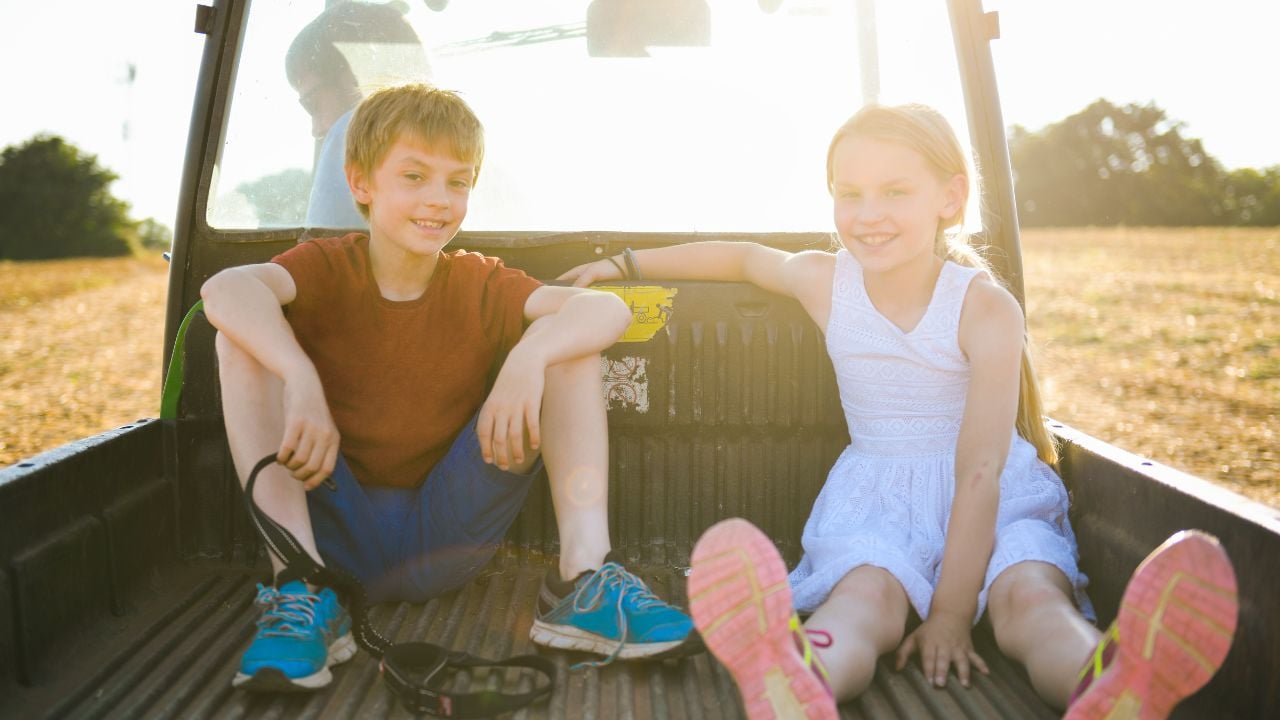
1. Riding in the Back of a Pickup
Kids rode to the beach or the ballfield in the open bed of a pickup truck, with the wind in their faces.
Buckling up wasn’t the law.
Florida’s child restraint law, which covers kids 5 and under, took effect in 1983.
The state’s general safety belt law followed in 1986.
Today, the state bars anyone under 18 from riding in a pickup’s open bed on limited-access highways unless the truck has secure seating and restraints.
A county commission can vote to exempt its county from that rule.
2. Running Behind the Mosquito Truck
Kids on bikes chased the mosquito truck as it rolled slowly through neighborhoods on summer evenings.
The prize was the thick white fog pouring out the back.
In cities like Jacksonville, that fog was the pesticide DDT, mixed with kerosene or diesel fuel and heated into a cloud.
Jacksonville’s mosquito control division says that era of spraying nearly drove the peregrine falcon and other birds of prey to extinction.
Federal regulators banned the pesticide in 1972 over its risks to wildlife and health.
The trucks still run.
Today’s fog is a different chemical, sprayed at a few ounces a minute instead of several gallons.
Parents today would call them straight inside.
3. Swimming Where the Gators Swam Too
A kid’s swimming hole in the 1960s could be a spring, a canal, or a lake instead of a swimming pool.
Canals didn’t come with lifeguards.
Alligators have lived in the state’s marshes, swamps, rivers, and lakes for centuries.
Kids swam in that same water on the assumption that the gators would keep to themselves, which, on an ordinary day, they did.
Most days, anyway.
The Florida Fish and Wildlife Conservation Commission now tells people to swim only in designated swimming areas during daylight hours.
Serious injuries from alligators are rare in Florida, the agency says.
How Many Alligators Florida Has
Florida has an estimated 1.3 million alligators, according to the Florida Fish and Wildlife Conservation Commission.
Alligators live in all 67 of the state’s counties, from lakes and ponds to swamps and slow-moving rivers.
4. Riding Bikes Without a Helmet
Bikes carried kids in the 1960s to school, the corner store, and a friend’s house across town, with nothing on their heads.
Helmet rules came much later.
Bike helmets didn’t have to meet a mandatory federal safety standard until 1995, under a children’s helmet safety law Congress passed the year before.
As late as 1993, a federal safety study found only about 18% of bicyclists nationwide wore helmets.
Florida law now requires every bicycle rider or passenger under 16 to wear a properly fitted helmet with the strap fastened.
A young rider cited for a first offense can have the charge dismissed by showing proof of a helmet purchase.
Quiz
How Much Do You Know About Florida?
Eight questions on the state’s landmarks, wildlife, and hidden trivia.
The Everglades is the only place on Earth where two large reptiles coexist in the wild. Which two?
5. Going Barefoot in Fire Ant Country
Backyards in the 1960s held a hazard for barefoot kids that earlier generations never had to think about.
A red fire ant mound could send a swarm of stinging ants up a bare leg before a kid even noticed it.
Red imported fire ants arrived from Brazil through either Mobile, Alabama, or Pensacola between 1933 and 1945.
The ants had reached 25 Florida counties by 1958.
A typical colony holds about 80,000 workers, according to the University of Florida's Institute of Food and Agricultural Sciences.
When a mound is disturbed, the ants pour out to bite and sting.
A white pustule usually shows up at the sting site the next day.
Watch your step.
6. Summers Loose in the Orange Groves
Kids in citrus country spent whole summer days wandering through the orange groves near home.
They climbed trees and ate oranges straight off the branch.
Nobody needed a permission slip.
Citrus groves covered huge stretches of Central Florida through the 1960s, long before development and the hard 1980s freezes pushed the industry further south.
Clermont's Florida Citrus Tower went up in 1958, all 226 feet of it.
From the top, visitors looked out over groves covering the rolling hills of the ridge as far as the eye could see.
After the freezes, most of the groves north of Interstate 4 were removed.
The land went to other uses.
7. A Full Day Outside With No Sunscreen
A beach day for kids meant hours under a subtropical sun with nothing on their skin but a towel and a hope for the best.
A bad sunburn was treated as a normal cost of a day outside, not a warning sign.
The peeling came standard.
Sunscreen existed by the 1960s, but consistent daily use, and the skin-cancer warnings that eventually drove it, were still decades away from becoming a habit.
Coppertone started out as a suntan lotion developed in the 1940s by Benjamin Green, a Miami pharmacist.
The brand's Little Miss Coppertone sign went up over Biscayne Boulevard in 1959.
The Food and Drug Administration didn't publish its first proposed sunscreen rules, SPF ratings included, until 1978.
Storms Before Statewide Building Codes
For kids in the 1960s, a hurricane meant riding it out at home with the family.
Hurricane Donna crossed the middle Florida Keys in September 1960, with maximum sustained winds estimated around 140 mph.
Donna reached the coast again south of Naples.
The storm caused 12 deaths in Florida, directly or indirectly, according to a National Weather Service account.
Florida didn't adopt even a minimum statewide building code until 1974.
Even that code let local governments choose among four codes and amend them.
Then came Andrew.
Hurricane Andrew tore through South Florida in 1992 and exposed how inadequate that patchwork of local codes was.
The statewide Florida Building Code that followed took effect in 2002.
Every new home since has had to meet it.
9 Things Florida Parents Always Do When Their Adult Children Come Home

An adult child can live across the country for years and still become a kid again the moment they walk through the front door.
Parents slip right back into an old rhythm every time.
9 Things Florida Parents Always Do When Their Adult Children Come Home
8 Habits Floridians Drop the Week Peak Hurricane Season Finally Passes
The National Hurricane Center's climatology puts the single most active date of the Atlantic season on September 10.
Many households loosen up once that date is behind them.
8 Habits Floridians Drop the Week Peak Hurricane Season Finally Passes
