

9 Florida Fence and Property Line Rules Neighbors Get Wrong

A fence post set two feet over the line can turn next-door neighbors into courtroom opponents.
Neighbors rarely see it coming.
That’s because Florida spreads its fence and property line rules across pages most people never think to check, until a dispute shows up on their doorstep.
These are the Florida fence and property line rules neighbors get wrong.
Note: This is general information, not legal advice. Fence, boundary, and homeowners’ association (HOA) rules vary by county and community and are subject to change.
1. Setback Rules by County
Florida sets no single statewide fence height or setback rule.
Hillsborough County caps a front-yard fence at 4 feet and allows up to 6 feet along the side and rear lines.
Wellington, over in Palm Beach County, runs the opposite kind of rule.
If you’re building there, your fence has to sit at least 3 feet back from the line instead of sitting right on it.
The math changes at the county line.
State law stays out.
Check your county’s actual land development code before you measure anything because the number that matters isn’t a state number at all.
2. Skipping the Fence Permit
Many Florida counties won’t let a fence go up without a permit first, no matter how short it is.
Miami-Dade County requires a permit before any fence goes up.
In Miami-Dade, a chain-link fence in your yard also has to sit behind the front building line.
Skip the paperwork, and a code inspector can order your fence removed later.
That call comes after you’ve already built it and paid for it.
The permit comes first.
A four-foot picket fence still needs the same signature as an eight-foot privacy wall in many of those counties.
3. Stricter Pool Fence Law
Your pool fence answers to a different law than the fence out front.
Florida’s Residential Swimming Pool Safety Act sets a statewide minimum for the barrier around a pool.
That barrier has to stand at least 4 feet high on the outside, with no gap a small child could climb through or squeeze under.
Its gate has to swing away from the water, latch itself, and keep the release out of a toddler’s reach.
Barrier isn’t your only option.
An approved pool cover satisfies it too, and so do exit alarms on every door and window leading to the pool.
Self-closing and self-latching doors with the release set out of a small child’s reach, or an approved pool alarm, count as well.
Even if you’ve already fenced the whole yard for privacy, that fence doesn’t automatically meet the pool law’s barrier rule unless it hits those exact specs.
You can always lean on one of the other four options instead.
Pick whichever option fits, and the pool law still controls, no matter what the county’s regular fence code says.
4. Old Fence Myth
You might assume a fence that’s stood for thirty years has already settled the property line.
Florida’s First District Court of Appeal receded from decades of earlier rulings in 2009.
It held that a fence’s mere existence doesn’t prove you and your neighbor ever disagreed about the true line.
You’ll need genuine, provable uncertainty about the boundary to win that argument now, not just an old chain-link fence nobody ever moved.
A survey that already shows the true line makes your argument even harder, and Florida courts have refused to treat a fence as the boundary once a survey exists.
Your fence isn’t proof.
Psst! See how rule-ready your fence plan is before the first post goes in the ground.
5. HOA’s Second Approval
If you live in an HOA, Florida law lets it add a second layer of fence rules on top of the county’s.
Under Florida Statute 720.3035, an HOA can require its written approval before your fence goes up.
That power only exists if it’s spelled out in your HOA’s declaration or its published guidelines.
If the board says no to your fence, it has to put the refusal in writing and name the exact rule it broke.
No deadline forces the board to answer fast.
The statute never sets a deadline.
You’ll need the county’s permit and the HOA’s approval as two separate steps.
That’s two approvals, not one.
Skip either approval, and your fence can end up pulled back out of the ground.
6. No Statewide Spite Fence Law
State law gives a spiteful fence surprisingly little statutory cover, on either side of the property line.
You might assume a fence built purely to spite you crosses a legal line the way it would in a state with a dedicated spite-fence law.
Florida doesn’t have a spite-fence law.
Many states lean on ordinary nuisance law instead of a stand-alone spite-fence statute, and Florida is generally counted among them.
A fence built purely to block your view or annoy you can only be challenged as a private nuisance under ordinary Florida common law.
Winning that claim means proving malice behind the fence and no legitimate purpose for it at all, and courts have found that a hard case to make.
Ugly isn’t illegal.
7. Adverse Possession Catch
You can’t win an adverse possession claim just by occupying a strip of a neighbor’s land and waiting.
Occupying someone else’s land for seven years under Florida Statute 95.12 only starts your clock.
The clock alone isn’t enough.
You also have to pay the disputed parcel’s property taxes every year the claim is running.
You then have to file a sworn return with the county property appraiser within 30 days of that very first tax payment, not every year after.
Skip the paperwork, and seven years of mowing somebody else’s yard buys you nothing.
What Florida’s Adverse Possession Return Does
Florida’s adverse possession return doesn’t hand over the property, even after it’s filed.
The state’s form says so in capital letters: Filing it doesn’t create any interest you could enforce in court.
The county property appraiser’s office simply logs the claim so the recorded owner can see it on file.
A recorded owner who pays that year’s taxes before April 1 still keeps priority over your payment as the adverse possessor.
It doesn’t matter how many years of mowing came before it.
8. Jointly Owned Tree
State law treats a tree with a trunk sitting on the property line as belonging to both you and your neighbor at once.
Neither neighbor can cut it down without the other’s consent.
That consent matters.
Courts have awarded damages over a boundary tree that came down without it.
A live tree that falls becomes a problem for whoever’s yard it lands in, yours included.
A dead tree is different because the law expects a tree’s owner to have noticed it was dying before it fell.
9. Self-Help Trimming Rights
You don’t need your neighbor’s permission to trim a branch or root that crosses onto your side of the line.
No permission required.
Cutting back an encroaching branch or root at your expense has been the settled rule in Florida, reaffirmed as recently as a 2010 ruling.
That 2010 case let one neighbor trim a boundary tree’s limbs back to the line without asking its owner first.
Reaching a saw across the line still doesn’t need anyone’s sign-off, as long as the cut stops exactly where your property does.
9 Flood Zone Myths That Cost Floridians Thousands

Florida’s insurer of last resort is about to make flood coverage mandatory on every wind policy it writes, no matter what the flood zone map says.
That mandate says more about the state’s flood risk than any zone letter ever could.
9 Flood Zone Myths That Cost Floridians Thousands
8 Boat Registration Renewal Traps That Catch Floridians Off Guard
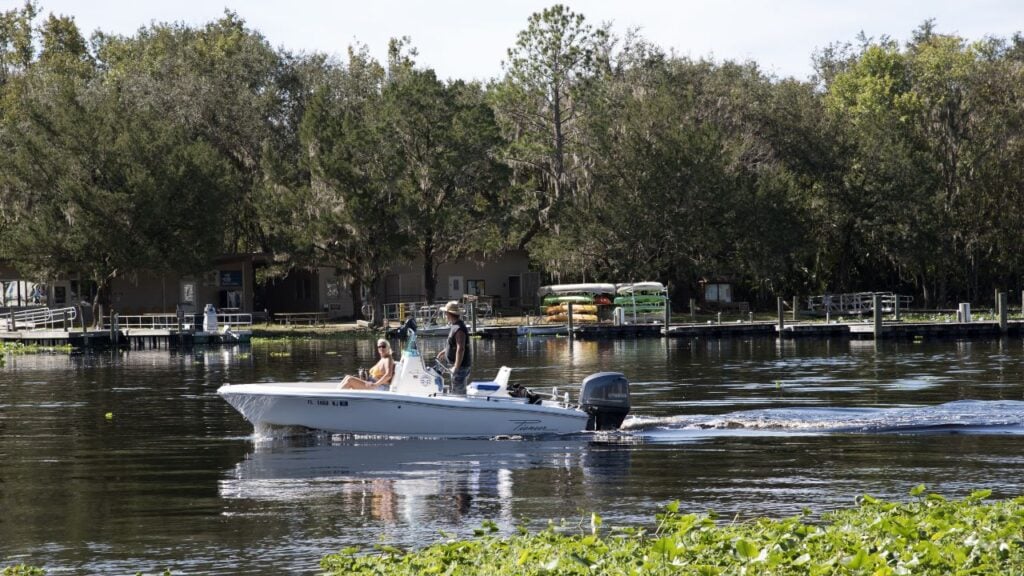
A boat’s most expensive moment in Florida rarely happens out on the water.
It’s the renewal detail an owner never notices until an officer asks to see the paperwork.
8 Boat Registration Renewal Traps That Catch Floridians Off Guard
