

8 Storm-Chaser Roofing Scams Kentucky Homeowners Need to Recognize

A truck pulls up in your Kentucky neighborhood right after a storm, and a stranger offers a free look at your roof.
The pitch sounds friendly.
But some of it may be a setup.
Here’s how to spot the tricks before you sign anything.
Note: This is general information, not legal or insurance advice. Contractor and insurance-claim rules are subject to change.
1. Crews Posing as Locals
How does a storm-chasing crew convince you it’s a local outfit when it just crossed the state line?
The trucks roll into a county within hours of a hailstorm or a tornado, wearing out-of-state plates and a magnetic sign that peels off as fast as it went on.
Kentucky lawmakers built a 2023 law around this exact pattern, after storm-chasing adjusters and contractors targeted tornado and windstorm victims across the state.
No roof, no roots.
A company that can’t point to a finished roof anywhere nearby is worth a second look.
If a crew showed up before your insurance adjuster ever called, it’s running the exact play state lawmakers had in mind.
2. Sign-Now Discount
The pitch a storm-chasing crew uses almost always comes with a deadline that expires before you can call anyone else.
The clock starts the moment the truck parks.
Kentucky’s Attorney General flagged the exact move in a consumer alert issued after a wave of hail storms.
It warns about contractors who dangle a lower price that disappears unless you sign that same day.
Good work can wait.
A roof that survived one storm can survive you calling your agent, getting a second estimate, or sleeping on the decision overnight.
A pitch that can’t survive that pause is the sign.
Reporting a Kentucky Storm-Chaser
Kentucky’s Office of the Attorney General takes reports on this exact kind of pitch through its Consumer Protection Hotline at 1-888-432-9257.
Before you sign a contract, Kentucky’s Secretary of State runs a free business filings search that shows whether the company is registered to do business at all.
A truck with a temporary sign often can’t pass that check.
3. Damage That Wasn’t There Before
But a storm-chasing crew’s free inspection on your roof sometimes turns up damage the storm never caused.
The Better Business Bureau warns that an unethical contractor may create damage just to help land the job.
A legitimate claim holds up.
Ask an independent insurance adjuster to inspect your roof before any tarp goes up or you sign a check.
Never expect a neutral inspection from the company chasing the job.
4. Waived Deductible
To win your signature, a roofer might offer to cover your insurance deductible.
Kentucky’s contractor consumer-protection law makes that offer illegal.
That discount isn’t a perk.
The math only works because someone else pays for it eventually.
An insurer already priced that deductible into what it agreed to cover, so a contractor who covers it is nudging you toward misrepresenting the claim.
Psst! How much do you know about roofing-scam and insurance-claim rules? Take our quiz and see how many you can get right.
Quiz
Kentucky Roofing Scam IQ
Answer these on storm-chasing contractors, insurance claims, and Kentucky’s contractor rules. We bet you can’t get them all right. Prove us wrong?
Which of these must be licensed by the state to legally work in Kentucky?
5. Negotiation Ban
A storm-chasing contractor pitching itself as your go-between with the insurance company is offering a job Kentucky law currently blocks everyone from doing.
Kentucky's contractor consumer-protection law, Kentucky Revised Statute 367.628, already bars a contractor from representing or negotiating your insurance claim, a job the law carves out only for a state-licensed public adjuster.
A roofer isn't your adjuster.
But a newer law changed who can use that carve-out.
A 2026 amendment to Kentucky's public adjuster law now bars a state-licensed public adjuster from negotiating with an insurer on your behalf, too.
That ban runs for two years, starting July 15, 2026.
For now, nobody holds that job.
A group of adjusters is challenging the freeze in Jefferson Circuit Court, and the case hadn't been decided as this published.
Until it is, a salesperson naming dollar figures on your claim is offering something even a licensed adjuster currently can't do.
6. Cash to Sign Today
How much can a storm-chasing contractor legally hand you just to get your signature?
That same Kentucky law caps it at $100.
Anything more is a kickback.
A gift card, a cash bonus, or a steep discount pitched as a reward for signing on the spot all cross that same line once the total passes $100.
At that point, the contractor has effectively paid you to help push the deal through.
7. Missing Cancellation Notice
Kentucky law requires a piece of paper that a storm-chasing contract often skips.
Kentucky's home-solicitation-sale law gives you three business days to cancel almost any doorstep contract.
It also requires the seller to spell out that right in writing at the time of signing.
Skip that notice, and there's no proof you ever got one, so the countdown never starts.
Your right to cancel stays open indefinitely until the seller hands over that required notice, however long that takes.
Psst! How storm-scam-proof is your roof deal? Run through this checklist and see where you stand.
8. Lien Threat
But a storm-chasing contractor's unpaid balance doesn't always mean a legal lien.
Kentucky law makes that threat illegal too, when the unpaid amount is simply the gap between what the contractor charged and what your insurance covered.
A lien isn't leverage.
A contractor who quotes one price, then pads the final invoice past what your insurance settlement pays, has no legal right to record a lien over that difference.
That gap belongs in a dispute over the estimate, not on the deed to your home, which just survived one storm.
7 Roadside Rules That Catch Kentuckians Off Guard on Rural Highways
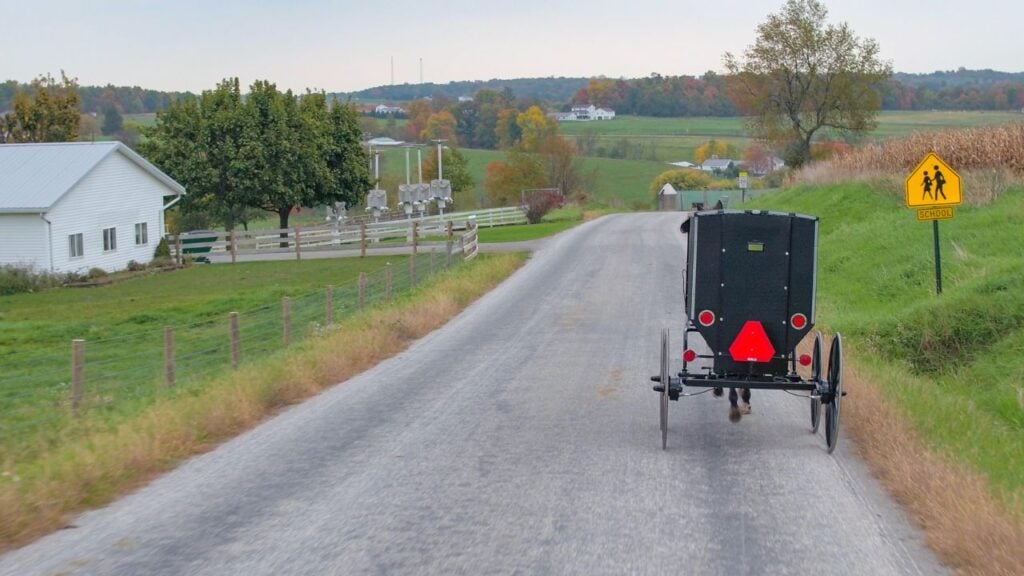
Kentucky law makes a cattle owner liable for the damage loose animals cause, whether or not the fence around them met a lawful standard.
A cow standing on a dark back road isn't rare, and whose fault that becomes is packed into a chapter of state law many drivers have never read.
7 Roadside Rules That Catch Kentuckians Off Guard on Rural Highways
11 Things That Only Make Sense If You Grew Up in Kentucky

Kentucky governors sign off on 4,000 to 6,000 new Colonel commissions a year, and many of the people holding one never bring it up.
That's the pattern with a lot of what Kentucky hands its kids, and no one ever has to explain it.
