
12 North Carolina Weather Records That Still Stand Today

Some weather records get broken every few years.
Others in North Carolina have stood for generations, and a few come from storms people still remember.
These are the weather extremes North Carolinians haven’t seen topped yet.
1. Fayetteville’s 110 Degrees
North Carolina’s highest temperature on record, 110°F, was reached at Fayetteville on August 21, 1983.
Nobody has topped it since.
Albemarle in Stanly County has the second-highest reading on the State Climate Office’s list, 109°F on July 28, 1940.
If you’re wondering who came closest since 1983, the answer is Dobbins Heights in Richmond County, with 108°F on August 9, 2007.
At Fayetteville’s airport that day, you’d have watched the reading rise from 105°F at 1 p.m. to 109°F at 3 p.m.
2. Mount Mitchell’s -34 Degrees
Mount Mitchell in Yancey County recorded the state’s lowest temperature, -34°F, on January 21, 1985.
At 6,684 feet, the mountain is the highest point east of the Mississippi River.
That reading beat the old state record of -26°F, which Banner Elk and Grandfather Mountain shared.
You’ll find Grandfather Mountain at -32°F and Banner Elk at -31°F right behind it.
All three came that day.
Even in Asheville, you’d have seen -16°F that day, nine degrees below the city’s old record of -7°F.
More than 80 weather stations across the state broke or tied all-time lows that day, according to the Climate Office.
3. Blowing Rock’s 63-Degree Swing
The record for the biggest temperature change in 24 hours, 63°F, belongs to Blowing Rock in Watauga County, set on January 9, 1978.
That record measures the size of a change instead of how hot or cold it got.
Which way did it go?
You won’t find that on the State Climate Office’s extremes list, which gives only the size of the swing.
If you started that day at 32°F, a 63-degree change would put you at 95°F or at -31°F, depending on the direction.
4. Mount Mitchell’s 36-Inch Snowfall
The most snow North Carolina has recorded in one day, 36.0 inches, fell on Mount Mitchell in Yancey County on March 13, 1993.
Mount Mitchell also holds the next two places on the State Climate Office’s list of one-day snowfalls.
Those totals were 29.0 inches on March 21, 2001, and 28.0 inches on January 28, 1998.
Edenton in Chowan County and Goldsboro in Wayne County round out the list, each with 26.0 inches, on March 1 and March 2, 1927.
Look at the calendar.
Four of the five days on the list fall in March, so you can’t assume the snow is finished when February ends.
5. Highlands’ 21-Inch One-Day Rainfall
Highlands in Macon County holds the state’s record for one-day precipitation, 21.15 inches on July 29, 1879.
That was 147 years ago.
You won’t find an older date anywhere on the State Climate Office’s extremes list.
Two totals from 2018 came close.
Elizabethtown in Bladen County reached 21.04 inches, 0.11 inch short, and Wilmington in New Hanover County reached 21.00 inches.
Further down the list, Rocky Mount in Edgecombe County is fifth, with 16.55 inches on September 16, 1999.
6. Altapass’ 22-Inch 24-Hour Rainfall
Altapass in Mitchell County set the state’s record for rainfall in 24 hours, with 22.22 inches from 2 p.m. on July 15 to 2 p.m. on July 16, 1916.
You’ll find it listed apart from Highlands’ one-day total because those 24 hours ran across two calendar days.
That total shattered the U.S. record for 24-hour rainfall at the time.
If you’re wondering what caused the flooding, it traces to two separate tropical systems.
One made landfall at Mobile, Alabama, on July 5, and the other came ashore near Charleston, South Carolina, on July 14.
More than 80 people died in the flooding, according to the Climate Office.
Psst! How much do you know about North Carolina’s extreme weather? Take our quiz and see if you can ace it.
Quiz
Weather Extremes IQ
Answer ten questions on North Carolina’s wildest weather. We bet you can’t get them all right. Prove us wrong?
How much did the governor’s office estimate in statewide damages from Hurricane Florence?
7. Storm of the Century's 50 Inches
Mount Mitchell holds the state's official record for snowfall from a single storm, 50.0 inches from March 12 to 14, 1993.
The State Climate Office refers to that storm as the Storm of the Century.
The one-day record you read about above, 36.0 inches on March 13, fell during that same storm.
You'll also see a bigger total on the list, 60.0 inches at Newfound Gap in Swain County from April 2 to 6, 1987.
It's marked unofficial.
8. Mount Mitchell's 139.94-Inch Year
If you're looking for the state's wettest year, Mount Mitchell recorded 139.94 inches of precipitation in 2018, the most of any place in North Carolina.
That's almost 12 feet.
The Climate Office confirmed the total in 2019, and the old record was 137.37 inches at Lake Toxaway in 2003.
It's the newest record on the extremes list, and the next-newest dates to 1993.
9. Mount Airy's 22.69-Inch Year
In 1930, Mount Airy in Surry County recorded only 22.69 inches of precipitation, the least in a calendar year anywhere in North Carolina.
A single day at Highlands in 1879, 21.15 inches, came within 1.54 inches of Mount Airy's entire year.
NCpedia says North Carolinians suffered through periods of widespread drought every year between 1930 and 1934, so you can't call 1930 a one-off.
That's five years running.
10. Hurricane Florence's Rainfall Total
Hurricane Florence's rain in September 2018 shattered North Carolina's record for rainfall from a tropical system, according to the State Climate Office's 2020 look back.
If you're wondering what it beat, the old record was 24.06 inches, set over four days at Southport during Hurricane Floyd in 1999.
The highest total anywhere in the state was 35.93 inches, near Elizabethtown in Bladen County.
That's nearly three feet.
An observer with the Community Collaborative Rain, Hail and Snow Network measured it.
Subtract Southport's total from that reading, and the difference is 11.87 inches, nearly half of Floyd's total.
11. Hurricane Hazel's Category 4 Landfall
Hurricane Hazel's landfall on the morning of October 15, 1954, along the state's border with South Carolina set a record that stands today.
It's still the only Category 4 storm to make landfall in North Carolina, according to the State Climate Office.
If you're comparing storms, Hazel is also the strongest landfalling hurricane in North Carolina history.
Category 4 winds and an 18-foot storm surge leveled parts of the southern coastline.
For a wind number, the best guess is gusts of 140 mph at Oak Island.
Hazel's Lowest Pressure Reading
The State Climate Office says the best estimate of Hurricane Hazel's minimum pressure at landfall, along the North Carolina and South Carolina border, was 937.9 millibars.
Standard air pressure at sea level is about 1013 millibars, so Hazel's reading was roughly 75 millibars lower.
A barometer on a fishing boat docked near Tilghman Point, South Carolina, took that reading.
The instrument was unofficial and in South Carolina, so the reading stayed off North Carolina's list of lowest confirmed pressure readings.
12. Hurricane Helene's Record Toll
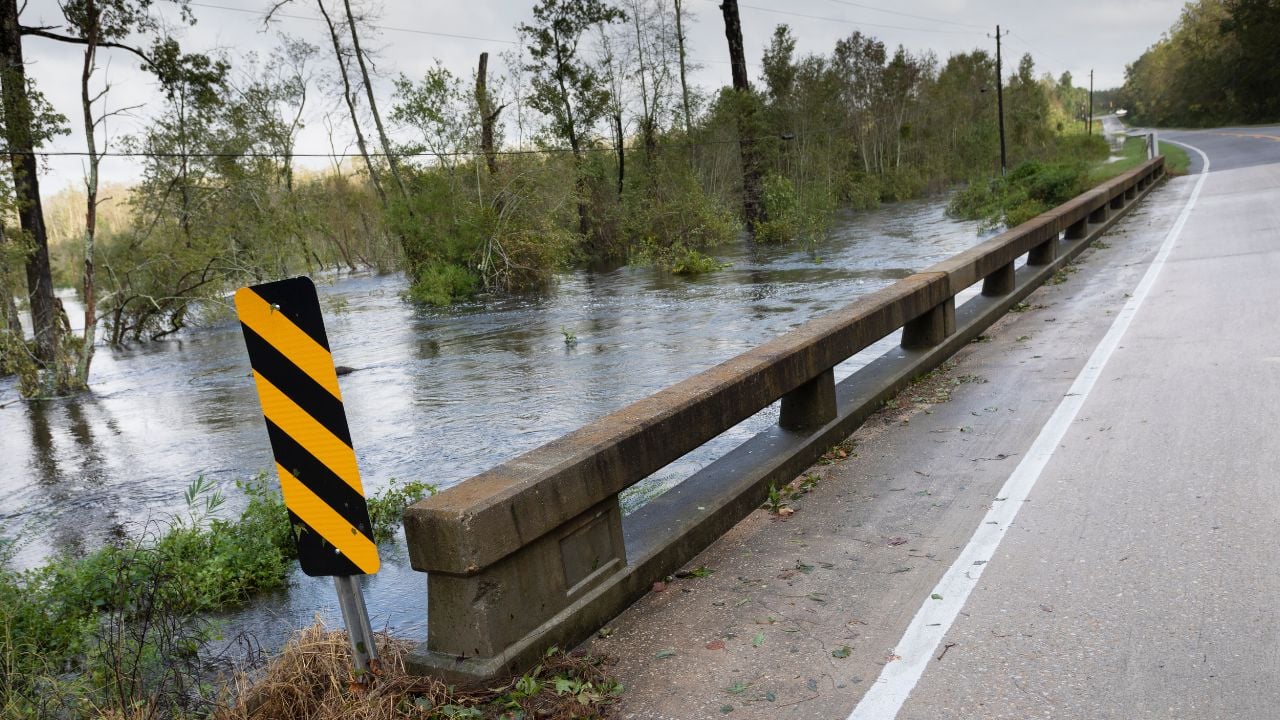
Hurricane Helene set two records after it struck in 2024, becoming North Carolina's deadliest and costliest known storm, according to the State Climate Office.
In North Carolina, the death toll was 108.
You can see what ranks second in the office's table of deadliest storms, the 1916 Charleston Hurricane, with at least 80 deaths.
If you're looking at the cost, Helene's damage is estimated at $59.6 billion, the most of any storm on the list of costliest storms.
On the Pigeon River at Canton, the water passed its previous highest crest, from Hurricane Ivan, by more than four feet.
11 Things North Carolina Plumbers Wish Homeowners Would Stop Putting Down the Drain

A Wake County plumber feeds a drain snake fifteen feet into a clogged kitchen line, then pulls back a wad of shredded wipes marked flushable.
Nothing about that surprises a North Carolina plumber.
11 Things North Carolina Plumbers Wish Homeowners Would Stop Putting Down the Drain
10 Holiday Decisions That Cause the Most Tension Among North Carolina Families

Some families are already negotiating whether they need a tree at all.
The argument rarely stops at the tree.
10 Holiday Decisions That Cause the Most Tension Among North Carolina Families
