
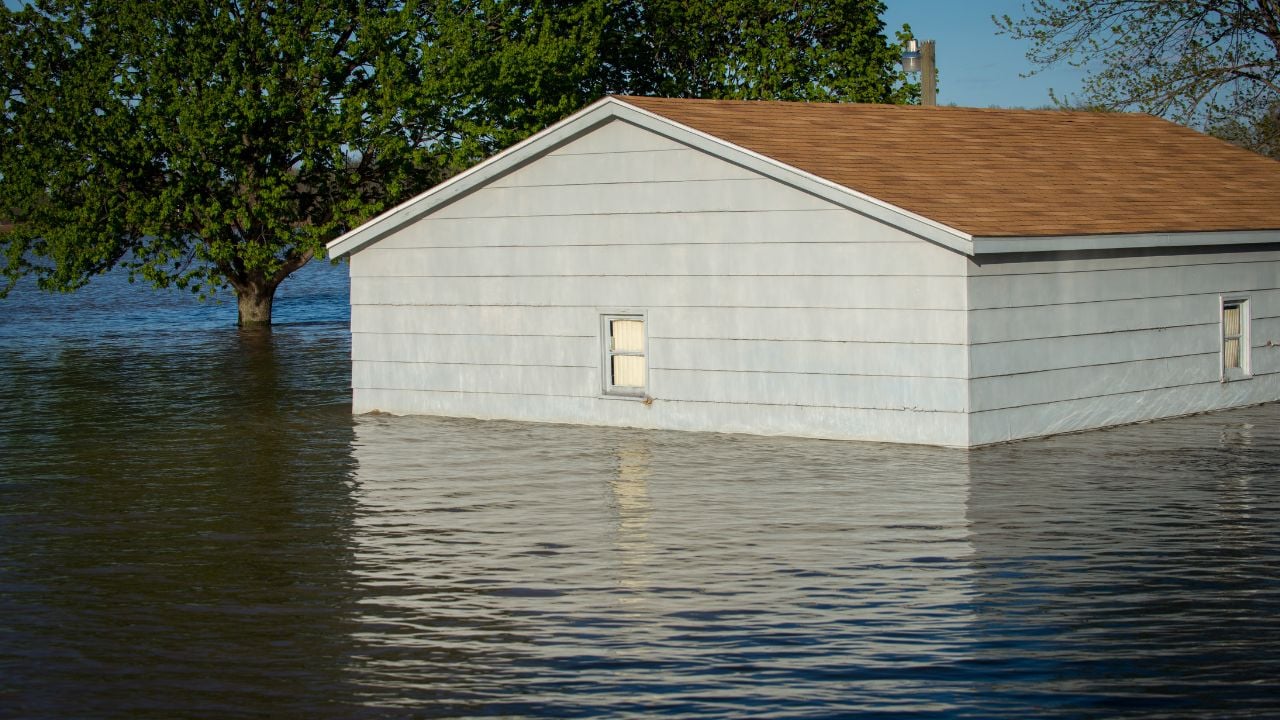
7 Indiana Drainage Rules Homeowners Learn About After the First Flood

The rain stopped hours ago, but the water in your yard hasn’t gone anywhere.
In Indiana, the ditch or buried pipe nearby can come with rules that reach onto your land.
Here are the drainage rules Hoosier homeowners tend to learn about only after their first flood.
Note: This is general information, not legal advice. Drainage rules and procedures are subject to change, so confirm the current requirements with your county surveyor’s office or county drainage board.
1. 75-Foot Right of Way
Under the drainage code, the county surveyor and the county drainage board can enter land within 75 feet of a regulated drain.
A regulated drain is an open ditch, buried tile or a mix of the two that the county maintains.
You measure that distance from the centerline of buried tile or from the top edge of each ditch bank.
If you own the land, the county surveyor has to give you oral or written notice of the entry.
The notice must state the purpose for the entry.
That entry doesn’t count as criminal trespass under the drainage code.
Crops you grow in that strip are at your risk.
If drain maintenance or reconstruction makes crop damage necessary, the surveyor and the board face no liability.
The width varies by drain.
On new regulated drains established after September 1, 1984, and on urban drains, the board can shrink the strip.
The board can cut it to as little as 25 feet from an open ditch bank or 15 feet from the centerline of tile.
On the surveyor’s recommendation, the board can cut the tile strip in a platted subdivision to as little as 7 feet on each side of the centerline.
Psst! How much do you know about floods and drainage? Take our quiz and see how many you can get right.
Quiz
Drainage and Flood IQ
Answer these questions on floods, wetlands and flood insurance. We bet you can’t get them all right. Prove us wrong?
In March 1913, about how many Indianapolis families lost their homes to the flood?
2. Drain Assessments
A regulated drain's maintenance fund comes from annual assessments on the land that benefits, which can include yours.
Once the board certifies your final assessment to the county auditor, it attaches to your parcel as a lien.
The Allen County surveyor's office says assessments are the only funding mechanism for maintaining and rebuilding its 1,451 miles of regulated drains.
Property taxes don't go towards drain improvements.
3. Permanent Structure Consent
Before you put a permanent structure on a regulated drain's right of way, you need the drainage board's written consent.
Wells County's surveyor says no permanent structures go within 75 feet of either side of a county-regulated drain without a variance from the drainage board.
Permanent structures include buildings, fences and driveways, according to Allen County's surveyor.
To get consent there, you file a "Petition for Consent to Allow Permanent Structure" with the drainage board.
You can't plant trees, shrubs or woody vegetation there without the board's written consent either.
The county surveyor can remove trees and shrubs from that right of way when removal is necessary to the drain's proper operation or maintenance.
4. 10-Day Drain Clearing Notice
The drainage code gives you 10 days to clear a regulated drain you've blocked.
The code's list of obstructions includes logs, trees, brush, unauthorized structures, trash, debris, excavating, filling and pasturing livestock.
The surveyor has to mail you a notice first, with return receipt requested.
Your 10 days start on the day you receive the notice.
If you miss that deadline, the surveyor does the work.
Waiting can cost you.
After a hearing with written notice to you, the board can add the cost to your next annual assessment.
If somebody other than an owner caused the damage, the board can sue that person for the repair cost plus a reasonable attorney's fee.
5. Drain Connection Permission
Connecting a private or mutual drain to a regulated drain takes the surveyor's permission under the drainage code.
The rule applies when the new outlet doesn't cross anyone else's land.
You file the request with the county surveyor, along with your plans and specifications.
A tiled outlet of 12 inches or less doesn't need specifications if you say so in the request.
When the drain can handle the added water and the connection is unlikely to cause harmful pollution, the surveyor has to grant the request.
If the regulated drain can't handle the extra water, the surveyor has to deny the request until the drain is reconstructed.
Mutual and Private Drains
The drainage code defines mutual drains and private drains separately from regulated drains.
A mutual drain runs across two or more tracts of land under different owners.
If you share a mutual drain with neighbors, every owner agreed to establish the drain.
No drainage statute created the mutual drain.
If you own the land alone or jointly with others, a drain on that land can be private.
A drain that a drainage statute established can't be private.
6. Drain Reconstruction Hearings
When the county surveyor proposes reconstruction of a regulated drain, the drainage board has to set a hearing.
If the schedules of damages and assessments name your land, the board mails notice to you 30 to 40 days before that hearing.
That notice lists the dollar damage to your land, your share of the reconstruction cost and your annual maintenance assessment.
If you want a court to review the board's final order, you have 20 days from the notice of that order.
Your final assessment is due on the date the board certifies it to the county auditor.
You can spread the cost.
Yearly installments of at least $50, plus interest, can run up to five years.
If the board designates your land as urban land in its certification, you can pay in yearly installments of at least $100 for up to 20 years.
7. Mutual Drain Petitions
A written request to the county drainage board can turn a mutual drain into a regulated drain.
You can file it if the drain affects your land.
The board holds a hearing at least 30 days after it receives the request.
You have to notify every affected landowner at least 20 days before that hearing.
The board grants the request only when owners of more than 50% of the affected acreage would benefit, and the benefits are likely to outweigh the damages.
The board's finding becomes final unless someone seeks judicial review within 20 days.
DNR Floodway Permits
Because the Indiana Department of Natural Resources (DNR) regulates floodways too, county drainage rules aren't the only rules that apply.
The DNR Division of Water issues a Construction in a Floodway permit under the state's Flood Control Act.
You need DNR approval before you start a structure, an obstruction, a deposit or an excavation in or on a floodway.
Your project falls under DNR's authority where the waterway's drainage area is at least 1 square mile.
DNR judges a project by its effect on floodway efficiency, which means whether the work raises the regulatory flood elevation by 0.15 feet or more.
That's under two inches.
The regulatory flood in that test is the flood expected about once every 100 years on average.
7 County Fair Traditions Hoosiers Would Never Give Up

Many Hoosiers have a county fair tradition they won't give up.
The 4-H livestock auction comes first on the list.
7 County Fair Traditions Hoosiers Would Never Give Up
9 New Car Technology Features That Leave Hoosiers Asking Why

New cars come with features that leave many drivers asking why.
Front-passenger screens lead the list.
9 New Car Technology Features That Leave Hoosiers Asking Why
