
7 Wisconsin Words That Make the Rest of the Midwest Do a Double Take

Ask for directions in Wisconsin, and you might hear a word or two that stops you in your tracks.
Locals don’t think twice about them, but other Midwesterners do.
Here’s what these Wisconsin words mean, and where a few of them came from.
1. Bubbler
Bubbler is Wisconsin’s word for a drinking fountain, according to the University of Wisconsin-Madison Law Library blog.
Lawrence University’s slang guide calls it a source of regional pride.
Where the word came from is up for debate.
A popular story credits a Kohler Water Works employee named Harlan Huckleby with designing the first bubbler.
The Sheboygan County Historical Research Center says it has never found anyone by that name working for Kohler.
Its executive director suspects the word is older, tracing it to late-1800s schoolhouse water containers with an attachment you leaned over to drink from.
Say bubbler yourself, and many other Midwesterners might need a moment to follow.
2. Stop-and-Go Lights
Stop-and-go light is a Wisconsin name for a traffic signal, and a University of Wisconsin-Madison survey caught it in use.
In the 2013-2014 Dictionary of American Regional English survey, researchers asked Wisconsin speakers to name the colored light at a busy crossing.
Stop-and-go light drew seven answers, tying stoplight for first.
Traffic light followed with six.
If you say stoplight, you’re in good company too.
Lawrence University’s slang guide describes stop-and-go lights as a term Wisconsin motorists sometimes use for traffic lights.
Psst! How much do you know about Wisconsin? Take our quiz and see if you can ace it.
Quiz
Wisconsin Trivia Test
Answer nine questions on Wisconsin dairy, the Great Lakes, and state history. We bet you can’t get them all right. Prove us wrong?
Until 1967, Wisconsin law banned selling margarine in which form?
3. Come Here Once
A 2006 Associated Press story used "come here once" as an example of Wisconsin dialect.
The story followed a University of Wisconsin-Madison graduate student from Eau Claire who studies German social linguistics.
She said it seemed normal growing up in Eau Claire to hear sayings such as "Come here once" and "Do you want to come with?"
She realized her speech was different once she came to Madison and met students from other parts of the country.
If someone tells you to come here once, they're asking you to come over.
4. Tyme Machine
A Tyme machine sounds like a time machine, but it's slang for an ATM.
Lawrence University's slang guide says the term makes absolutely no sense to a newcomer.
If you want the history, TYME was a brand of ATMs local to Wisconsin and Michigan's Upper Peninsula, and it stands for Take Your Money Everywhere.
A 2005 Sheboygan Press story, posted by the University of Wisconsin-Madison, used Tyme machine as an example of regional vocabulary.
The story pointed readers to the Dictionary of American Regional English.
5. Eh
Eh is one of the answers Wisconsin speakers gave in the 2013-2014 Dictionary of American Regional English survey.
The survey asked them to finish a sentence suggesting a return trip.
Right led with 10 answers, followed by "don't you think" with nine.
Eh and huh each drew six.
If you'd finish that sentence with eh, you're tied for third.
The Dictionary of American Regional English's Wisconsin word maps include a set on tag questions, which show variation in the 1960s and today.
6. Sconnie
Sconnie is slang for a Wisconsinite, and Lawrence University's slang guide says it carries state pride.
You'll sometimes see it printed on T-shirts.
A 2006 University of Wisconsin-Madison Clipsheet story said students in a Folklore 540 class kept answering "Sconnie" when asked what could replace the Cheesehead as Wisconsin's next pop culture symbol.
One student said the idea has grown to represent the Badger lifestyle, such as eating cheese curds or driving a John Deere tractor.
If you call someone a Sconnie, you're using a word that some embrace and others deride.
7. Or No
Or no is a question-ending phrase, listed in Lawrence University's slang guide, that offers the listener a way to decline.
You'd hear it in a line like "Want a ride, or no?"
Many other Midwesterners would end your question at "ride."
The Hodag, Wisconsin's Made-Up Monster
Hodag is the name of a made-up monster with a documented first appearance.
Eugene Shepard, a lumberjack and prankster from Rhinelander, claimed he'd killed one with dynamite.
Shepard's illustration of the hodag ran in The New North on October 28, 1893, according to Wisconsin 101, a University of Wisconsin-Madison site.
If you're picturing one, the hodag is described as a hybrid of reptile and mammal with a spiky back, sharp claws and menacing horns.
The hodag has become a symbol of folklore and intrigue in the region.
How the Hodag Hoax Ended
Shepard displayed what he said was a captured hodag at the Oneida County Fair in 1896.
That hodag turned out to be a set of pulleys and wires.
If you're wondering how the hoax ended, it came after scientists from the Smithsonian announced they would inspect it.
Wisconsin 101 says Wisconsin's lumber industry declined in the 1890s, the same decade the hodag story was first reported.
The Dictionary Behind the Words
The Dictionary of American Regional English (DARE) catalogs regional vocabulary across the country.
University of Wisconsin-Madison English professor Frederic Cassidy created the project in the 1960s, according to the 2005 Sheboygan Press story.
DARE ran an Online Survey of Wisconsin English in 2013 and 2014.
DARE's Wisconsin word maps put the 1960s data on one side and the 2010s data on the other.
In 2006, linguists planned a Wisconsin Englishes Project to study regional vocabulary, pronunciations, idioms and ethnic influences.
Examples included "bag" sounding like "beg" and "milk" sounding like "melk."
If you pronounce bag like "beg," you match one of those examples.
Everyday Words in the Survey
Not every answer in the 2013 and 2014 survey was one you'd call a Wisconsin original.
Asked how you'd tell someone to light an electric light, Wisconsin speakers said "turn on" 11 times, ahead of "hit" with five and "flip" with three.
Turn on won.
Turning a light off went the same way, with turn off drawing 11 answers and "turn out" drawing five.
Asked how to describe a neighbor's short visit, respondents chose stopped by 12 times.
"Came over" and "dropped by" drew eight answers each.
6 Wisconsin Supper Club Habits Nobody Explains to Newcomers
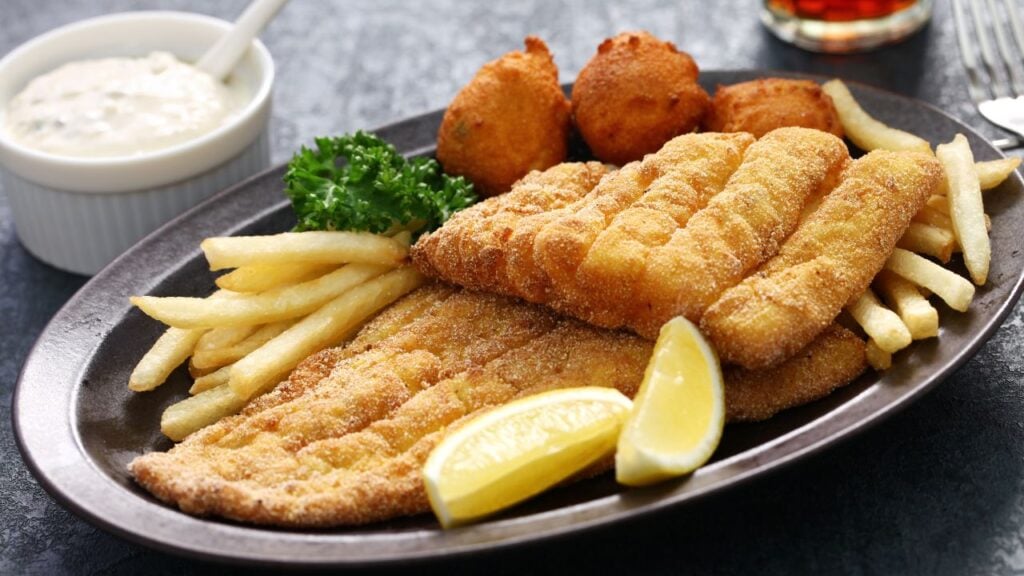
The supper club is the classic Wisconsin restaurant, built around a slow dinner and a set of customs.
Out-of-staters tend to find out the hard way.
6 Wisconsin Supper Club Habits Nobody Explains to Newcomers
7 Reasons a Wisconsin Farm Stand Gets Shut Down
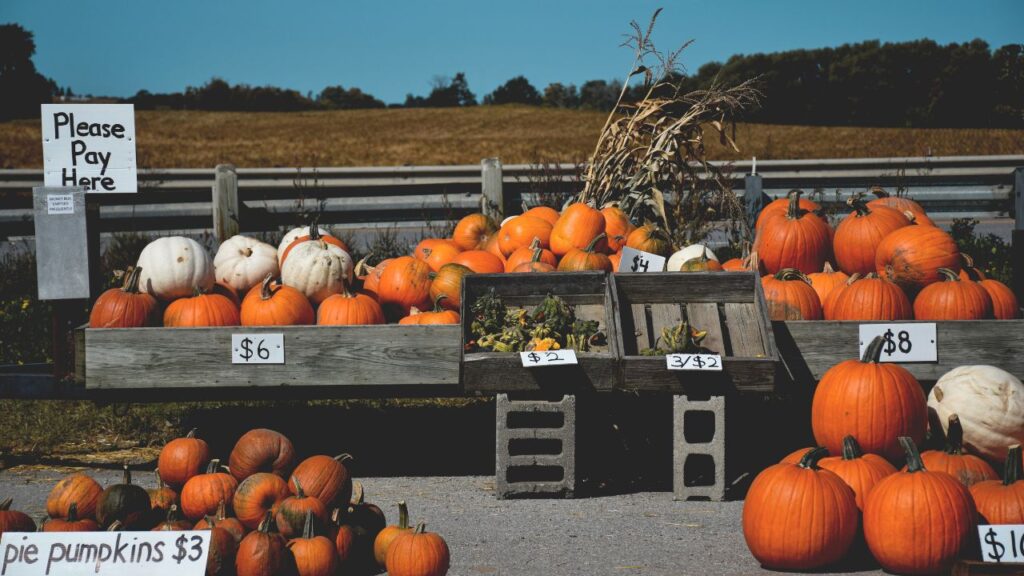
Roadside stands across Wisconsin stack bushel baskets for the apple rush.
Some stands get shut down.
