
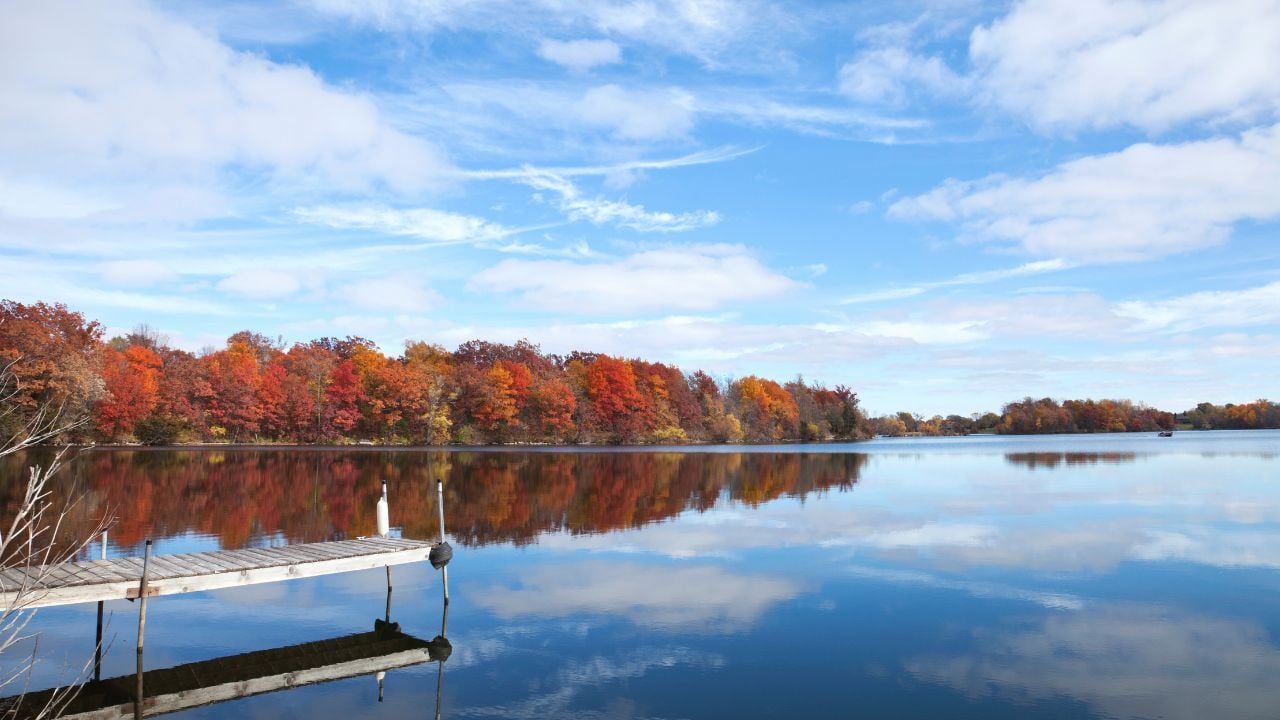
5 Things Minnesota Lakes Do in Late Fall That People Watch For

The boats may be out of the water, but the lakes are far from done for the year.
Folks who spend lots of time by a lake notice plenty changing as the cold settles in, right up to the first skim of ice.
Here’s what Minnesotans who love their lakes keep an eye on as fall winds down.
1. Fall Turnover
A lake turns over in fall when cooling air makes its surface water heavier than the water below.
The heavier water sinks.
The less dense water underneath rises to the surface.
Water is heaviest at 39 degrees Fahrenheit.
It becomes less dense again the further it moves from that mark, warmer or colder.
Once a lake reaches about 39 degrees at every depth, the wind can mix it easily, which is how your lake exchanges its surface and bottom water.
Climate and lake depth can change how that goes on your lake.
2. Cisco Spawning
In fall, a lake’s shallow water becomes the place where cisco, also called tullibee, and whitefish spawn, according to the DNR’s fish and wildlife almanac.
Game fish head to deeper water as the water cools.
Netting seasons for both fish are based on expected water temperatures.
On some lakes, dates vary.
The DNR posts a 48-hour notice at the lake access.
On a variable lake, you’d watch for that notice.
If your lake follows a fixed season, the earliest opens the third Friday of October.
Every fixed season ends the second Sunday of December.
Each schedule’s dates are listed on the netting page.
Psst! How much do you know about lakes in late fall? Flip each card and see if you can get them all right.
3. Clear Ice on Calm Water
The DNR describes clear ice as the ice that typically forms on top of calm water at the start of a lake’s ice season.
It’s sometimes called blue ice.
Clear ice is also the strongest and safest kind of ice.
You can spot it by how clear it looks.
Because clear ice typically forms on calm water, a calm stretch is where you’d look for it.
Early ice can be poor.
In 2023, many lakes froze over with a cold snap at the end of November.
Many of those lakes then struggled to build good quality ice amid warm conditions in the first half of December, the DNR’s HydroClim report says.
4. Ice-In
If you’re a citizen observer reporting to the DNR, ice-in means the entire lake is frozen over and the ice cover remains through winter.
Observers post the date, lake name and county to the DNR Climate Office’s Facebook page.
In 2020, dozens of lakes had frozen over by mid-November, the Star Tribune reported.
The ice-in maps show median dates, calculated from 1950 on, along with the earliest and latest on record.
Look up your lake.
What an Ice-In Date Leaves Out
Observers don’t report thickness, so an ice-in date doesn’t tell you how thick a lake’s ice is, according to the DNR.
You should check ice conditions frequently, because they can change rapidly.
“Ice is never 100% safe!” is how the ice-in page puts it.
5. Freeze-Up Sounds
Lake ice gets noisy at the start of winter, according to a University of Minnesota Sea Grant column.
The sounds come from the ice warming and cooling.
In northern Minnesota, the average daily temperature range in December and February is about 20 degrees Fahrenheit, though it can reach 40.
A cooling ice sheet shrinks away from the shore.
A warming sheet expands against it.
That movement makes the ice crack and bend.
Vibrations are what you hear.
The sounds are less pronounced in the dead of winter.
Thicker ice takes more force to crack.
A snow-covered sheet also makes less noise.
If you hear loud cracking and rumbling just after freeze-up, a Star Tribune naturalist’s column says that doesn’t necessarily mean the ice is unsafe.
Cisco Netting Basics
If you want to net cisco or whitefish on a lake, you have to be a Minnesota resident, according to the DNR.
About 700 people take part each year.
Netting is allowed only when there’s little chance of catching other fish than cisco and whitefish.
Game fish go back immediately.
The netting list covers lakes in northern counties such as Cook, Lake, St. Louis, Itasca and Cass.
If you live near one of those lakes, the DNR’s website lists the fixed schedules.
Loons on the Big Lakes
Researchers counted common loons weekly on Lake Winnibigoshish and Lake Mille Lacs in the fall of 1998, according to a DNR project page.
If you want a sense of scale, the highest count on Lake Winnibigoshish was 1,599 loons on Oct. 21.
On Mille Lacs, the high was 1,688 loons on Oct. 20, which the page calls a record count for any lake in Minnesota.
Adult loons travel to the Atlantic coast or the Gulf of Mexico in September.
Younger loons follow a month or so later.
Many lake people watch for the last loons of the season.
You might see a loon.
Ice Thickness Numbers
The DNR’s ice thickness guidelines show how much ice a lake needs before you step, ride or drive onto it.
If you’re heading out on foot, the guideline is 4 inches.
Heavier loads need more.
A snowmobile or small all-terrain vehicle (ATV) needs 5 to 7 inches.
A side-by-side ATV needs 7 to 8.
The guideline for a small car or sport utility vehicle (SUV) is 9 to 10 inches.
A medium truck needs 13 inches.
A heavy-duty truck needs 16 to 17.
Those numbers apply to new, clear ice.
Temperature, snow cover, currents, springs and rough fish all affect how safe ice is, the DNR says.
9 Things Minnesota Does Better That Wisconsinites Won’t Admit

Minnesota and Wisconsin share a border and a lot of opinions about each other.
These are the things Minnesota does better that Wisconsinites won’t admit.
9 Things Minnesota Does Better That Wisconsinites Won’t Admit
9 Things Minnesota Mail Carriers Notice About a House
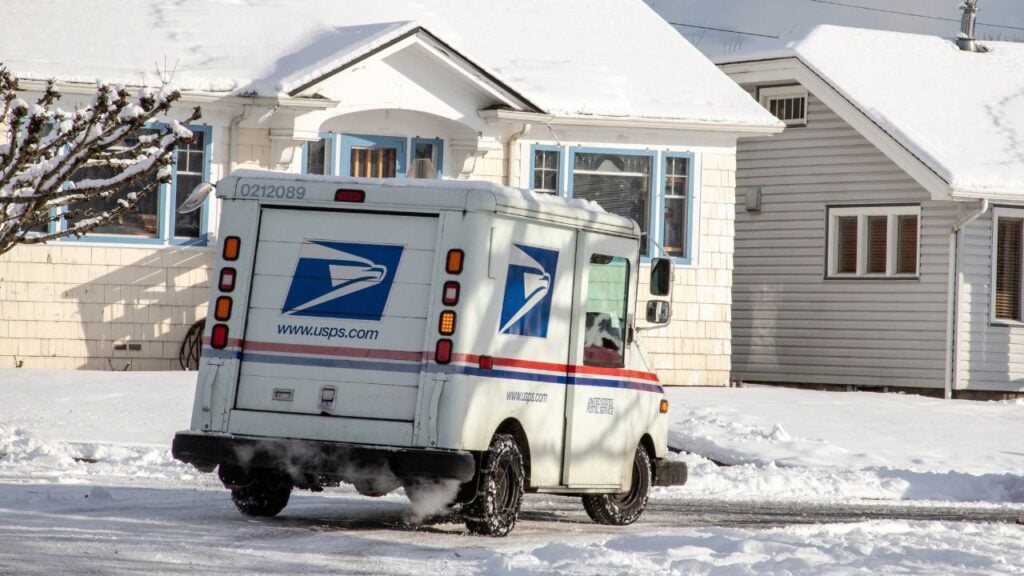
A mail carrier on foot walks through a lot of Minnesota winter.
These are the things Minnesota mail carriers notice about a house long before anyone answers the door.
