
Is That Sale Actually Ending Soon? 7 Ways Retailers Create Urgency to Make Ohioans Buy Now

A ticking clock next to a deal you’re interested in can make you click “buy” faster than you meant to.
Ohioans who shop online may run into pressure tactics designed to rush their decision, not help it.
Here are the tricks to watch for before you hit buy.
Note: This is general information, not legal advice. Consumer rules are subject to change, so confirm the current requirements with the Ohio Attorney General’s office.
1. Deadlines Without Dates
A retailer can hurry you with a deal that ends soon and never names a date.
A 2022 report from Federal Trade Commission (FTC) staff calls that a false limited-time message.
It’s a deal that has no deadline or a meaningless one that resets when reached.
Soon isn’t a date.
A 2019 study of about 11,000 shopping websites found 88 instances of the limited-time message pattern.
The pattern is a static urgency message without an accompanying deadline.
If an ad says a deal ends soon, you can look for the date before you decide.
2. Resetting Countdown Timers
Some retailers run a countdown timer whether or not the offer ends.
In 2024, the United Kingdom’s Competition and Markets Authority (CMA) secured formal commitments from Wowcher after a 2023 investigation into its countdown timers and marketing claims.
The concern was that the overwhelming majority of Wowcher’s products stayed available at a similar price after the daily countdown timer ended.
Nothing was ending.
Wowcher agreed to remove a permanent homepage timer that counted down to midnight.
In September 2023, the Dufresne Group, a furniture and appliance retailer, agreed to pay a $3.25 million penalty to resolve concerns raised by Canada’s Competition Bureau.
One example was a deal that was still available after a countdown timer expired.
The 2019 study found 157 deceptive countdown timers on 140 of the sites.
A timer counts as deceptive if it reset after timeout with the same offer still valid.
The same label applies when a timer expired but the offer it claimed was ending stayed valid.
If a timer reaches zero while you’re still on the page, you can see whether the offer is still there.
3. Scripted Low-Stock Counts
A retailer’s low-stock message can pressure you to buy immediately by saying inventory is low when it isn’t, according to FTC staff.
Canada’s Competition Bureau lists claims such as ‘Only 2 left in stock’ among its deceptive tactics when availability doesn’t change over time.
The 2019 study counted 17 deceptive low-stock messages on 17 shopping websites.
Of those 17 sites, 16 lowered the stock number on a schedule.
The remaining site generated random stock values each time the page loaded.
If a page says ‘Only 2 left’ today, you can look again later and see whether the count has changed.
4. Fake Limited-Time Discounts
Emma Sleep, a retailer, ran countdown clocks that risked giving the impression that discounts would soon end and products would return to full price, the CMA said in July 2023.
Only a small fraction of Emma Sleep’s products sold at the full price.
Canada’s Competition Bureau lists a limited-time offer as a deceptive tactic when the discounted price stays available long after the advertised time limit.
If a discount comes with a deadline, you can note the date and check the price again after it passes.
Psst! How much do you know about retail urgency tactics? Take our myth-or-fact cards and see if you can ace them.
5. Invented High-Demand Alerts
A retailer’s high-demand message implies that an item is likely to sell out soon, according to the 2019 study.
FTC staff list a false high-demand message among the tactics that pressure you to buy immediately.
An FTC example of a false high-demand message says 20 other shoppers have an item in their carts when that isn’t true.
The 2019 study found 47 high-demand messages on shopping websites, and 38 of them appeared regardless of the product shown or the items in the cart.
You can open a second product page and see whether the same alert appears.
Canada’s Competition Bureau lists the message ‘5 other shoppers are also looking at this product right now’ among its deceptive claims when availability doesn’t change over time.
In 2024, Wowcher gave the CMA commitments about claims such as ‘In high demand!’
Wowcher agreed that claims about a deal’s popularity must accurately reflect its sales figures.
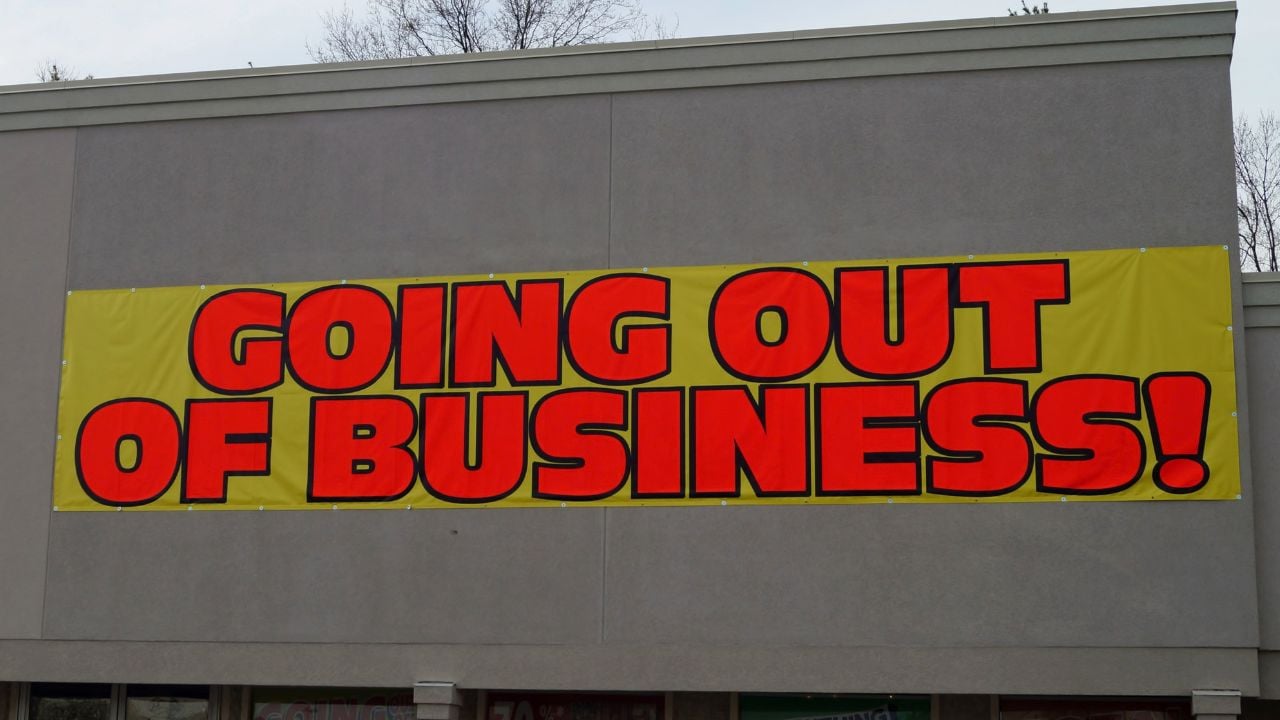
6. Fake Going-Out-of-Business Sales
Some businesses use closing-sale wording dishonestly to pressure you to buy, according to the Better Business Bureau (BBB).
The warning describes a small window of time to purchase and limited access to certain merchandise.
It also flags a store advertising a closing sale for months without ever closing.
The FTC says it’s against the law to advertise a going out of business sale when a store isn’t going out of business.
Ohio’s distress-sale rule sets a forty-five-day limit on a going-out-of-business sale.
The same rule bars a store from adding stock to the sale, with a few exceptions.
If a store you know advertises a closing sale and isn’t closing, you can report it to your state attorney general.
What Ohio’s Distress-Sale Rule Covers
Ohio’s distress-sale rule covers more than going-out-of-business sales.
It also reaches any sale described in a way that would lead you to believe it came from one of six causes.
Besides a closing, those causes are a lost lease, liquidation, a disaster such as a fire, bankruptcy and the supplier’s financial condition.
A store can add one more forty-five-day period if the ads you see clearly disclose the extension.
Goods ordered for that outlet before the sale was advertised can be added to the stock.
A store can’t refer to a liquidation sale unless it is liquidating all assets for final distribution.
7. Restarting Sales
Urgency can restart when a retailer replaces an ended sale with a new one.
In July 2023, the CMA said that when an Emma Sleep sale ended, it was quickly replaced by another, in some instances within 24 hours.
A High Court order confirms Emma Sleep behaved illegally with misleading countdown timers, false high-demand messages and discount claims.
Emma Sleep also agreed to stop running limited-time sales or discounts where substantially similar deals continue after the deadline passes.
If a sale you skipped ends, you can check the next day whether a similar sale has replaced it.
In November 2025, the CMA opened investigations into the retailers Wayfair and Appliances Direct.
It’s checking whether time-limited sales at both retailers ended when they said they would.
The case pages for Wayfair and Appliances Direct, last updated 18 June 2026, list both investigations as open with no finding made.
Ohio’s rule 109:4-3-12 treats an out-of-store ad as deceptive if it implies a sale will end within a set period, unless the sale does end then.
7 Line Items on an Ohio Utility Bill That Aren’t Electricity

Ever wonder what else is on your Ohio energy statement besides electricity?
Some of those lines have little to do with the electricity you use.
7 Line Items on an Ohio Utility Bill That Aren’t Electricity
5 Things Ohioans Can’t Legally Do With a Deer They Hit

A deer on an Ohio road can end your drive in a second.
Many drivers aren’t sure whether they can take it home afterward.
