

7 Things Mississippi Kids Learned at Grandma’s House

A weekend at Grandma’s could teach you more than any school day.
Mississippians who spent time there may remember picking, planting and cooking right alongside Grandma.
Here’s a look back at the lessons those visits taught.
1. Koolickles
Grandma’s house is where many kids first met a koolickle.
The Mississippi Encyclopedia says koolickles originated in the Mississippi Delta, though no one knows exactly how they came to be.
A koolickle is a dill pickle soaked in Kool-Aid, which tints it bright red and gives it a tangy crunch.
You can find koolickles at gas stations, school fundraisers, sporting events and neighborhood house stores.
The recipe has you slice dill pickles in half and add them to extra-strength Kool-Aid with extra sugar.
Next, you shake the mixture and refrigerate it.
Then you wait a week.
Some call them pickoolas.
2. Muscadine Picking
If Grandma has a muscadine vine, you remove each berry by hand as it ripens, according to Mississippi State University Extension.
Muscadines are native to Mississippi and grow wild throughout the state.
You harvest muscadines from late August to October, when they’re fully ripe.
You can turn the fruit into juice, jam, jelly or pie.
3. Patchwork Quilts
You can thank a long tradition for Grandma’s quilts.
According to the Mississippi Encyclopedia, a quilt was the most common bedcovering among Mississippi families from the late eighteenth century to the 1940s.
Families recycled old shirts, blankets and even feed sacks into bedcoverings.
Women and girls usually made and maintained them.
But many young boys helped piece patchwork or quilt on communal projects.
Small hands counted.
4. Watermelon Planting
The Mississippi Encyclopedia records a planting tradition for Grandma’s watermelon patch: You plant the year’s crop on May 1.
The tradition has you push each seed into the soil with your fingers.
Your fingers do the work.
Peak watermelon season in Mississippi runs June through September.
The state’s 2015 watermelon crop came to $3.78 million.
5. Gathering Pecans
If Grandma has a pecan tree, picking the nuts up by hand is still an effective way to harvest them, according to Mississippi State University Extension.
You want to gather them quickly, since the less time the nuts sit in contact with the soil, the better.
Mississippi growers produce, harvest and market two million to four million pounds of pecans a year from more than 14,000 acres.
Nearly 75 percent of pecan production in Mississippi comes from improved-variety trees.
The remaining trees are native or seedling, and some grow in natural groves along the river bottoms in the Delta region.
6. Fried Catfish
Fried catfish at Grandma’s house has company across Mississippi, where catfish restaurants are common and many specialize in fried catfish.
In 2015, according to the Mississippi Encyclopedia, Mississippi farms produced more than twice the catfish of Alabama, the next largest producer.
Cooks tended to fry catfish one way: You bread it in cornmeal and fry it in hot grease in an iron skillet.
7. Mud Pie
Grandma’s dessert table might hold a mud pie, a chocolate pie with a crunchy top and a soft, chewy center.
The Mississippi Encyclopedia says Mississippi bakers are famous for the pie.
You whisk together sugar, melted butter, chocolate and eggs.
Then you pour the filling into a pie shell and bake it.
You can top the pie with whipped cream, boiled custard, vanilla yogurt or vanilla ice cream.
Some cooks add sliced bananas and strawberries.
Old Canning Recipes
Mississippi State University Extension has a warning for any canning recipe Grandma handed down: Family recipes passed down through the decades aren’t safe.
Research has evolved over the years, and cooks now know more about safe home canning.
Labs have tested research-based recipes to guard against botulism, a life-threatening poisoning.
If your pressure canner has a dial gauge, have it tested every year before canning begins.
Unsafe Home Canning Methods
Mississippi State University Extension lists several home canning methods as unsafe.
Canning in an oven doesn’t work because ovens don’t provide enough heat to kill harmful bacteria.
Open kettle canning and dishwasher processing are also unsafe.
Tomatoes need added acid because without enough acid the product can cause botulism poisoning.
You can’t see, smell or taste the botulinum toxin, but the tiniest taste of contaminated food can kill you.
Calhoun County Sweet Potatoes
Calhoun County farmers grow most of Mississippi’s sweet potatoes, according to the Mississippi Encyclopedia.
The Calhoun County town of Vardaman has for decades claimed the title of Sweet Potato Capital of the World.
Vardaman has hosted a Sweet Potato Festival since the 1970s.
In 2025, Mississippi growers planted about 32,000 acres of sweet potatoes.
If you call a Beauregard a yam, you’re using the wrong name.
Rice on the Menu
Hoppin’ John is traditionally eaten on New Year’s Day for good luck in Mississippi and many other parts of the South.
Hoppin’ John is a type of bean pilaf made by cooking black-eyed peas, often in pork-seasoned broth, and mixing them with rice.
If you order rice and gravy at a meat-and-three, the Mississippi Encyclopedia says the menu often lists it as a vegetable.
Psst! How much do you know about Mississippi’s food and folk traditions? Take our quiz and see how many you can get right.
Quiz
Mississippi Folkways IQ
Answer these questions on Mississippi food and folk traditions. We bet you can’t get them all right. Prove us wrong?
Which convenience-store chain sells koolickles at its counters, according to the Mississippi Encyclopedia?
Corn, Grits and Cornbread
Grits and cornbread have played major parts in Mississippi diets for generations.
You can serve corn with beans, as hoecake, as grits and on the cob.
The Mississippi Encyclopedia says most of the state's corn is grown in the Mississippi Delta.
Washington and Leflore Counties are the leading producers, followed by Bolivar, Sunflower, Tallahatchie and Sharkey.
5 Mississippi Tamale Rules Nobody Explains to Visitors
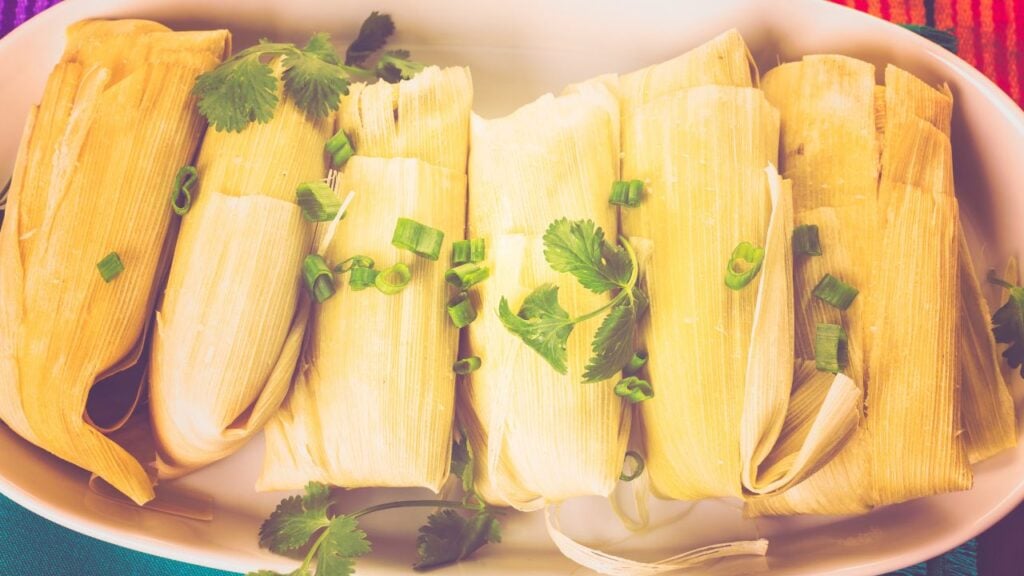
Many Mississippi Delta tamale customs go unexplained to visitors.
Learn the rules before you order.
