
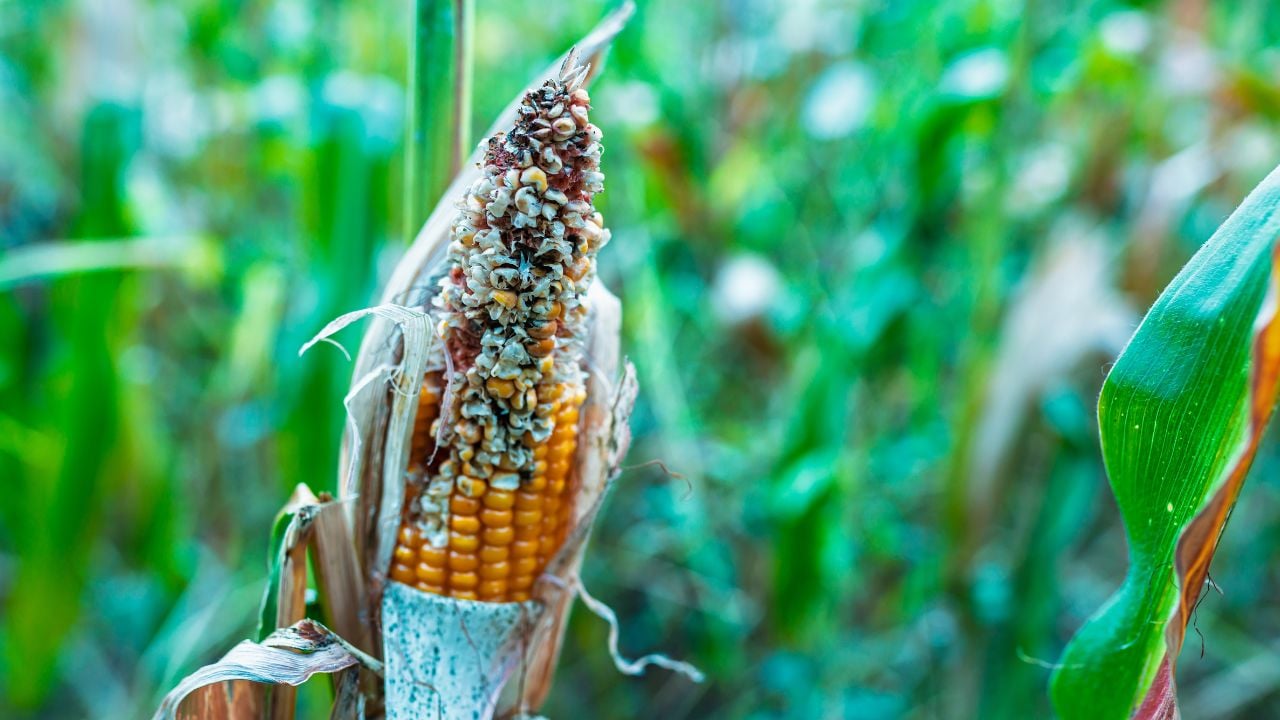
Iowans Have a Lot Riding on One Industry, and Its 2026 Outlook Isn’t Pretty

When farmers have a rough year, the hardware store, the diner and the bank down the road can feel it too.
That matters for Iowans, since many paychecks tie back to agriculture.
Here’s what a recent report says about this year and what it could mean for your wallet.
Note: This is general information, not financial advice. Farm income figures and forecasts are subject to change.
Who Wrote the Report and How
Iowa State University’s Center for Agricultural and Rural Development teamed up with the Iowa Farm Bureau and the Iowa Bankers Association on the study, released in July 2026.
It runs eight chapters, each looking at the state’s agricultural economy from a different angle.
To get their answers, the researchers pulled together federal farm income figures, farm-level financial data and Iowa State’s land value survey.
As you read on, the findings start with how large agriculture is in the economy and end with how much pressure farms are under.
Farming’s Share of the Economy
Agriculture-related industries added $51.5 billion a year to Iowa’s economy on average from 2020 to 2024, the study found.
Those jobs reach beyond the industry itself, since one job in an agriculture-related industry supported a total of 1.65 jobs in Iowa’s economy.
So every 100 of those jobs supported 165 jobs across the state.
When a bad stretch hits agriculture, many people who don’t drive a tractor can feel it in their work, and that could include you.
Income Cut by More Than Half
Net farm income in Iowa fell 53% from 2022 to 2024, based on federal data the report cites.
A farm that cleared $100,000 in 2022 would, at that statewide pace, clear about $47,000 in 2024.
Unofficial estimates show income rising in 2025, mainly because of government payments and livestock returns.
But those same estimates forecast drops in both 2026 and 2027.
If you were hoping 2026 would bring a rebound, they say otherwise.
Costs Above Prices
Iowa crop farmers are in their third year in a row of costs generally running above prices, the report says.
Estimates put the cost of growing an acre of corn in Iowa up 37% since 2021, and soybeans up 36%.
Machinery charges for corn rose 57%, while seed, chemical and fertilizer costs went up 39%.
National futures prices from early June 2026 don’t point to relief, with corn at $4.50 to $4.75 a bushel until 2029 and soybeans around $11.
Farmland Values Going Into 2026
Iowa farmland has slipped slightly in value since 2023, in regular and inflation-adjusted dollars alike, the report finds.
High-quality Iowa farmland was $14,271 an acre in 2025.
In Iowa State’s 2025 land value survey, 40% of respondents expected Iowa land values to decline over the next year.
The survey was published in December 2025, so the year ahead it asked about is largely 2026.
Yet 82% expected them to increase over five years.
If you own Iowa farmland, that’s near-term worry, with 40% expecting a decline, alongside long-term optimism, with 82% expecting gains.
80 Acres at 2025 Prices
At the report’s 2025 high-quality average of $14,271 an acre, an 80-acre field of Iowa farmland is worth about $1.14 million.
A 5% drop would take about $57,000 off that value.
A 10% drop would take about $114,000.
Farms Under Strain
The report says the steady tightening is straining Iowa farm businesses.
Of the mid- and large-size Iowa farms in the sample, 19% were financially vulnerable in December 2025.
That’s more than double the 7.7% in 2022.
Out of every 100 farms that size, about eight were financially vulnerable in 2022.
In December 2025, about 19 were.
If you’ve heard that today isn’t the 1980s, the report agrees, up to a point.
The study even has a section on why this isn’t the 1980s.
It points to healthy farmland equity, healthy lender balance sheets and low delinquency rates.
But today’s conditions don’t yet mirror the severity of the 1980s farm crisis, even as the pressure is mounting.
Psst! How much do you know about Iowa’s farm economy? Take our quiz and see if you can ace it.
Quiz
Iowa Farm Economy IQ
Answer these questions on Iowa’s farms, crops, livestock and energy. We bet you can’t get them all right. Prove us wrong?
What share of Iowa’s electricity came from wind power in 2024?
Livestock Exception
If you're looking for the good news in the report, it's in livestock, and cattle in particular.
Nationwide, livestock revenues have beaten crop revenues for three years running.
Returns to Iowa cattle feeders averaged an estimated $556.70 a head in 2025, a record.
Through May, returns in 2026 are averaging $496.37 a head.
Iowa ranks first among states in hog and pig inventories and fourth in cattle on feed, according to the report.
There are also two new food-processing projects.
JBS USA broke ground on a $135 million sausage plant in Perry.
Daisy Brand broke ground on a $676 million dairy processing facility in Boone.
Hogs are the shakier side.
Hog farmers' returns averaged $27.17 a head in 2025 and $17.16 through May 2026, about $10 a head lower.
8 Catskill Towns That Aren't Worth a Foliage Weekend Drive
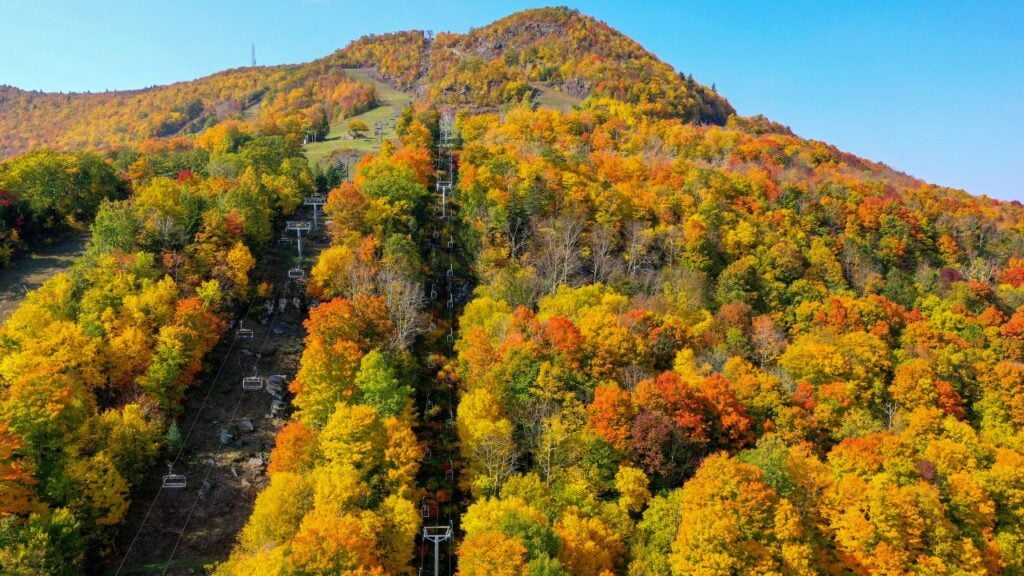
You don't drive to the Catskills in October because you want to spend more time in your car.
But pick a town on name recognition alone, and your fall getaway can start feeling like a very scenic errand.
