
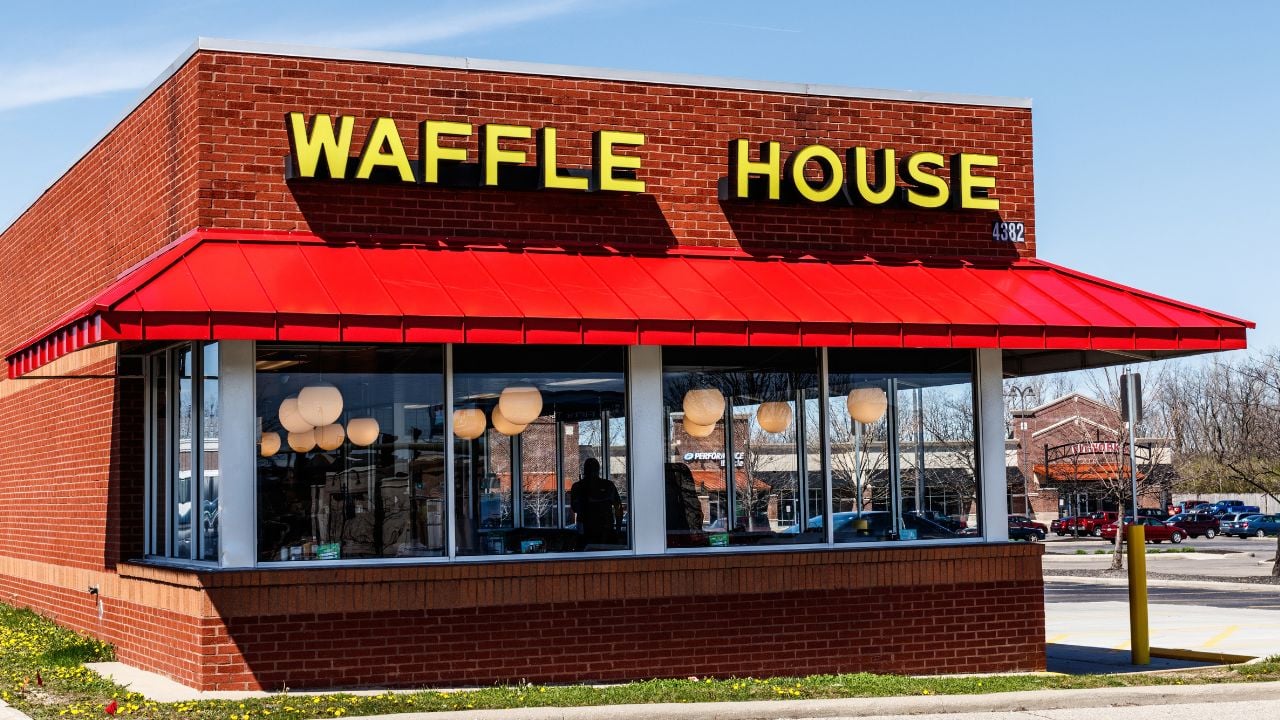
4 Secrets Waffle House Cooks Wish Floridians Knew Before They Order

Your server calls in your hashbrowns, and they land just the way you asked.
Floridians who slide into a booth at Waffle House may never notice the system that makes it happen.
Here’s what the cooks wish you knew about what goes on after you order.
1. Plate Code
Waffle House cooks use a plate-marking code to keep track of what you order.
Grill operators place jelly packets, butter packets, bits of shredded potato and other items on each plate as the order is called.
Waffle House’s director of public relations confirmed in 2022 that the system exists and described it as hidden in plain sight and quite easy to learn.
A jelly packet placed vertically at the bottom of your plate means scrambled eggs, and the same packet at the top means sunny-side up.
An upside-down mayo packet near a vertical jelly packet at the bottom of the plate means runny scrambled eggs.
A mayo packet near a butter packet on the cook’s board means a light waffle, and a right-side-up mayo packet on a plate means a darker one.
A napkin topped with a packet of brown sugar means grits in place of oatmeal.
Depending on its position, a jelly packet on top of a mustard packet means an extra egg or an omelet with ham.
The code came to TikTok’s attention through one of the restaurant’s cooks.
2. The Mark
Waffle House servers call in your order from a small red tile on the floor, according to Mental Floss.
Gray tiles surround it, and it sits near the open kitchen and grill.
That spot is The Mark.
Servers are only allowed to call in orders from there, so the grill operator hears one order at a time.
Waffle House has used the call-in system since the chain was founded.
The system is meant to get your food to you within the company’s eight-minutes-or-less mandate.
You can look for the tile on your next visit.
3. Pull and Drop
Waffle House servers call the meat first, and the call is Pull.
Pull tells the grill operator which meats to take out of the refrigerator.
Meat goes first.
It needs the longest cooking time.
Your bacon order comes out as Pull one bacon for three slices or Pull two bacon for six.
Drop is the call for hashbrowns, so Drop four puts four orders on the grill.
If your server doesn’t say scattered or in a ring, the default is scattered.
Pat Warner, a former Waffle House director of public relations, explained the word Plate.
A Plate is any order that includes hashbrowns.
Order a quarter cheeseburger with hashbrowns, and the kitchen hears a quarter cheese plate.
A Deluxe is a burger with lettuce, tomato and onions.
Psst! How much do you know about Waffle House? Take our quiz and see if you can ace it.
Quiz
Waffle House Trivia
Answer these questions on Waffle House and its menu. We bet you can’t get them all right. Prove us wrong?
In what year does Waffle House say Aunt Maggie baked the first Waffle House pie?
4. Hashbrown Lingo
Waffle House hashbrown lingo goes well past smothered and covered.
The chain says that lingo first gained traction in the mid-1980s, according to The Atlanta Journal-Constitution.
Mental Floss dates the official hashbrown toppings to 1984, though operators had been customizing hashbrowns informally since the early 1980s.
Onions make hashbrowns smothered, and a slice of melted American cheese makes them covered.
If you want hickory smoked ham in your hashbrowns, the word is chunked.
Diced means grilled tomatoes, peppered means jalapeño peppers, and capped means grilled button mushrooms.
Topped means Bert's Chili, and country means sausage gravy.
What All the Way Means at Waffle House
Waffle House's All the Way order puts all eight toppings on scattered hashbrowns.
The chain claims 1,572,864 possible hashbrown combinations, according to the newspaper.
That figure covers four preparation methods, three sizes and 18 additional ingredients.
What Waffle House Serves After a Storm
Waffle House can shrink its menu on purpose after a storm.
Its hurricane playbook limits the menu so the supply chain can keep a smaller set of items stocked and chilled or frozen.
The playbook also covers what to serve when a restaurant has gas but no electricity, or a generator but no ice.
In 2017, Pat Warner, Waffle House's director of external affairs, told National Public Radio that the limited menu is easier on the company's production teams and supplier.
Warner described the cooking as mostly bacon and eggs.
Philip Strouse, a Federal Emergency Management Agency private sector liaison, said Waffle House stays open while the wind is blowing.
That limited menu counts as yellow on the Waffle House Index, the gauge that the agency's leader, Craig Fugate, coined.
The index measures storm damage, and a Waffle House that shuts down is a bad sign.
Green means the restaurant is open with its full menu, yellow means open with a limited one, and red means closed.
A yellow restaurant has either lost power or is being powered by a generator, or its food supplies are running low.
The two Waffle House restaurants in Joplin, Missouri, were among the few places that stayed open after the deadliest tornado in six decades tore through the area, Snopes notes.
Waffle House restaurants are open 24 hours a day, seven days a week.
Waffle House has locations in Florida, where the Atlantic hurricane season runs through November 30.
If you walk in after a storm, you may find fewer choices on the menu than usual.
