
Sticker Shock at the Coffee Aisle? South Dakota’s Wall Drug Still Advertises 5-Cent Coffee

Brewing coffee at home is supposed to be the budget move.
Lately, though, many South Dakotans may wince at the price of a bag of grounds.
Here’s how a pound of grocery coffee stacks up against Wall Drug’s famous nickel cup.
Nickel Coffee
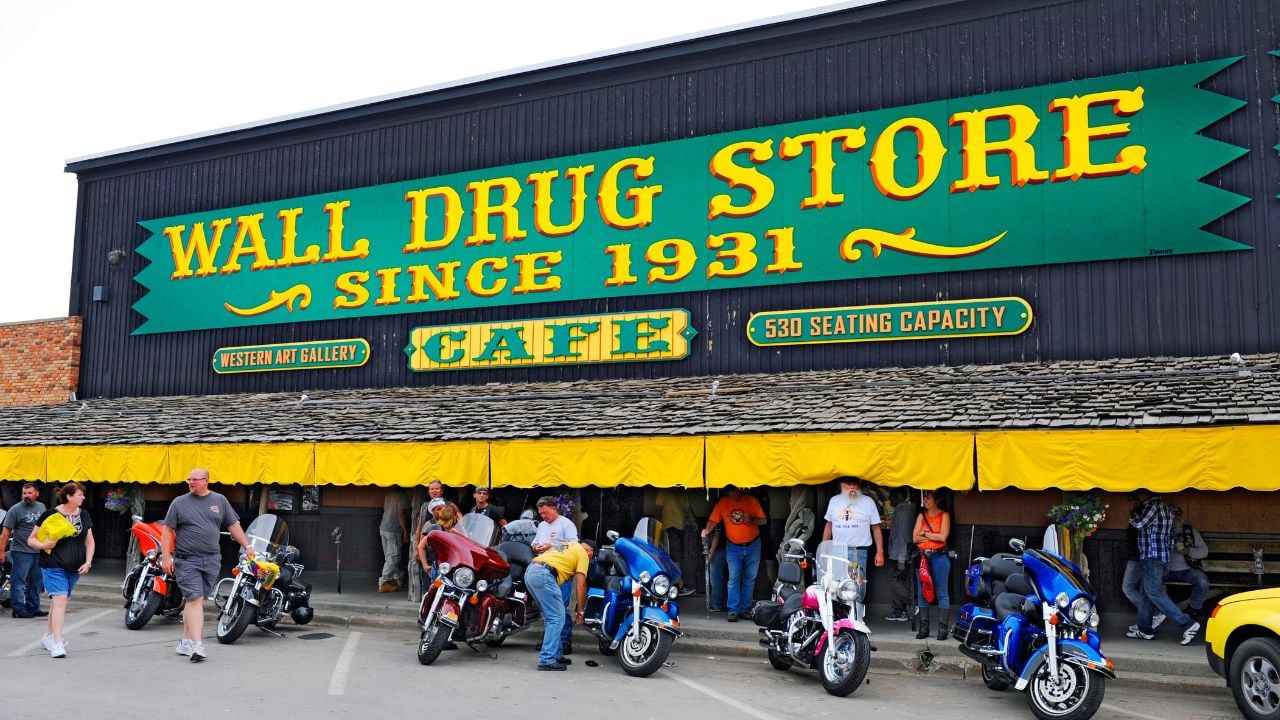
Wall Drug’s restaurant page lists 5-cent coffee among the things the Western Art Gallery Restaurant is known for.
That’s the seller’s word.
Kevin Woster of South Dakota Public Broadcasting (SDPB) wrote about it in April 2022, in a story about the store’s doughnuts.
He said the coffee was still a nickel.
In November 2013, the Epoch Times reported that Wall Drug still advertised coffee for 5 cents.
Wall Drug’s history page says more than 2 million visitors a year stop at the roadside attraction for a meal or activity, 5-cent coffee and ice water.
The most recent outside report of the price that we found is NPR’s from July 2024.
The store advertises it. The company’s pages list it as of October 2026.
Neither page cited here names a cup size, so we can’t tell you what a nickel buys.
The restaurant seats more than 500 people.
If you’re planning a stop, the cafe hours as of October 2026 are 8 a.m. to 5 p.m., Monday through Sunday.
Ground Coffee by the Pound
The Bureau of Labor Statistics (BLS) is the government’s price tracker.
It put the U.S. average for ground coffee at $9.30 a pound in August 2026.
That’s as published by Federal Reserve Economic Data (FRED), a database run by the Federal Reserve Bank of St. Louis.
The number covers ground coffee with regular caffeine, sold in a can or plastic container of any size.
It’s a U.S. city average, so you can’t read it as a South Dakota price.
Next to the 5 cents Wall Drug lists, $9.30 is far more.
But a pound isn’t a cup, so it’s not a fair match.
What the BLS Coffee Price Measures
The BLS average price for ground coffee estimates what shoppers paid in one month, built from store price quotes.
Average prices work for comparing the price levels of different items in the same month.
They don’t track change over time. That’s left to the Consumer Price Index.
The sample is built for price indexes, not for average prices.
The ground coffee series read $9.72 for April 2026 and $9.30 for August 2026. Those are two separate monthly levels.
Coffee Prices Over Time
To track change over time, BLS points you to the Consumer Price Index.
Its seasonally adjusted coffee index was 6.1% higher in August 2026 than in August 2025.
That matches what the Department of Agriculture’s Economic Research Service reported in its Food Price Outlook dated September 25, 2026.
So if you spent $100 on coffee last August, the same coffee would cost about $106.10 now.
Retail coffee prices have also risen faster than prices for other nonalcoholic beverages.
Look back two years and the jump is bigger. The index is up about 28% from August 2024.
That’s about $128 now for coffee that cost $100 then.
Since mid-2024, the index hit its high in May 2026. It has slipped each month since.
FRED shows no value for October 2025, so the data has a gap.
The ground coffee average price, which is for comparing levels and not change, read $6.31 in August 2024, $8.87 in August 2025 and $9.30 in August 2026.
The nickel is the same across the sources cited here.
Reports from 2013, 2022 and 2024 and Wall Drug’s pages as of October 2026 all give the same 5 cents.
The pound moved.
The nickel shows up at the same price on every date we checked.
What the Average Leaves Out
BLS says all food average prices are published without sales tax.
So you can’t treat $9.30 as what a pound rings up at the register.
Published average prices also don’t include items with shipping, handling or delivery charges.
Package size matters too.
Some food series cover only a fixed package size, while others include all sizes.
The ground coffee series is the all-sizes kind. So it’s one per-pound figure covering cans and containers of any size.
BLS representatives collect prices each month in the 75 urban areas priced for the Consumer Price Index.
If the sample is large enough, it also publishes average prices for four regions: the Northeast, Midwest, South and West.
Those regions are still bigger than any one state.
Psst! How much do you know about South Dakota’s road trip stops? Take our quiz and see if you can ace it.
Quiz
Dakota Road Trip Quiz
Answer these questions on coffee, caves and roadside stops in South Dakota. We bet you can’t get them all right. Prove us wrong?
During the 14 years of carving at Mount Rushmore, how many workers died on the job?
Western Art Around the Nickel
With your nickel coffee, the restaurant page says you can stroll through the Western Art Gallery Restaurant.
It lists more than 300 original oil paintings of Western art and illustrations that the Hustead family collected over the past 50 years.
Wyeth, Harvey Dunn and Oscar Howe are among the artists.
Woster's 2022 SDPB story also pairs the 5-cent coffee with time spent admiring the western art display.
A Wall Drug post from December 2021 says the center pillar in the Art Gallery Cafe was carved from a cedar tree already 187 years old in 1974.
The artist was Ken Vance of Louisville, Ohio.
The pillar carries the carved likeness of Butch Cassidy and the Sundance Kid.
Two more carved pillars in the adjacent dining room depict Gall, Crazy Horse, Spotted Tail and Red Cloud.
Take a look at the pillars while you're there.
Free Coffee for the Armed Services
Wall Drug says some coffee is free.
It honors the men and women in the armed services by giving them free coffee and doughnuts to this day.
If you're a veteran, the 2013 Epoch Times report says your coffee was free too.
The history page lists 5-cent coffee beside ice water, which is still free.
5 South Dakota Roadside Stops That Close Before Anyone Expects
Not every roadside stop in the Black Hills stays open as long as you'd expect.
Plan your stops before you pull off the interstate.
5 South Dakota Roadside Stops That Close Before Anyone Expects
9 Everyday Habits That Only Make Sense to South Dakotans
Some everyday routines make perfect sense once you've lived in South Dakota.
Out-of-staters tend to need a few of them explained.
