
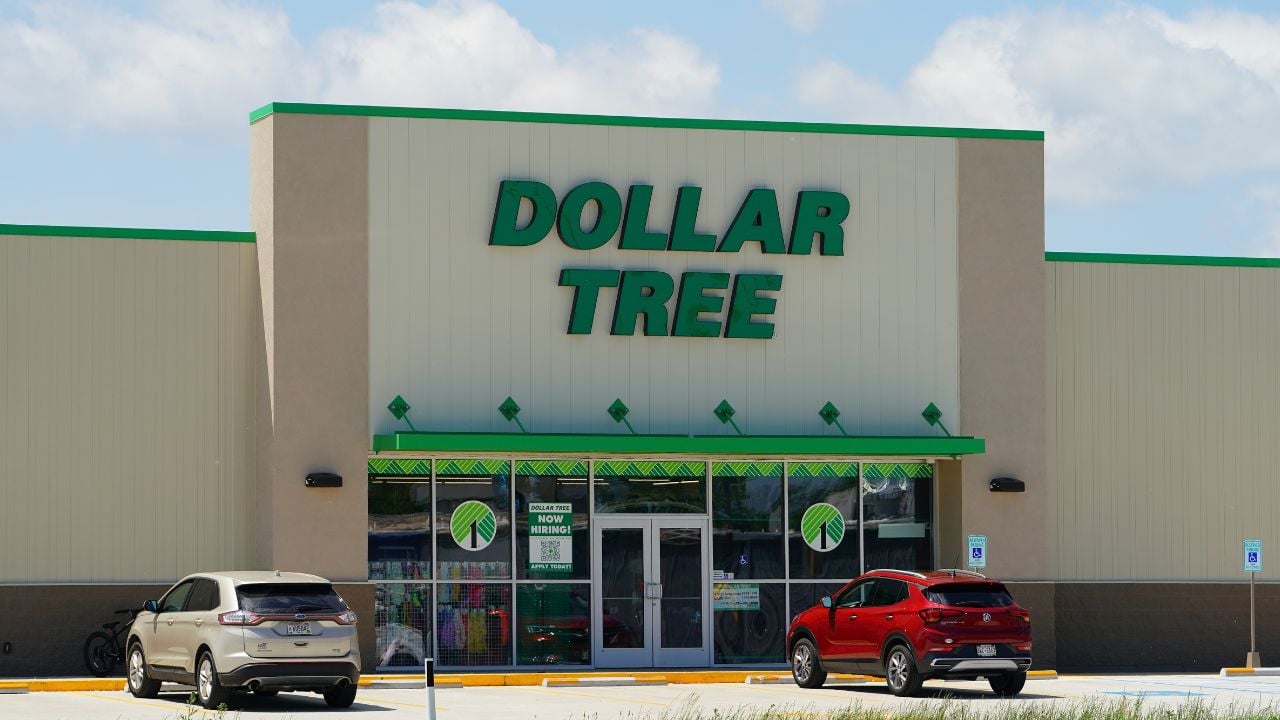
Dollar Tree Held $1 for 35 Years, but Missourians Now See Items Up to $7

Shopping at Dollar Tree used to be easy, because almost everything cost the same.
But Missourians who still shop there know that’s no longer the case.
Here’s how the chain’s famous price changed over time.
The $1 Era
Dollar Tree spent 35 years committed to selling almost everything for $1, according to NPR reporting from November 2021.
That promise meant you could pick up almost anything off a shelf and know the price without reading a tag.
Grab five of those $1 items, and your total came to $5 before sales tax.
Dollar Tree is marking its 40th anniversary in 2026, according to its August 2026 earnings call. (That’s when a company talks to investors about its results.)
So the $1 price covered 35 of those years.
That’s most of its history.
The 2021 Break
Dollar Tree announced in 2021 that prices for most items would go up to $1.25.
The change would reach every store by early 2022.
The company had tested higher prices first, and it said shoppers kept buying anyway.
Inflation (prices rising across the economy) made the old price harder to hold, too.
NPR noted that the inflation rate the previous month was the highest since 1990.
The chain’s CEO at the time said the higher price gave Dollar Tree more room to handle rising costs.
The move wasn’t a reaction to short-term market conditions.
Something had to give.
To stay at $1, the chain had to stop selling some sizes and products.
It hoped to bring them back.
So what your dollar could buy depended on what the chain could still sell at that price.
Dollar stores were among the fastest-growing chains then. Hundreds of new ones opened during the pandemic.
Ladder of Prices
Dollar Tree’s price ladder started to take shape before the break, when the chain tested stores with products at $3 and $5.
By 2023, the chain had piloted $3 packaged bread and $5 ice cream in hundreds of stores, Retail Dive reported.
As of June 2023, the frozen aisle in “multi-price” stores had seven doors of $1.25 products.
Three doors held items at $3, $4 and $5. (Multi-price stores sell items above the $1.25 starting price.)
Do the math.
Three of the ten freezer doors had the higher prices, or 30%.
A $5 item costs four times what a $1.25 item does, and five times the old $1.
The chain planned to run its multi-price approach in 4,300 stores by the end of 2023.
Psst! How much do you know about dollar-store history? Take our quiz and see if you can ace it.
Quiz
Dollar Store Pop Quiz
Answer these questions on the history of dollar stores and everyday prices. We bet you can’t get them all right. Prove us wrong?
In fiscal 2024, about how much did it cost the U.S. Mint to make a single nickel?
The $7 Ceiling
Dollar Tree raised its top price from $5 to $7 in March 2024, Fortune reported.
The chain announced the change on its earnings call.
That's $2 more, or 40% higher.
Dollar Tree planned price points from $1.50 to $7 on more than 300 items that year.
The chain's examples included $5 bags of dog food next to $1.25 pet treats and toys.
In the candy aisle, bags cost $3.
A $7 item costs seven times the old $1 price. One purchase now costs what seven did for 35 years.
A September 2026 Yahoo Finance report still describes items priced at $3, $5 or up to $7.
So you can run into a $7 price tag at a chain that once held almost everything to $1.
Multi-Price Share of Sales
Multi-price items brought in 17% of Dollar Tree's total sales in the quarter the chain reported in August 2026.
That's about $17 of every $100 spent.
A year earlier, the share was about four percentage points lower, near $13 of every $100.
So the share is growing.
Dollar Tree converted or added roughly 710 stores to the multi-price format in the quarter, Yahoo Finance reported.
That put the total at about 6,600 stores across North America.
That's about 2,300 more than the 4,300 Dollar Tree planned for the end of 2023.
The chain has 9,436 stores across the U.S. and Canada, so roughly seven in ten now use the multi-price format.
Average ticket, the amount you spend in one visit, rose 3.3% in the quarter.
Dollar Tree credited last year's pricing actions and the higher multi-price share.
If your usual trip rings up $20, 3.3% comes to about 66 cents.
What Dollar Tree's 17% Measures
A glossary on the Motley Fool transcript of the call describes multi-price as selling items above the standard $1.25 starting price.
The 17% is a share of sales dollars, not items on the shelf.
A single $7 purchase adds more sales dollars than five $1.25 purchases, so a few pricey sales can lift the share.
The other 83% came from items that aren't multi-price.
The figure covers the whole chain for one quarter. It can't tell you what any one store's shelves look like.
What's Still $1
Most items at Dollar Tree aren't $1 anymore.
Fortune reported in 2024 that most of them were staying at the $1.25 starting price.
Dollar Tree raised its base price to $1.25 in 2021.
Some $1 items remain.
Dollar Tree's 40th anniversary brought a handful of rotating $1 items to its stores, the CEO told investors on the August 2026 call.
Those items are small in scale and not a key driver of sales growth.
Don't expect a full aisle of them. Your odds of finding a $1 item depend on the rotation.
The CEO also said nothing prevents Dollar Tree from keeping a $1 price point in the assortment.
The fun of the multi-price mix is finding a $1 pool noodle, a $3 seasonal item or a $5 hammer in the same store.
20 Items Missourians Used to Buy for a Dollar or Less
It's hard to believe now, but a single dollar once bought something worth taking home.
Missourians didn't need much cash to bring home something fun, useful, or delicious.
20 Items Missourians Used to Buy for a Dollar or Less
10 Money Mistakes That Keep Middle-Class Missourians Stuck

You'd think a decent paycheck would settle things.
Many middle-class Missourians stay stuck living paycheck to paycheck because of everyday habits that drain money without anyone noticing.
