
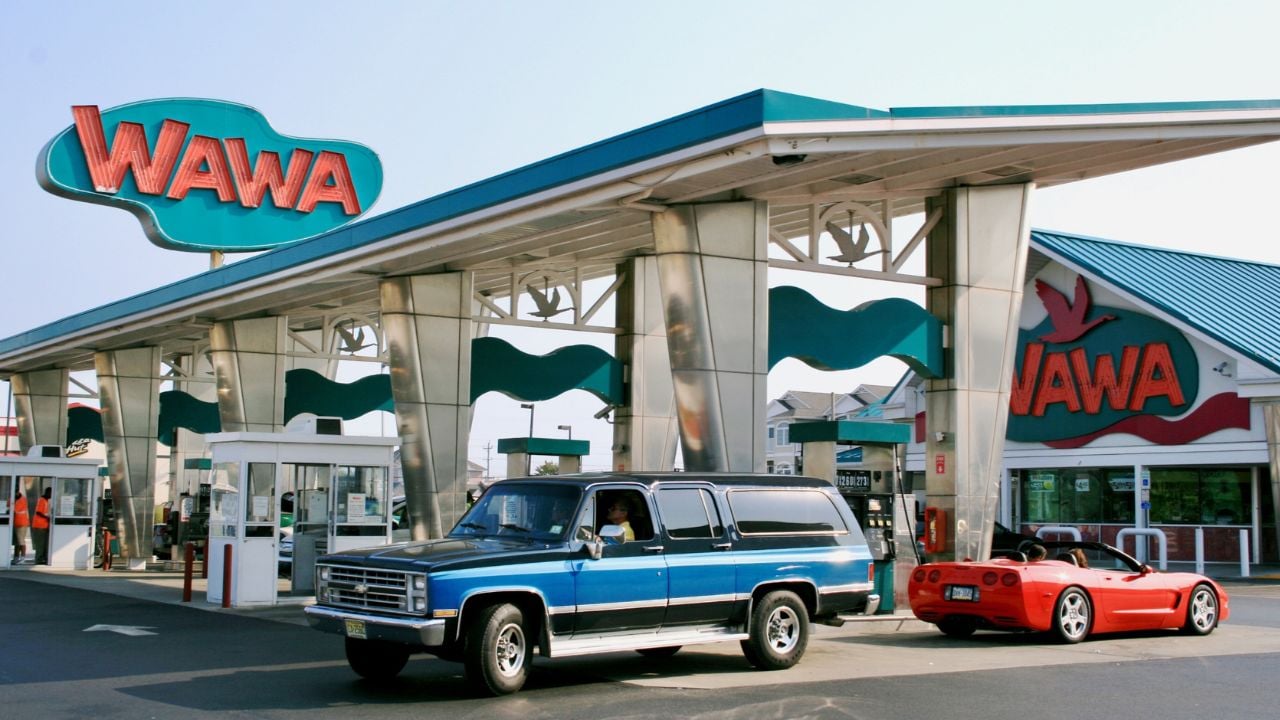
7 Things New Jerseyans Know About Never Pumping Gas That Baffle Everyone Else

Pull into a New Jersey gas station, and you can stay right in your seat.
New Jerseyans don’t think twice about it, but visitors often find it strange, and some of the details surprise even locals.
Here’s what goes on behind the full-service rule.
Note: This is general information, not legal advice. Fines and rules are subject to change, so confirm the current requirements with the New Jersey Department of Labor and Workforce Development.
1. Gas Can Rules
Your gas can falls under the self-serve ban too.
The Retail Gasoline Dispensing Safety Act makes it unlawful for an attendant to let anyone but another attendant fill a vehicle’s tank or any container.
So if you pull in with a gas can in the trunk, the attendant does the filling.
An attendant can fill only a portable container that’s sound metal or approved non-metal.
It also has to close tightly and have a spout, or be designed to pour without spilling.
If your can doesn’t pass, the attendant can’t fill it.
2. Pump Kill Switch
A pump kill switch is how retail gas stations back up the self-serve ban.
Under state law, a retail gas station needs a clearly marked switch or circuit breaker, away from the pumps, that cuts power to all of them.
The law names two reasons to flip it: Either an emergency or a customer or other unauthorized person operating or trying to operate a pump.
So if you reach for a pump yourself, the station is allowed to cut power to every pump.
Many drivers from other states find that baffling.
3. Diesel Exemption
Under state regulations, diesel fuel is exempt from the self-serve ban.
The exemptions also cover marine service stations, aircraft fueling stations, and employer gas stations that serve only a company’s employees and aren’t open to the public.
You’re outside the ban when you fill a diesel.
The same goes when you fuel a boat or a plane at a marine service station or an aircraft fueling station.
Psst! How much do you know about the laws behind pumping gas? Take our quiz and see if you can ace it.
Quiz
Gas Station IQ
These questions cover the rules and history behind who pumps your gas. We bet you can’t get them all right. Prove us wrong?
When New Jersey passed its 1989 act, lawmakers wrote that fumes from customers pumping gasoline themselves are a health hazard, particularly for which group?
4. Attendant Training Rules
Under the self-serve ban, only a trained attendant can dispense fuel at a gas station.
That training includes instruction on the act's prohibitions and any emergency procedures.
Next, the attendant needs at least one full working day of supervised practice under an experienced operator, plus a passing exam.
The law requires a station to have a certificate for each person who dispenses fuel, signed by that person and the retail dealer.
When you pull in, the attendant at your pump is required to have trained for the job and to have that certificate available at the station.
Who Counts as an Attendant
Under the ban on pumping gas yourself, an attendant is a retail dealer, meaning the person who operates a gas station, or an employee of that dealer.
An owner who pumps follows the same training rules as an employee.
A customer is neither, so a customer can't qualify as an attendant.
5. Attendants on Duty
Staffing is part of the self-serve ban, so a gas station open to the public needs an attendant on duty whenever it's open for business.
The regulations also require warning signs, including one that reads "It is unlawful to serve yourself. Wait for an attendant."
If you're visiting from out of state, that sign tells you what to do at the pump.
It's also unlawful for an attendant to fill your tank while the vehicle's engine is running.
It also bars an attendant from dispensing fuel while smoking.
6. Fines for Breaking the Ban
Breaking the self-serve ban costs $50 to $250 for a first offense.
Later offenses can cost up to $500 each.
You can read the fine schedule in the act itself, and the act makes a violator of any provision liable for those amounts.
The commissioner weighs how serious the violation was, the violator's compliance history, cooperation and willfulness when assessing an administrative penalty.
A station you pull into that runs without the required certificates or shutoff switch is a separate violation by the retail dealer for each day.
7. Hackensack Discount Fight
If you've wondered why the self-serve ban exists, the story starts with a discount in Hackensack.
The ban dates to 1949.
The Two River Times reports that a Hackensack gas station owner named Irving Reingold offered customers a lower price for pumping gas themselves.
Rival gas station owners then pushed lawmakers for a ban and sold it as a safety measure.
It worked.
Your next fill-up in New Jersey still follows that rule.
Oregon's 2023 Change
Oregon banned self-service from 1951, loosened it only in some rural counties, and allowed it statewide in 2023.
Oregon now lets you fill your tank statewide, though gas stations must still provide an attendant and follow safety rules.
If you're driving through Oregon, you'll still find an attendant at the station, since the state requires one.
That left New Jersey as the only state with a full ban, NBC10 Philadelphia reported.
Where Residents Stand
Fairleigh Dickinson University polls show little change on full service since 2012.
The latest poll surveyed 1,211 registered New Jersey voters in June 2026, and 64% wanted to keep full service while 24% preferred self-service.
When the university asked in 2012, 63% wanted to keep full service and 23% favored self-service.
A 2022 Monmouth University poll found 54% of New Jersey adults would favor self-service if full service stayed an option.
Women backed full service more strongly than men did in the June 2026 poll, 74% to 56%, though a majority of men still wanted to keep it.
If you're in that 64%, the law already works the way you want.
Bills to End the Ban
Lawmakers have tried to end the self-serve ban more than once, including in the Assembly in 2022 and in the Senate in 2025.
Senate President Nicholas Scutari opposed the 2022 bill, saying residents wanted to keep the current system and no data showed self-service would save money.
Senator Jon Bramnick's 2025 bill, S4303, would let a gas station offer only full service, only self-service or both, with some conditions.
If you have a disability, one provision of S4303 is aimed at you.
If a station went self-service only, that bill would require a calling device at a refueling site or a decal on every pump with a phone number for help.
LegiScan lists S4303 as dead.
8 Property Tax Freeze Rules New Jersey Retirees Miss Out On

Small details can trip up retirees applying for New Jersey property tax relief.
Those are the rules New Jersey retirees miss out on.
8 Property Tax Freeze Rules New Jersey Retirees Miss Out On
7 Flood Zone Changes That Catch New Jersey Homeowners Off Guard
Flood zone rules can change in ways that surprise New Jersey homeowners.
Those changes are catching New Jersey homeowners off guard.
7 Flood Zone Changes That Catch New Jersey Homeowners Off Guard
