
7 Flood Zone Changes That Catch New Jersey Homeowners Off Guard

A New Jersey homeowner requests a permit for a routine storm repair and learns the rules have changed since they last renovated their house.
It’s no wonder, given that New Jersey’s Department of Environmental Protection has rewritten the state’s flood zone rules twice in three years.
These are the flood zone changes catching New Jersey homeowners off guard.
Note: This is general information, not legal advice. Flood zone rules, maps, and insurance requirements are subject to change.
1. State Floodplains Beyond FEMA’s Map
Flood-prone land in New Jersey now stretches beyond where federal maps put it.
The state’s Inland Flood Protection Rule and its newer coastal companion expanded the area New Jersey’s Department of Environmental Protection (NJDEP) treats as a flood hazard zone.
That zone now reaches past the boundary the Federal Emergency Management Agency (FEMA) draws on its flood maps.
The gap surprises people.
A yard, a driveway, or a small addition can sit outside FEMA’s mapped Special Flood Hazard Area and still land inside NJDEP’s larger regulated footprint.
Federal flood insurance still isn’t required on that strip of land.
A regulated project there now needs a state permit and construction built to New Jersey’s design standards before anyone breaks ground.
Homeowners along the Raritan, the Passaic, and their smaller tributaries face this gap first.
2. A Costlier 50% Rule
Hitting New Jersey’s 50% rebuild threshold after a flood now costs more than it did three years ago.
The state calls the tripwire the 50% rule.
Once storm repairs or a renovation’s cost reaches half a home’s market value, the rule kicks in.
The whole structure then has to meet today’s flood elevation standard, not the one it was built to.
That standard is higher than it used to be.
NJDEP raised it for inland rivers in 2023 and raised it again for the coast in 2026.
A 50%-rule rebuild today has to clear a taller bar than one did three years ago.
That threshold adds up every improvement made over the past ten years, not just the current project.
Old additions count too.
A homeowner who expects a simple kitchen swap can find the permit requires raising the entire first floor to New Jersey’s newer, higher standard.
Splitting a renovation into smaller projects to dodge the threshold doesn’t work either.
The state now adds up every improvement on the property, not just the one in front of the inspector.
3. The New Flood Disclosure Requirement
Selling a home now means putting flood risk in writing.
Gov. Phil Murphy signed the state’s flood disclosure law in July 2023, and the requirement has applied to home sales since March 2024.
A seller must state on the property condition disclosure form whether the home sits in a FEMA flood hazard area and share any flood history they know about.
Silence isn’t an option anymore.
Landlords carry a version of the same duty, disclosing flood zone status and any past flooding in the building or parking areas before signing or renewing a lease.
A homeowner who has never seen a drop of water in thirty years can still be sitting in a mapped flood zone.
New Jersey’s new law forces that fact onto paper the moment the house goes up for sale.
Buyers get to weigh that risk before closing instead of finding out from a neighbor after moving in.
4. FEMA’s County Map Overhaul
FEMA is actively rewriting the flood map under three New Jersey counties.
Morris County received new preliminary flood maps in November 2025, and Hunterdon and Somerset counties got theirs earlier that same year, all part of the same regional update.
A public review and appeal period follows every new map.
FEMA has to resolve every appeal before it sends the letter that starts the clock on adoption.
The whole process runs slow.
FEMA’s timeline puts the span from a preliminary map to an adopted one at 18 to 24 months.
A home can cross into a mapped flood zone for the first time the moment that map turns final.
A house that never carried a flood insurance requirement in its history can wake up owing one, simply because surveyors finally remeasured the river it sits near.
What Counts as a Special Flood Hazard Area
New Jersey’s Special Flood Hazard Area is the zone FEMA maps as having at least a 1% chance of flooding in any given year.
Insurers call that same zone the 100-year floodplain.
A home only has to carry federal flood insurance when three things line up.
It has to sit inside that mapped zone, carry a mortgage, and answer to a lender that’s federally regulated or backed.
Drop any one of the three, and the purchase stops being mandatory, though the flood risk itself doesn’t change.
5. Premiums That Rise on Their Own
Flood insurance bills can rise even when nothing about the property changes.
FEMA switched to a pricing system called Risk Rating 2.0, which prices each home’s flood risk individually instead of grouping every home in a zone under one flat rate.
Homes that were priced well below their actual risk for decades are still catching up to that number today.
The bill keeps rising.
Federal law caps how fast any one policy can rise, up to 18% a year for a primary residence.
A homeowner who never filed a claim and never touched their house can still open a renewal notice and see that maximum applied.
No new map, no new storm, and no new law caused it.
The pricing system alone can do that, year after year, until the premium finally catches up.
6. Four More Feet for Coastal Rebuilds
Coastal rebuilds now answer to a four-foot flood elevation add-on.
NJDEP adopted the Resilient Environments and Landscapes rule (REAL) on January 20, 2026.
It adds four feet to FEMA’s base flood elevation for new construction and substantially improved homes in the state’s coastal flood zones.
That’s a foot higher than the standard NJDEP set for inland rivers and streams under the 2023 Inland Flood Protection Rule.
That’s the state’s other flood-elevation rewrite in the same three-year stretch.
Coasts got the steeper number.
A Shore homeowner whose storm-damaged house sat two feet above the old flood line can now need it raised well past that.
That’s on top of the extra foot of freeboard many towns already required.
Towns from Highlands down through Ocean and Cape May counties are measuring that new line against houses that have stood in that same spot for generations.
Psst! How flood-ready is your New Jersey home? Run through this checklist and see where you stand.
7. Deadline That Keeps Moving
New Jersey’s flood-zone rebuilding rules depend on a deadline that has already moved once.
NJDEP’s original cutoff let a project keep the pre-2026 flood standard if its permit application was complete by July 20, 2026.
The department then proposed pushing that legacy cutoff to July 20, 2027 instead, a full extra year.
Old rules got a reprieve.
That extension hadn’t been written into the actual regulation as of late summer 2026, so NJDEP issued separate guidance promising to honor it anyway while the paperwork catches up.
NJDEP is also running a closed workgroup through early fall 2026 to study whether that 2026 coastal rule should be simplified.
NJDEP’s stakeholder workgroup isn’t the department working alone: It seats five trade associations, three environmental nonprofits, and one regional planning group, meeting through early fall 2026.
None of the group’s proposed changes have gone public, and NJDEP has signaled the state’s tight rulemaking calendar could squeeze its usual public-information sessions.
9 Things That Confuse Everyone Who Moves to New Jersey
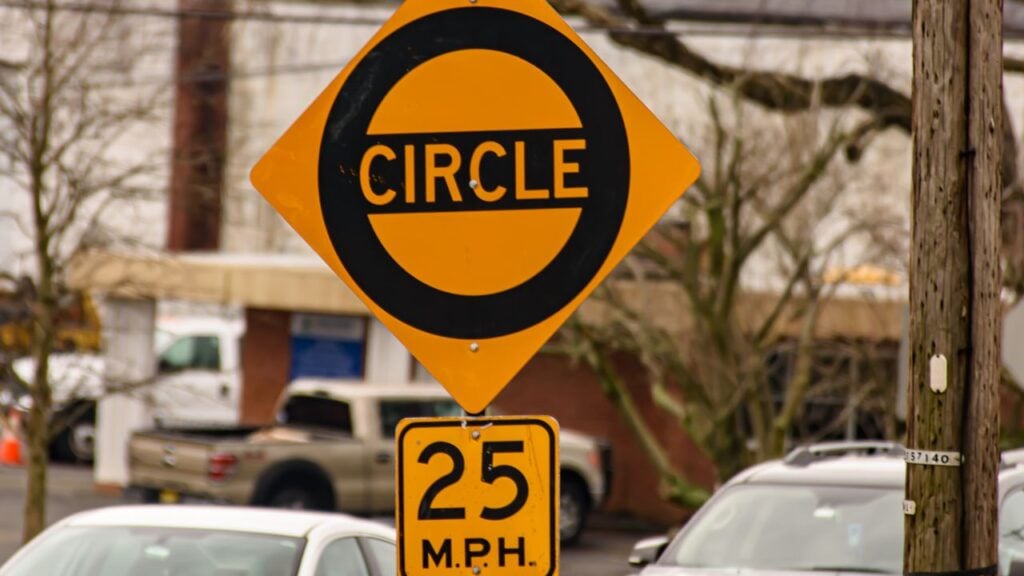
New Jersey answers to 564 separate town governments, packed into one of the smallest states in the country.
Two neighborhoods a mile apart can run on completely different trash days, tax bills, and rulebooks, which throws newcomers for a loop fast.
9 Things That Confuse Everyone Who Moves to New Jersey
9 New Jersey Myths Residents Are Sick of Correcting

New Jersey is one of the most densely populated states in the country, and many out-of-staters still assume it’s a flyover state next to New York.
New Jerseyans have heard every one of these myths a hundred times, and they’re tired of correcting the same nine.
