
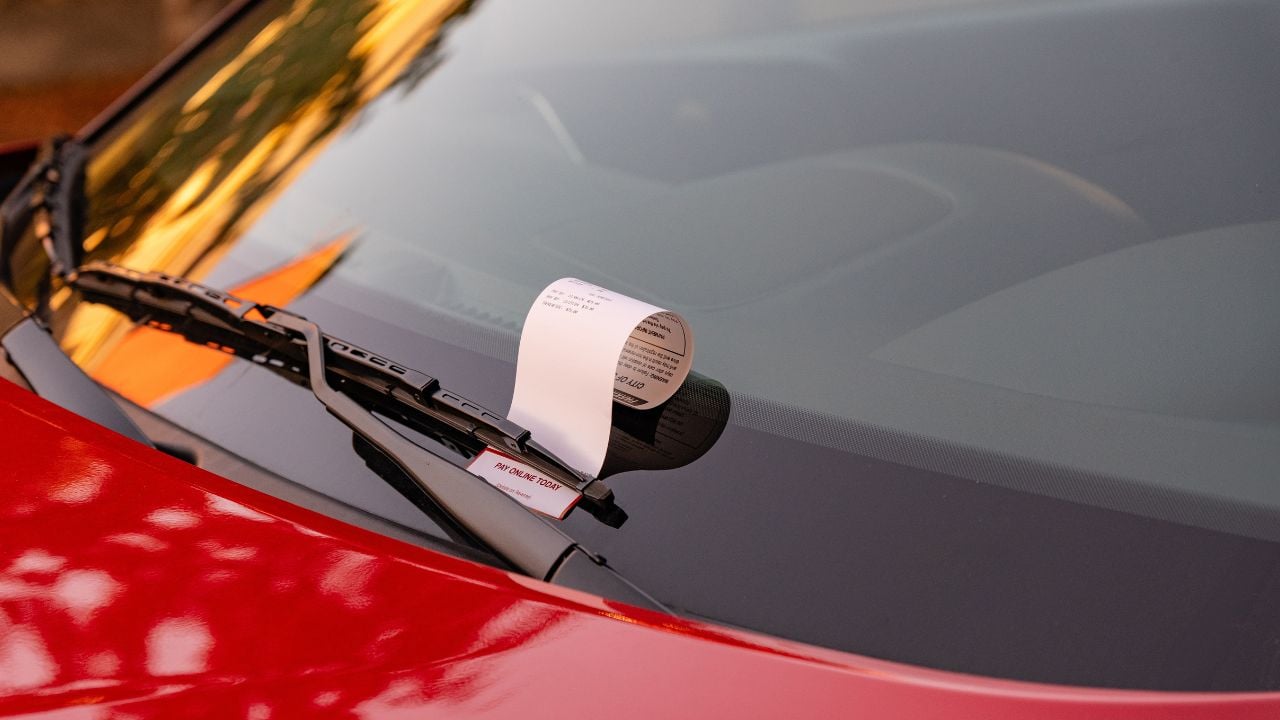
6 Things New Jerseyans Can Be Ticketed for Because of What’s on Their Car

Careful driving doesn’t always keep you from getting pulled over.
In New Jersey, your car itself can be the problem, and some of the reasons are easy to overlook.
Here’s what to check before an officer does.
Note: This is general information, not legal advice. Vehicle rules and fines are subject to change, so confirm the current requirements with the New Jersey Motor Vehicle Commission.
1. Snow and Ice on Your Roof
A ticket can come from snow or ice you left sitting on your car.
New Jersey’s law requires you to make all reasonable efforts to remove accumulated ice or snow from your vehicle’s exposed surfaces before you drive.
That covers your hood, trunk, windshield, windows and roof, so a cleared windshield alone won’t do it.
The fine is $25 to $75 for each offense, whether or not anything falls off, and the law assesses no motor vehicle points or insurance eligibility points.
An officer who believes the snow or ice is a threat to people or property can pull you over for it.
If ice or snow flies off and hits another vehicle or a pedestrian, causing injury or damage, the fine for a non-commercial driver rises to $200 to $1,000.
The duty falls on whoever has physical possession of the vehicle when the snow builds up.
You aren’t breaking the law while you’re parked under snow.
Driving off changes that.
The law also exempts a trip during a snow or ice storm that began and continued for the whole time you drove.
2. Tinted Front Windows
Window tint can bring a ticket, depending on which of your windows it covers.
On your front windshield and front side windows, N.J.S.A. 39:3-74 bars any sign, poster, sticker or other non-transparent material, apart from a certificate or other item the law requires you to display.
The Motor Vehicle Commission (MVC) allows tint on those windows with a medical exemption only.
You have to keep the approval document in the vehicle, to show police and for inspection.
In practice, it’s darkness that draws the stop, as the ruling below explains.
A violation of N.J.S.A. 39:3-74 carries a fine of up to $25 under N.J.S.A. 39:3-79.
3. Plate Frames and Grime
Your license plates can bring a ticket two ways, through a frame that hides the lettering or through dirt that blurs it.
R.S. 39:3-33 says plates must be “kept clear and distinct and free from grease, dust, or other blurring matter,” and dust is on that list.
Where a plate sits on your car matters too, since a car that came with two plates needs one on the front and one on the rear.
Each has to sit between 12 and 48 inches off the ground, held horizontal.
The fine is up to $100, and a second offense can double it.
What Counts as a Hidden Plate
New Jersey’s plate frame rule applies to a frame or holder that conceals or otherwise obscures the name of the State or the registration number.
A frame that covers only part of the lettering isn’t a violation if the information can still reasonably be identified or discerned.
Partial concealment of that kind also isn’t a basis for a stop, under a 2023 amendment to the law.
The same standard covers the registration inserts the MVC issues and the information on temporary registrations.
The amendment also tells the Attorney General to issue guidance so officers know how to enforce the rule.
4. Cracks in Your Windshield
A cracked windshield can bring a ticket, and the statutes turn on the word “unduly.”
N.J.S.A. 39:3-75 bars you from driving with unduly fractured, discolored or deteriorated safety glazing material, the approved glass in your windshield and windows.
It also bars glass that causes undue or unsafe distortion of visibility, and N.J.S.A. 39:3-74 separately bars a vehicle equipped or loaded so as to unduly interfere with the driver’s vision to the front and sides.
The state can revoke the registration of a vehicle with that glass, and the fine is up to $25 under the same N.J.S.A. 39:3-79 cap that applies to tint.
Each piece of approved safety glass also has to carry a permanent mark from its manufacturer.
5. Expired Inspection Stickers
An expired inspection sticker on your windshield can draw a ticket.
The MVC says vehicles need an inspection every two years, and new vehicles need their first inspection at five years.
If you let it lapse, N.J.S.A. 39:8-9 sets a fine of $100 to $200, up to 30 days in jail, or both.
You can have your vehicle inspected up to two months before your sticker expires.
In April 2026, the MVC extended stickers expiring from April through July by three months.
6. Dead Lamps and Plate Lights
A dead headlight or taillight can bring a ticket under N.J.S.A. 39:3-66, which requires lamps to be kept clean and in good working order.
The fine is up to $25 under the N.J.S.A. 39:3-79 cap.
If an officer finds a lamp that isn’t working, N.J.S.A. 39:3-61 says you may be allowed to park nearby and repair or replace it before moving the vehicle, and if you do, there’s no violation of Title 39.
Plate lights count too.
Under that statute, a lamp has to illuminate your rear plate with white light and make it clearly legible from 50 feet behind the vehicle.
That lamp has to be lit whenever your headlamps or other driving lamps are.
2022 Tint Ruling
A ticket for tint starts with a stop, and the state Supreme Court set the standard for that stop in State v. Smith, decided June 28, 2022.
For your front windshield and front side windows, police have reason to stop a car when those windows are so dark that officers can’t clearly see people or items inside.
The Court noted that the tint wording in N.J.S.A. 39:3-74 dates to 1921 and was last amended in 1937, so it wasn’t written with window tint in mind.
The safety-glass section, N.J.S.A. 39:3-75, doesn’t cover tint.
Psst! How much do you know about the roads you drive? Take our quiz and see if you can ace it.
Quiz
Road Trivia
Answer these questions on highways, tunnels and driving firsts. We bet you can’t get them all right. Prove us wrong?
The first drive-in movie theater opened in June 1933 just outside Camden. What did admission cost?
Tint Bill in Trenton
A ticket for front-window tint could look different for some drivers if Assembly Bill A5547 becomes law.
Assemblyman Kenyatta Stewart introduced the bill on September 24, 2026.
It would let the owner or lessee of a vehicle used by an elected official or covered person apply to the MVC for a tint permit.
The tint could go as dark as the minimum light transmittance federal law requires.
The bill defines elected officials as U.S. senators, U.S. representatives from New Jersey and the governor.
Covered persons include active, former and retired judicial officers, law enforcement officers, child protective investigators and prosecutors, plus immediate family members in the same household.
Not everyone qualifies.
If you aren't on that list, the bill doesn't give you a tint permit.
Each approved elected official or covered person would get a card valid for no more than 48 months, to be shown to police on request.
Failing to display the card would carry a $100 fine.
A judge could dismiss the charge if the person shows a card that was valid on the day of the charge, though the judge may still impose court costs.
9 Things That Confuse Everyone Who Moves to New Jersey
Moving to New Jersey comes with surprises that catch newcomers off guard.
Jughandles, 564 separate town governments and property taxes that reset the day you buy are among the nine.
9 Things That Confuse Everyone Who Moves to New Jersey
9 New Jersey Myths Residents Are Sick of Correcting

Many out-of-staters show up assuming New Jersey is a flyover state compared to its New York neighbor.
Pumping gas yourself and whether the Turnpike and Parkway are the same road are two of the nine.
