
12 Things Coloradans Do That Confuse Their Flatlander Relatives

Visit Colorado and say “Buena Vista,” “Louisville” or “Ouray” the way they look on the sign, and a local will set you straight.
Then there’s what Coloradans do with trash cans, mail ballots, and a bicycle at a stop sign.
Here’s what Coloradans do without thinking, and the reasons your visiting relatives are constantly confused.
Note: This is general information, not legal advice. Laws, fines and fees are subject to change.
1. Eating a Slopper With a Spoon
Eating a Pueblo slopper means working through a burger smothered in green chile sauce and topped with cheese and onions.
If you’re making a slopper at home the Pueblo way, add french fries before you pour on the green chile.
The Colorado Department of Agriculture says a slopper is best eaten with a spoon.
2. Checking Tire Tread in September
Checking tire tread in September gets you ready for Colorado’s Traction Law.
The law is in effect each year from Sept. 1 through May 31 on the I-70 Mountain Corridor between Dotsero and Morrison.
If you don’t comply, the penalty includes a fine and a surcharge.
Relatives often overlook the tread.
What Colorado’s Traction Law Requires
Colorado’s Traction Law requires tires with a tread depth of at least 3/16-inch.
Qualifying tires include winter tires with the mountain-snowflake icon, all-weather rated tires and mud and snow tires.
All-wheel-drive and four-wheel-drive vehicles have to meet the same standard.
A vehicle without qualifying tires needs chains or an approved alternative traction device on two or more drive tires.
3. Pronouncing Town Names
Pronouncing town names the local way often trips up out-of-towners and new residents.
You say Buena Vista as BYOO-nuh Vista, Louisville as Lewis-ville and Ouray as YOU-ray.
If you’re headed to Salida or Paonia, you’ll want suh-LIE-duh and pay-OWN-yuh.
Saguache is suh-WATCH.
4. Reusable Bags at the Register
Reusable bags matter at the register now that a 2021 Colorado law bars many stores from giving you a single-use plastic carryout bag.
The ban has applied since Jan. 1, 2024.
Restaurants and small stores that operate only in Colorado and have three or fewer locations can still hand out plastic bags.
If a store offers you a recycled paper bag instead, it charges at least 10 cents for it.
Your city or county may charge more than that.
5. Noon Rule on 14ers
The noon rule for climbing 14ers, which are peaks over 14,000 feet, is a general guideline to be off the summit by noon.
Colorado has dozens of them.
A storm can still reach you earlier or later than noon, so experts encourage hikers to check summit forecasts from the National Weather Service.
Psst! How much do you know about Colorado? Take our quiz and see how many you can get right.
Quiz
Rocky Mountain Pop Quiz
These questions cover Colorado’s geography and history. See if you can ace them.
In February 1985, which Colorado town recorded the state’s record low, minus 61 degrees Fahrenheit?
6. Staying Behind Tandem Plows
Colorado's Tandem Snowplow Law makes it a Class A traffic offense to pass a government snowplow in tandem formation with its lights on.
In that formation, plows stagger diagonally to clear the whole roadway in one sweep.
If you try to pass them, you could run into white-out conditions and ridges of snow between lanes.
The fine ranges from $15 to $100, plus a surcharge.
Plows drop de-icer and sand, so you'll want to stay three to four car lengths back.
7. Collecting Rain in Two Barrels
Colorado law limits many households to two rain barrels with 110 gallons of combined storage.
You have to use that water outdoors, on the same property it came from.
Untreated rainwater from your roof isn't safe to drink.
A building with more than four units can't have a rain barrel.
Your homeowners association can't ban rain barrels, but it can set reasonable rules for where they go and how they look.
8. Adjusting Recipes for Altitude
Colorado State University calls itself the birthplace of high-altitude cooking adjustments.
The university built a high-altitude cooking laboratory in 1927.
The lab tested recipes for altitude conditions from sea level to 12,000 feet.
Anything above 3,000 feet counts as high altitude, and that's all of Colorado.
To keep cakes from collapsing and cookies from spreading, consider raising the oven temperature by no more than 25 degrees.
You'll likely need to shorten the baking time, so check on your treats through the oven light instead of opening the door.
Use slightly less baking powder or baking soda, since leaveners react with more force at higher elevations.
One change at a time.
9. Bicycle Safety Stops
Colorado's bicycle safety stop lets many cyclists roll through a stop sign when it's safe.
If you're on a bike, you first slow down, usually to 10 miles per hour or less, and yield to traffic and pedestrians.
At red lights, cyclists still have to come to a complete stop and proceed only when the intersection is clear.
10. Returning Mail Ballots
Every Colorado voter receives a mail ballot, the Secretary of State's office says.
For most voters, the ballot has to reach the county clerk and recorder by 7 p.m. on Election Day.
Postmarks don't count.
If you're not sure your ballot will arrive in time, you can drop it off in person.
Drop boxes are open and under video surveillance 24/7.
You can sign up for BallotTrax to track your ballot from sent to accepted.
11. Keeping Trash Away From Bears
Colorado Parks and Wildlife says leaving your trash cans out where bears can reach them violates state law, along with some local city and county ordinances.
Keep your trash indoors overnight, and put it out only on the morning of pickup.
Trash was still the No. 1 source of bear conflicts, according to a 2023 release.
When garbage is easy to reach, the lure of an easy meal can overcome a bear's natural wariness of humans.
Bears that get too comfortable around people can become a threat to human safety, and some have to be killed.
12. Motorcycle Lane Filtering
Motorcycle lane filtering became legal in Colorado under a 2024 law that lets riders slowly pass between vehicles stopped in traffic and headed the same direction.
Traffic has to be at a complete stop, and slow-moving congestion doesn't count.
The rider has to pass on the left at 15 miles per hour or less when the lane is wide enough.
When the stopped vehicles start to move, the rider has to merge back into the flow of traffic.
Lane splitting, which means riding between lanes of moving vehicles, is still illegal.
When you're stopped at a red light, a motorcycle may ease past you on the left.
That can startle many drivers.
The law expires in September 2027 unless lawmakers act.
9 Things That Confuse Everyone Who Moves to Colorado

Whether you land in Denver for a job or a mountain town for the snow, you run into surprises.
Newcomers tend to trip over the same things.
9 Things That Confuse Everyone Who Moves to Colorado
9 Things That Shut Down in a Colorado Mountain Town Between Seasons
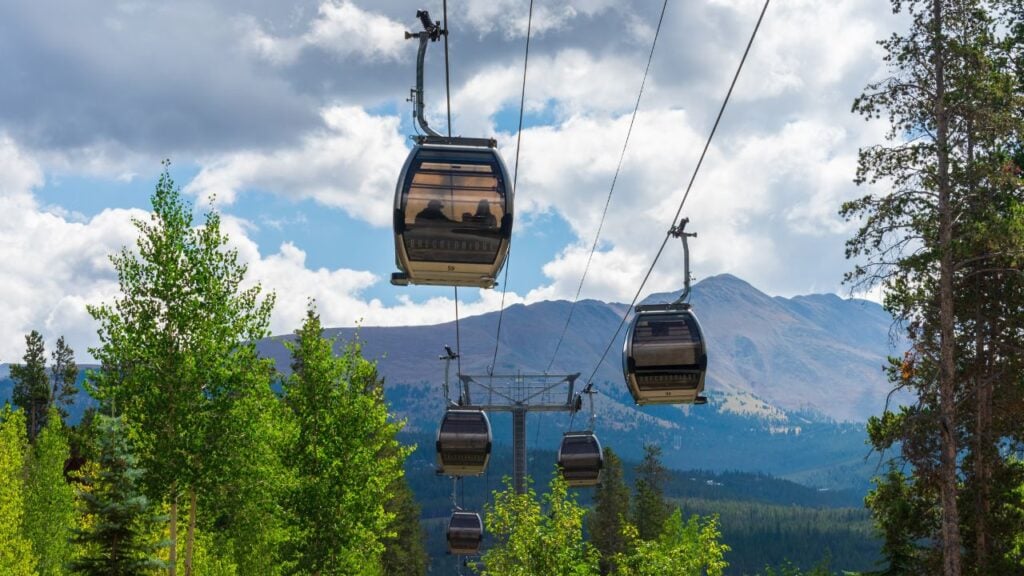
Many Colorado mountain towns close for business between summer and ski season.
The list starts with Breckenridge's Peak 8 Fun Park.
9 Things That Shut Down in a Colorado Mountain Town Between Seasons
