
12 Things That Make Michiganders Different From Everyone Else in the Midwest

Michigan lost a fight with Ohio over Toledo and ended up with the entire Upper Peninsula.
Add the most lighthouses of any state, an island with no cars and the country’s oldest surviving ginger ale, and Michigan stops looking like the rest of the Midwest.
Here’s what sets Michiganders apart, from the mitten to the Mackinac Bridge.
1. Mitten Hand Map
The Michigan hand map works because the Lower Peninsula is shaped like a mitten.
If you hold up one hand, your thumb outlines the east side of Saginaw Bay, and your pinkie is the Leelanau Peninsula.
If you live in Lansing, you point to the middle of your palm.
2. Longest Freshwater Coastline
Michigan has the longest freshwater coastline in the nation, at more than 3,200 miles.
Four of the five Great Lakes surround the state.
In Michigan, you’re never more than 85 miles from a Great Lake.
You’re also never more than 6 miles from a body of water.
3. Mackinac Island Without Cars
Mackinac Island State Park hasn’t allowed cars since 1901, and Mackinac State Historic Parks says the ban became state law in 1960.
For emergencies, Mackinac Island has one police car, two fire trucks, and an ambulance.
The park has more than 70 miles of natural and paved trails.
What Moves on Mackinac Island
If you bring a bike, you’ll need to pay for a temporary bicycle license before boarding the ferry.
State law bars e-bikes in Mackinac Island State Park and in the City of Mackinac Island without authorization from the park or the city.
4. Lions Every Thanksgiving
The Detroit Lions have played on Thanksgiving since 1934.
Team owner George A. Richards started the tradition as a gimmick to sell tickets.
If you’ve ever timed your Thanksgiving dinner around kickoff, you’re part of that tradition.
Apart from 1939 through 1944, when World War II stopped the game, the Lions have played every Thanksgiving.
Every one of those games has been at home in Detroit.
5. Faygo
Faygo started in Detroit in 1907, when brothers Ben and Perry Feigenson began bottling lager beer, mineral water, and soda water.
The company moved its bottle works to Gratiot Avenue in Detroit in 1935.
Faygo now comes in more than 30 flavors, so you have plenty to choose from.
If you pick up a bottle of Redpop, you’re getting what the Detroit Historical Society calls the most popular flavor and one of the Feigenson brothers’ earliest creations.
In the late 1960s, Faygo began advertising during televised Detroit Tigers games, and its Faygo Kid ads became very popular.
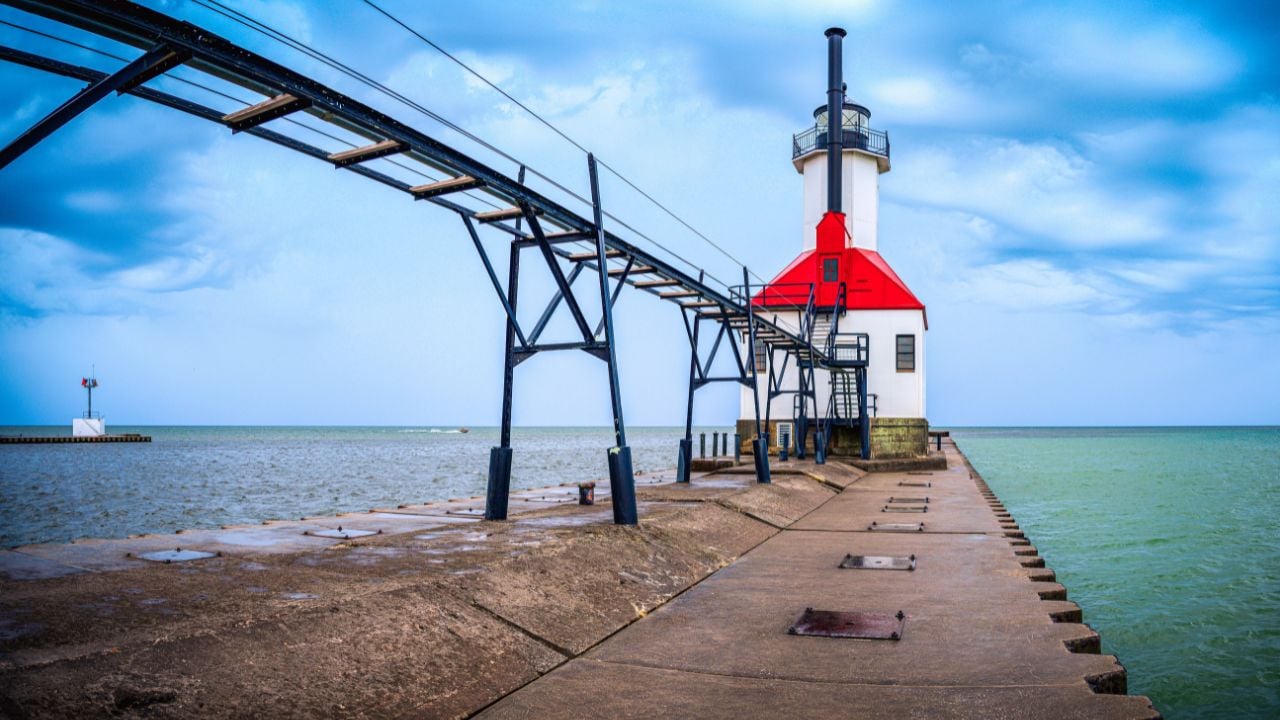
6. Lighthouses
Michigan has more than 120 lighthouses, more than any other state in the country, according to the Michigan Economic Development Corporation.
You can tour many of them in the warm-weather season.
Others have bed and breakfast lodging or museums, so you can stay overnight at some.
7. Detroit-Style Pizza
Buddy’s Pizza opened in 1946 at Six Mile and Conant in Detroit, and it credits Gus Guerra and Connie Piccinato, a friend and employee, with creating the first Detroit-style pizza there.
The building was previously a speakeasy called Buddy’s Rendezvous.
Guerra and Piccinato used square blue steel pans that were intended to hold nuts and bolts at local automotive plants.
If you order a slice at Buddy’s, you get Wisconsin brick cheese spread edge to edge, which the restaurant says makes a crispy, caramelized crust.
8. Toledo for the Upper Peninsula
Michigan’s Upper Peninsula is tied to the Toledo War of 1836, when Michigan and Ohio fought over which state would get Toledo.
Congress ended it by giving Toledo to Ohio and offering Michigan the rest of the Upper Peninsula.
If you’ve ever wondered why the Upper Peninsula belongs to Michigan, that trade is where you start.
9. Vernors
Vernors is a Detroit ginger ale, and pharmacist James Vernor introduced it in 1866.
If you drink one today, you’re having the oldest surviving ginger ale brand in the United States, according to The Henry Ford museum.
Vernor discovered that his recipe took on a unique flavor when aged in a wooden keg.
Vernors was featured at local soda fountains.
10. Sand Dunes
Michigan’s sand dunes are the largest collection of freshwater dunes in the world.
Melting glaciers left the sand, rivers carried it to the lakes, and waves put it on the beaches.
Then westerly winds blew the sand inland, and the wind has been building the dunes for thousands of years.
Perched dunes are on top of bluffs 90 to 360 feet high.
If you visit Sleeping Bear Dunes in the Lower Peninsula or Grand Sable Dunes in the Upper Peninsula, you can see examples.
Psst! How much do you know about Michigan’s landmarks? Take our quiz and see if you can ace it.
Quiz
Michigan Know-How
Answer these questions on Michigan’s landmarks, lakes, and history. We bet you can’t get them all right. Prove us wrong?
In 1909, Wayne County built a famous mile of Woodward Avenue in Detroit. What was it made of?
11. Yooper
A 2016 Michigan Public column describes Yooper as the unofficial term for people from the Upper Peninsula.
A lot of Yoopers wear the label with pride.
Some Yoopers call the Lower Peninsula Down-State.
If you ask around, you might hear people below the Mackinac Bridge called trolls, but Yoopers don't use the term much.
12. Mackinac Bridge
The Mackinac Bridge is five miles long, measuring 26,372 feet from one end to the other.
It has carried traffic since November 1, 1957.
If you cross it, you're on the longest suspension bridge between anchorages in the Western Hemisphere, according to the American Society of Civil Engineers.
The suspension portion of the bridge, including its anchorages, is 8,614 feet long.
The bridge's main span is 3,800 feet.
8 Things Michigan Law Lets an Employer Take From a Final Paycheck
Your final paycheck isn't always yours to keep in full.
Where the money goes when a job ends depends on who's asking.
8 Things Michigan Law Lets an Employer Take From a Final Paycheck
8 Wedding Habits Michiganders Say Have Gotten Out of Hand

Michiganders have opinions about how big weddings have gotten.
Bridesmaids, guests, and budgets all take a turn in this one.
