
5 Things Kentucky’s Elk Do in the Coalfields Every Winter

On a cold winter day in Kentucky’s coalfields, check the south-facing slopes for elk.
The herds change their habits once fall’s over, and knowing them can make your next drive worth it.
Here’s what Kentucky’s elk do in the coalfields every winter.
1. Gathering Into Herds
Elk gather into herds for winter survival.
A 2006 Kentucky Living article reported that groups of 50 to 100 cows and calves aren’t unusual in winter.
Spot a group that size, and you’re likely looking at cows and their calves.
2. Bachelor Bull Groups
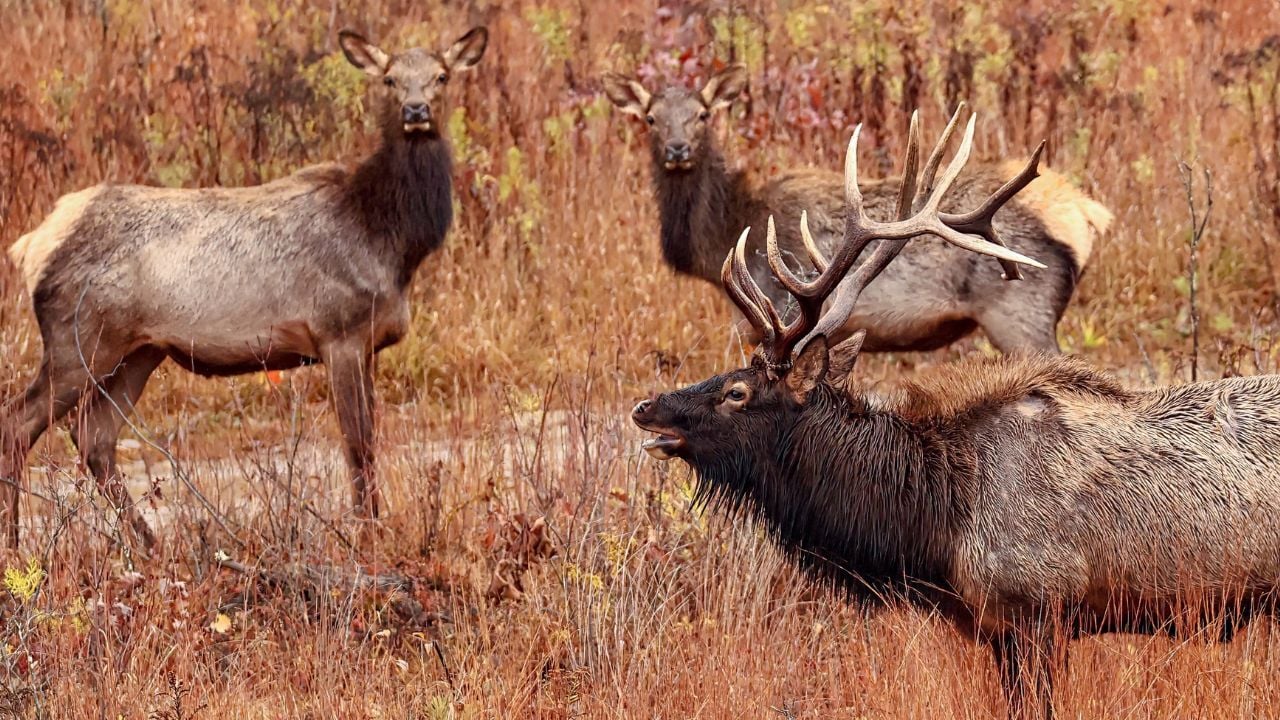
If every elk in a winter group is a bull, you’ve likely found a bachelor group.
Elk bulls split off from the cows as winter approaches and join up with other bulls.
Bulls that fought each other in the fall gather in herds of 10 to 15 by winter.
Those bulls feed to add weight.
3. Grazing Reclaimed Mine Grass
A 2006 study of elk on a southeastern Kentucky surface mine with reclaimed grassland found grass made up about 40 percent of their winter diet.
Perennial ryegrass topped the list, followed by tall fescue and orchard grass.
Forbs and browse together made up less than a quarter of the winter diet.
Elk use grasses more in winter, when tree leaves are largely absent and forbs are least available.
The mine had thousands of acres of reclaimed grassland for them to graze.
By spring, grass falls to about 10 percent of the diet, and woody browse takes the lead at 46 percent.
If you see elk head-down in a winter field, they may well be working through those grasses.
Kentucky’s Elk Restoration Zone
Kentucky’s elk restoration zone covers 16 counties in eastern Kentucky.
That adds up to about 4.1 million acres of hardwood forest and reclaimed coal mine land.
Kentucky released its first Rocky Mountain elk in December 1997.
Relocations continued through 2002.
4. Feeding on Open Grass
University of Kentucky research found that bulls made their greatest daily use of grass habitats in winter.
Male elk overall preferred grass habitats, too.
Adult males also selected open land at greater rates than the study area offered.
The 2006 Kentucky Living article also reported elk bedding down in open fields in winter.
Open grass may be a good place to start your scan.
5. Bedding Down by Slope
On a cold winter day, you may do better checking south-facing slopes than north-facing slopes.
The state’s Elk 101 course says post-rut elk lie down on north-facing slopes on warm days and south-facing slopes on cold days.
Forest and Mine Land in the Elk Zone
Kentucky’s coalfield elk live in a zone that’s approximately 80 percent deciduous forest.
Active and reclaimed surface mines make up another 10 percent, and farm or cleared land covers 9 percent.
A state habitat feasibility study identified the area for its relatively low human population density and minimal commercial agriculture.
Drive through it, and you may see far more forest than open grass.
Elk Calendar
Winter herds form at the end of a calendar that starts in August.
Pre-rut covers August and early September, and in Kentucky the rut follows in late September or early October.
Bulls are at their most vocal and most territorial during the rut.
Post-rut runs from late October into January.
Plan a winter outing in the coalfields, and you’re planning around that last stage.
Elk Under Hunting Pressure
If you’re counting on winter elk in open fields in broad daylight, you may be disappointed.
That course describes post-rut elk as usually in heavy cover, though they still feed in open areas.
Across three hunting seasons, that research also found elk cut their use of open land during daylight hours.
That shift was tied to hunting pressure, though only anecdotally.
Winter Coat Color
Elk coats fade from light copper in summer to light-tan in winter and spring.
Elk have a light beige rump patch, and the legs and neck usually look darker than the body.
Through binoculars, the rump patch and darker legs are what you want to find on a hillside.
Psst! How much do you know about Kentucky’s elk herd? Take our quiz and see how many you can get right.
Quiz
Kentucky Elk IQ
Answer these questions on Kentucky’s elk comeback and the land around it. We bet you can’t get them all right. Prove us wrong?
While grazing, elk can pick up the larvae of which parasite from snails and slugs?
Mine Land as Elk Habitat
When Kentucky chose where to release elk, reclaimed strip mines had already opened grasslands in the forest.
Elk find high-quality food through winter and the rest of the year on reclaimed mine land, the authors of the mine study concluded.
Nutritional quality didn't appear to limit that growing herd.
Elk diets shifted by season, possibly in response to availability and palatability.
When you watch elk graze a treeless slope in winter, you may be looking at reclaimed mine land.
Expanding grassland on reclaimed mines can have negative consequences for native biodiversity.
The University of Kentucky dissertation recommends that future elk management center on keeping healthy grassland within the restoration zone.
8 Tiny Clues That Reveal Which Part of Kentucky Someone Comes From
A Louisville cousin calls a Paducah cousin to plan Sunday dinner for five o'clock.
The call turns into an argument about what time that means.
8 Tiny Clues That Reveal Which Part of Kentucky Someone Comes From
11 Things That Only Make Sense If You Grew Up in Kentucky

Growing up in Kentucky means picking up a long list of habits and traditions.
These are the things that only make sense if you grew up there.
