
6 Utah No-Burn Day Rules That Can Get You Fined in the Winter

On a mandatory no-burn day in Utah, it doesn’t matter if your chimney barely smokes.
Winter nights are cold, but some days come with a ban, and breaking it can mean a fine.
Here are the Utah no-burn day rules that can get you fined in the winter.
Note: This is general information, not legal advice. No-burn rules and fine amounts are subject to change, so confirm the current rules with the Utah Division of Air Quality.
1. Wood-Burning Fireplaces
A mandatory no-burn day puts your wood-burning fireplace off limits.
The ban covers Box Elder, Cache, Davis, Salt Lake, Tooele, Utah, and Weber counties.
If you light a wood fire on one of those days, the Division of Air Quality can fine your household up to $150.
Natural gas appliances and propane stoves stay legal.
Your gas fireplace is fine.
Where the No-Burn Rule Applies
If you live in Salt Lake or Davis County, or anywhere in Cache Valley, the mandatory no-burn rule covers your whole address.
If you live in Weber or Utah County, it covers you only west of the Wasatch Range.
If you live in Box Elder or Tooele County, only part of your county is covered, and the Division of Air Quality describes those areas on its no-burn page.
The rule also exempts sources above 7,000 feet in Box Elder, Davis, Salt Lake, Tooele, Utah, and Weber counties.
2. Certified, Pellet, and Coal Stoves
A mandatory no-burn day isn’t limited to open fireplaces.
It reaches wood stoves whether or not the Environmental Protection Agency (EPA) has certified them.
Your certified stove isn’t exempt.
Pellet stoves and coal-burning stoves are on the same banned list.
If you light any of them, the same fine applies.
3. Sole-Source Heat Registration
A mandatory no-burn day has one household exemption, for homes that depend on a wood fire for warmth.
The rule requires your device to be the sole source of heat for an entire residence.
You have to register it with the director of the Division of Air Quality as well.
The Division’s form for that is the Solid Fuel Residential Sole Source Heating Application.
A home with a working furnace likely doesn’t qualify.
Check your furnace first.
If you burn without that registration, you can face the same fine.
4. Voluntary Days in Salt Lake County
The Division of Air Quality rates each day as unrestricted, voluntary, or mandatory.
On a voluntary day it asks residents to skip wood, pellet, and coal stoves and fireplaces, and on a mandatory day they’re prohibited.
Salt Lake County doesn’t wait for a mandatory no-burn day.
The county health department prohibits burning solid fuel in fireplaces and wood stoves on days the state calls either voluntary or mandatory.
It bans outdoor fires on those days too, including bonfires and charcoal grill fires.
Your fire pit counts too.
In Salt Lake County, notices of violation can carry penalties of up to $299 a day.
If the state recognizes your wood stove or fireplace as your home’s sole source of heat, you’re exempt.
5. Burning Without Visible Smoke
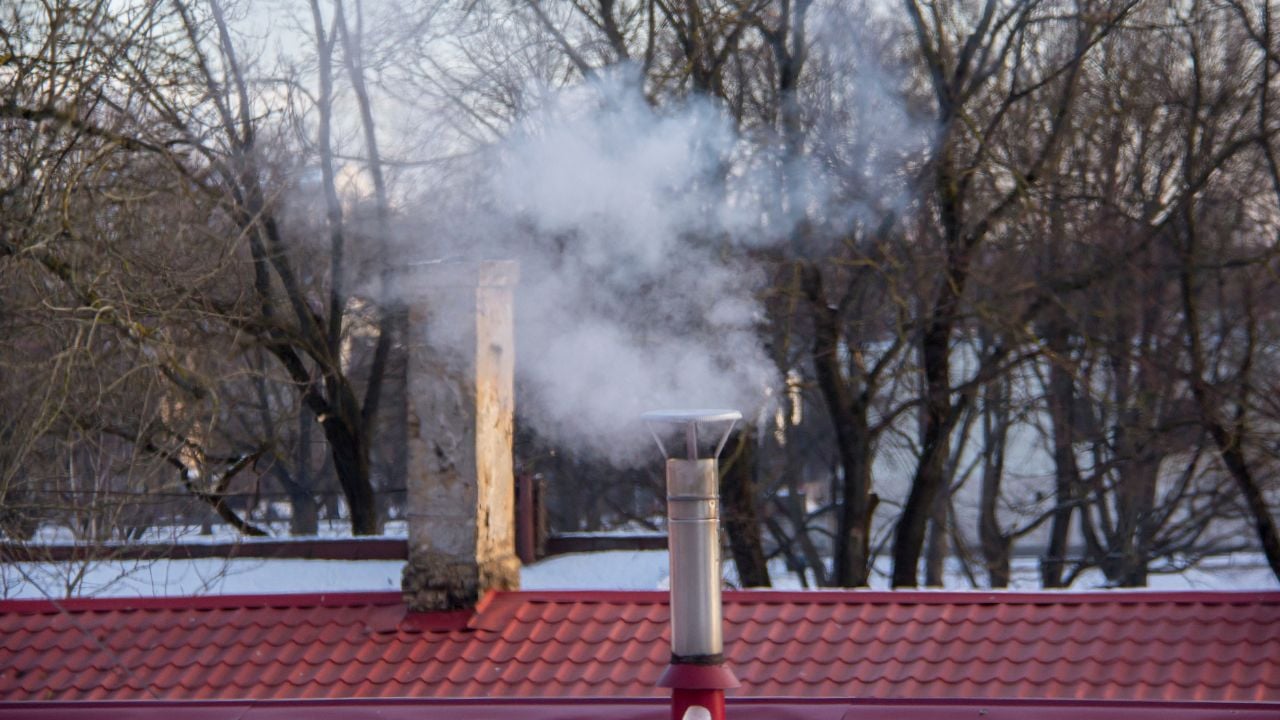
A mandatory no-burn day applies even if your chimney shows little smoke.
Division of Air Quality compliance officers use infrared cameras that detect heat plumes even when there’s no visible smoke.
Officers can assess fines of up to $150 to households found violating the ban.
Neighbors can call it in.
If your neighbors suspect a violation, they can report it by phoning the Division at (801) 536-4000 or filling out its online complaint form.
In Salt Lake County, the health department investigates those complaints and can issue the notices of violation.
6. Pollution Forecast Triggers
A mandatory no-burn day starts with a pollution forecast, not a cold snap.
State rules call for a mandatory no-burn period when fine particulate pollution (PM2.5) is forecast to hit 25 micrograms per cubic meter or more.
A second trigger is coarse particle pollution (PM10) reaching 120 micrograms per cubic meter.
That reading counts at a monitor in Salt Lake, Davis, Weber, or Utah County, with an inversion predicted to last at least 24 hours.
The Division’s director announces which counties the period covers.
Check before you light.
The Division can call a mandatory day in any month, though the usual window runs from November 1 through March 1.
If you light a fire against the call, a fine can follow.
The Division reports action levels to local media twice a day, and you can download the UtahAir app to see them.
Psst! How much do you know about Utah’s winter air? Take our quiz and see if you can ace it.
Quiz
Utah Winter Air IQ
Answer nine questions on inversions, particle pollution, and the mountains behind Utah’s winter air. We bet you can’t get them all right. Prove us wrong?
Why do snow-covered valley floors make a Utah inversion worse?
What Applies on Other Days
Even when no no-burn day is in effect, state rules still limit what goes in your wood stove.
You can burn only seasoned wood, and the rule bans garbage, plastic, rubber, paint, and treated wood.
The banned list also reaches asphaltic products, books and magazines, colored or wrapping paper, and waste petroleum products.
Trash goes in the can.
Opacity is how much your smoke blocks the view behind it.
Your smoke can't be darker than 20 percent opacity, apart from a 15-minute start-up period and a 15-minute refueling window in any three-hour period.
Those limits cover all of Box Elder, Cache, Davis, Salt Lake, Tooele, Utah, and Weber counties.
If you're shopping for a new wood stove, the rule bars anyone from selling or installing a wood stove that isn't EPA certified.
An older stove that isn't certified can change hands with a house if the owner installed it before March 6, 2014, and it stays in the home.
4 Utah Snow Removal Rules Homeowners Get Fined for Every Winter
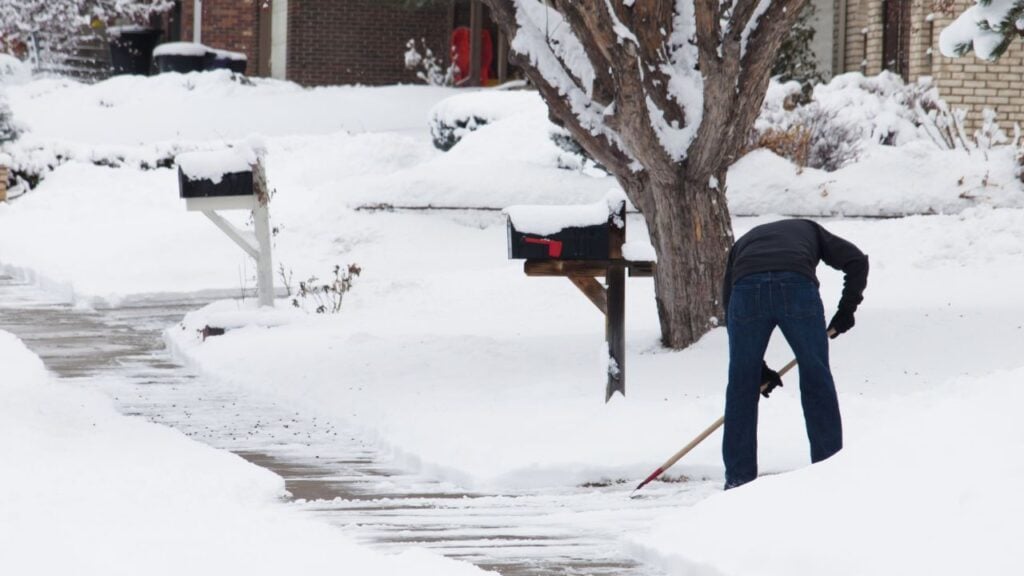
Snow doesn't wait for your schedule, and neither does a fine.
One overdue driveway can turn into a several-hundred-dollar bill before the week is out.
4 Utah Snow Removal Rules Homeowners Get Fined For Every Winter
7 Water Rules New Utah Homeowners Find Out About Too Late
You finally own a place with a yard, and watering it sounds like the easy part.
In Utah, the watering rules can catch new owners after move-in day.
