
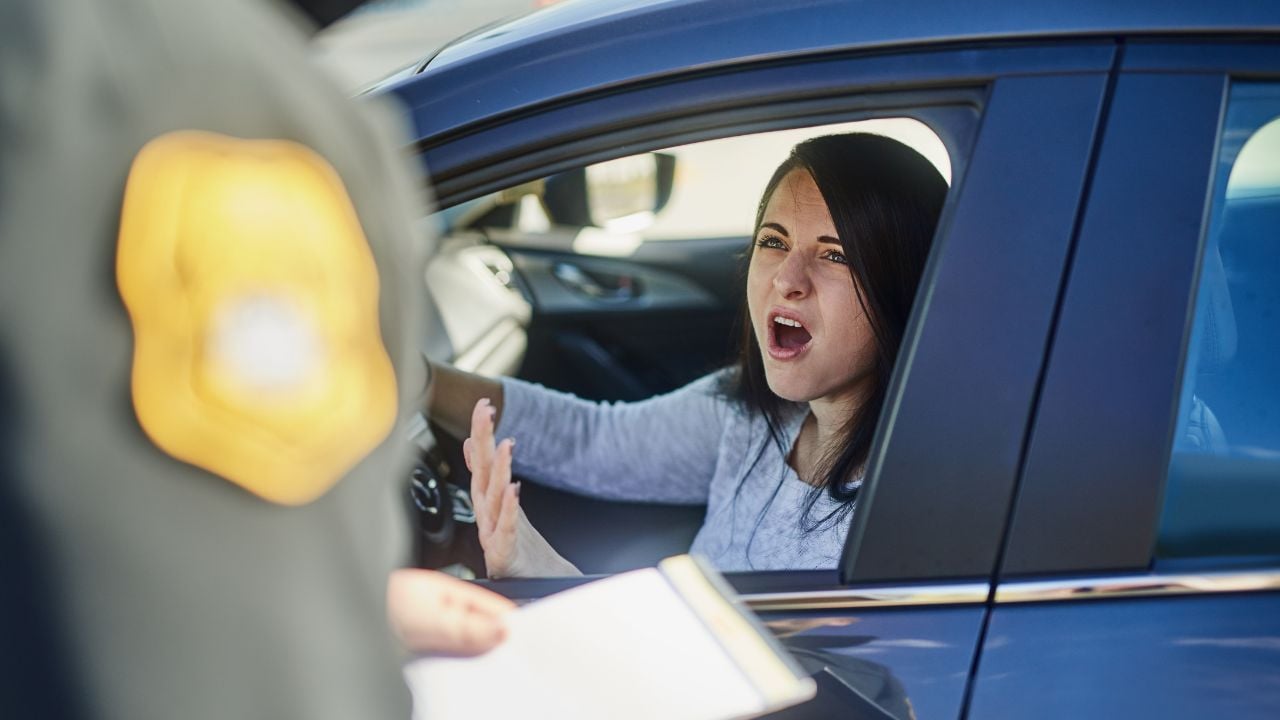
7 Things Wisconsin Drivers Can Get Ticketed for That Feel Completely Legal

Flip your turn signal on as you start to turn in Wisconsin, and you’re already breaking the law.
It feels harmless, and so do certain other everyday habits behind the wheel.
Here’s what Wisconsin drivers can get ticketed for that feels completely legal.
Note: This is general information, not legal advice. Traffic laws and penalties are subject to change, so confirm the current requirements with the Wisconsin Department of Transportation.
1. Passing a Stopped Car
Wisconsin’s Move Over law now protects any stopped car with its hazard lights on, not just police cars and tow trucks.
Driving past a stopped car at full speed feels harmless to many people.
But a law signed in December 2025 says a stopped car counts if its hazards are flashing, flares sit near it, or someone attending it is visible to passing drivers.
Flashing hazards alone are enough.
If the road has at least two lanes going your way, you have to move over when it’s safe.
If you can’t, you have to slow down until you’re past the car.
The rule covers a car stopped on the roadway or within 12 feet of it.
A ticket can run from $30 to $300.
If you damage someone’s property while breaking the rule, a court has to suspend your license for 90 days to a year.
2. Close Behind a Snowplow
Wisconsin law bars you from following a working snowplow too closely.
Plows often create a cloud of snow that can obscure visibility for all drivers, according to the State Patrol.
You have to stay at least 200 feet back on a highway with a posted limit above 35 miles per hour.
On a road posted at 35 or lower, the minimum is 75 feet.
Both gaps apply to a plow that’s clearing snow or ice, or laying salt or sand.
Tailgating a plow can cost you $20 to $40 for a first offense.
A second conviction within a year can run $50 to $100.
Staying inside those gaps for a mile or more counts as evidence that you’re breaking the rule.
If you pull up behind a plow stopped at an intersection, you have to stop at least 20 feet back and stay there until it moves.
3. Hand-Held Phones in Work Zones
Wisconsin law bars you from using your phone where road workers are at risk from traffic, unless you’re hands-free.
The State Patrol says hand-held phone use is prohibited while you pass through, and within 500 feet of, work zones, utility work areas and emergency response areas.
Many drivers figure a quick glance at a map is harmless.
A quick scroll counts.
The ban covers any use of your phone in those areas, not only calls and texts.
The exceptions are reporting an emergency and using a voice-operated or hands-free setup that you don’t run by hand.
A first offense is a $20 to $40 forfeiture.
Wisconsin averages more than 2,000 work zone crashes a year, which the State Patrol says works out to one every four hours.
4. A Turn Signal That Comes Too Late
Switching on your turn signal as you start the turn doesn’t meet Wisconsin’s rule.
The signal has to stay on for at least the last 100 feet you travel before the turn, whenever other traffic may be affected.
Tickets run $20 to $40 for a first offense, and $50 to $100 for a second within a year.
Many drivers flip the signal on at the last second and figure that’s close enough.
Close doesn’t count.
When it’s impossible to signal for the last 100 feet, a 1985 Wisconsin court ruling says the requirement doesn’t apply.
Bicycle riders only have to signal for the last 50 feet before a turn.
Psst! How much do you know about Wisconsin’s traffic laws? Take our quiz and see if you can ace it.
Quiz
Wisconsin Driving Law IQ
Answer these questions on Wisconsin traffic laws. We bet you can’t get them all right. Prove us wrong?
Wisconsin lets you cross a no-passing line to pass a slow vehicle, as long as it’s going slower than what fraction of the speed limit?
5. Lingering in the Left Lane
Wisconsin law says a vehicle moving slower than the normal speed of traffic belongs in the right-hand lane, or as close to the right edge as practicable.
Breaking that rule can bring a forfeiture of $30 to $300.
Cruising in the left lane can earn you a ticket if traffic around you is moving faster.
Pass, then move over.
The exceptions include passing another vehicle and getting ready for a left turn.
6. A Cluttered Windshield
Wisconsin law bars you from driving with an object placed or hanging where it blocks your clear view through the front windshield.
The Wisconsin Supreme Court has said the obstruction has to be a material one, even a minor one, so not every object in your line of sight counts.
A first offense under this law can cost $20 to $40.
Signs, posters and other nontransparent material are barred from the front windshield, the side windows in the driver's compartment and the rear window.
The court has read that rule as aimed at signs, posters and similar items, not a small oil change sticker.
The statute's one written exception is a certificate or sticker issued by a government agency.
It can't cover more than 15 square inches and has to sit in the lower left corner of the windshield.
Blocking your view through the rear window is a violation unless your vehicle has an outside rear view mirror that meets state requirements.
The same law says your windows have to stay reasonably clean at all times.
7. Watching Videos at the Wheel
While you drive in Wisconsin, you can't operate an entertainment screen that's switched on, or be in a position to directly observe one.
Touching isn't the test.
A first offense can cost $20 to $40.
Navigation screens, backup cameras and displays of traffic, road or weather conditions are exempt.
The ban doesn't cover a screen the driver can't directly see.
It also doesn't apply to emergency vehicles, tow trucks or certain commercial motor vehicles.
8 Sump Pump Blind Spots Wisconsin Buyers Don't Expect After Closing
The inspector says the sump pump works, so you sign.
That's good news, but it may not tell you the whole story.
8 Sump Pump Blind Spots Wisconsin Buyers Don't Expect After Closing
The Same Grocery Cart Costs Wisconsin Shoppers Nearly Double at Some Stores

Groceries are expensive enough without paying more than you need to.
The same everyday list can ring up very differently from store to store.
The Same Grocery Cart Costs Wisconsin Shoppers Nearly Double at Some Stores
